• HOME
  • NEWS
  • EXPLORE
    • CAREER
      • Companies
      • Jobs
    • EVENTS
    • iGEM
      • News
      • Team
    • PHOTOS
    • VIDEO
    • WIKI
  • BLOG
  • COMMUNITY
    • FACEBOOK
    • INSTAGRAM
    • TWITTER
Monday, May 11, 2026
BIOENGINEER.ORG
No Result
View All Result
  • Login
  • HOME
  • NEWS
  • EXPLORE
    • CAREER
      • Companies
      • Jobs
        • Lecturer
        • PhD Studentship
        • Postdoc
        • Research Assistant
    • EVENTS
    • iGEM
      • News
      • Team
    • PHOTOS
    • VIDEO
    • WIKI
  • BLOG
  • COMMUNITY
    • FACEBOOK
    • INSTAGRAM
    • TWITTER
  • HOME
  • NEWS
  • EXPLORE
    • CAREER
      • Companies
      • Jobs
        • Lecturer
        • PhD Studentship
        • Postdoc
        • Research Assistant
    • EVENTS
    • iGEM
      • News
      • Team
    • PHOTOS
    • VIDEO
    • WIKI
  • BLOG
  • COMMUNITY
    • FACEBOOK
    • INSTAGRAM
    • TWITTER
No Result
View All Result
Bioengineer.org
No Result
View All Result
Home NEWS Science News Health

Oregon State researchers discover new class of cancer fighting compounds

Bioengineer by Bioengineer
May 11, 2021
in Health
Reading Time: 3 mins read
0
IMAGE
Share on FacebookShare on TwitterShare on LinkedinShare on RedditShare on Telegram

IMAGE

Credit: Oregon State University

CORVALLIS, Ore. – A team of Oregon State University scientists has discovered a new class of anti-cancer compounds that effectively kill liver and breast cancer cells.

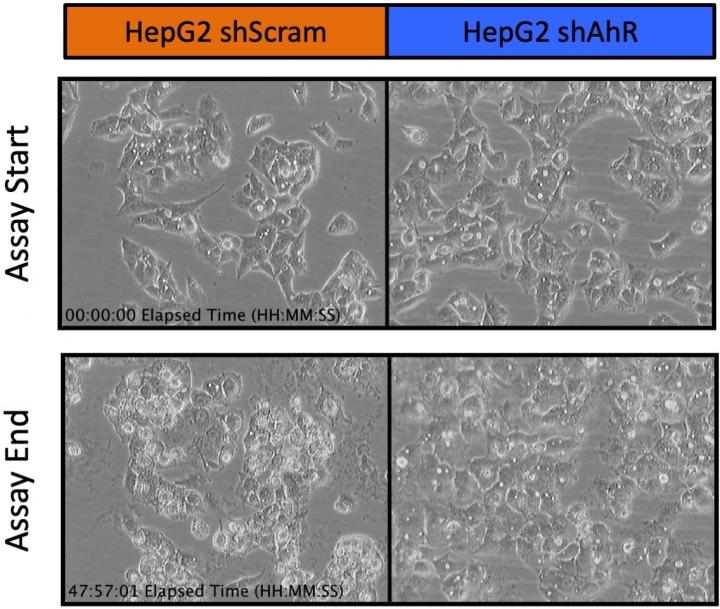
The findings, recently published in the journal Apoptosis, describe the discovery and characterization of compounds, designated as Select Modulators of AhR-regulated Transcription (SMAhRTs).

Edmond Francis O’Donnell III and a team of OSU researchers conducted the research in the laboratory of Siva Kolluri, a professor of cancer research at Oregon State. They also identified the aryl hydrocarbon receptor (AhR) as a new molecular target for development of cancer therapeutics.

“Our research identified a therapeutic lead that acts through a new molecular target for treatment of certain cancers,” Kolluri said.

O’Donnell added: “This is an exciting development which lays a foundation for a new class of anti-cancer therapeutics acting through the AhR.”

The researchers employed two molecular screening techniques to discover potential SMAhRTs and identified a molecule – known as CGS-15943 – that activates AhR signaling and kills liver and breast cancer cells.

Specifically, they studied cells from human hepatocellular carcinoma, a common type of liver cancer, and cells from triple negative breast cancer, which account for about 15% of breast cancers with the worst prognosis.

“We focused on these two types of cancers because they are difficult to treat and have limited treatment options,” said Kolluri, a professor in the Department of Environmental and Molecular Toxicology in the College of Agricultural Sciences. “We were encouraged by the results because they are unrelated cancers and targeting the AhR was effective in inducing death of both of these distinct cancers.”

The researchers also identified the AhR-mediated pathways that contribute to the anti-cancer actions of CGS-15943. Developing cancer treatments requires a detailed understanding of how they act to induce anti-cancer effects. The researchers determined that CGS-15943 increases the expression of a protein called Fas Ligand through the AhR and causes cancer cell death.

These results provide exciting new leads for drug development, but human therapies based on these results would not be available to patients for years, the researchers said.

###

An editorial commemorating the 25th anniversary issue of the journal Apoptosis highlighted this discovery and the detailed investigation of cancer cell death promoted by CGS-15943.

In addition to Kolluri and O’Donnell, who recently completed medical school and is an orthopaedic surgery resident at UC Davis Medical Center, other authors of the paper are: Hyo Sang Jang and Nancy Kerkvliet, both from Oregon State; and Daniel Liefwalker, who formerly worked in Kolluri’s lab and is now at Oregon Health and Science University. Kolluri is also part of Oregon State’s Linus Pauling Institute and The Pacific Northwest Center for Translational Environmental Health Research.

Funding for the research came from the American Cancer Society, National Institute of Environmental Health Sciences, the U.S. Army Medical Research and Material Command, the Department of Defense Breast Cancer Research Program, Oregon State University and the National Cancer Institute.

Media Contact
Sean Nealon
[email protected]

Original Source

https://today.oregonstate.edu/news/oregon-state-researchers-discover-new-class-cancer-fighting-compounds

Tags: BiologyBreast CancercancerGenesGeneticsMedicine/HealthMicrobiologyMolecular Biology
Share12Tweet8Share2ShareShareShare2

Related Posts

New Post-Hoc Analysis Explores Daily Oral Orforglipron Use in Adults Over 65 with Obesity, Regardless of Diabetes Status

May 11, 2026

Evaluating Digoxin Use in Patients with Symptomatic Rheumatic Heart Disease

May 10, 2026

Evaluating the Effectiveness and Safety of Digitalis Glycosides in Treating Heart Failure

May 10, 2026

Urdu Fall Risk Questionnaire Adapted for Elderly

May 10, 2026
Please login to join discussion

POPULAR NEWS

  • Research Indicates Potential Connection Between Prenatal Medication Exposure and Elevated Autism Risk

    840 shares
    Share 336 Tweet 210
  • New Study Reveals Plants Can Detect the Sound of Rain

    727 shares
    Share 290 Tweet 181
  • Salmonella Haem Blocks Macrophages, Boosts Infection

    61 shares
    Share 24 Tweet 15
  • Breastmilk Balances E. coli and Beneficial Bacteria in Infant Gut Microbiomes

    57 shares
    Share 23 Tweet 14

About

We bring you the latest biotechnology news from best research centers and universities around the world. Check our website.

Follow us

Recent News

New Post-Hoc Analysis Explores Daily Oral Orforglipron Use in Adults Over 65 with Obesity, Regardless of Diabetes Status

Evaluating Digoxin Use in Patients with Symptomatic Rheumatic Heart Disease

Evaluating the Effectiveness and Safety of Digitalis Glycosides in Treating Heart Failure

Subscribe to Blog via Email

Enter your email address to subscribe to this blog and receive notifications of new posts by email.

Join 82 other subscribers
  • Contact Us

Bioengineer.org © Copyright 2023 All Rights Reserved.

Welcome Back!

Login to your account below

Forgotten Password?

Retrieve your password

Please enter your username or email address to reset your password.

Log In
No Result
View All Result
  • Homepages
    • Home Page 1
    • Home Page 2
  • News
  • National
  • Business
  • Health
  • Lifestyle
  • Science

Bioengineer.org © Copyright 2023 All Rights Reserved.