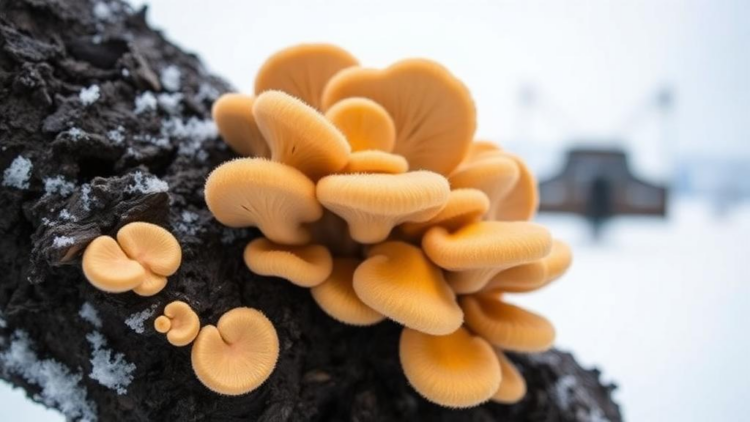
Deep in the frozen ruins of Whalers Bay on Deception Island, one of the most storied locations in maritime Antarctica, scientists have uncovered a thriving hidden community of fungi living inside the decaying remnants of a century-old whaling station. A new study published in the journal Blue Biotechnology reveals that wood, fabric, rope and soil collected from this historic site harbor a remarkably diverse array of cold-adapted fungi, many of which produce enzymes and lipids with striking potential for industrial applications. The research, led by Elisa A. A. Teixeira and Luiz H. Rosa of the Federal University of Minas Gerais in Brazil, together with Peter Convey of the British Antarctic Survey and colleagues, offers both a biological census of an extreme environment and a tantalizing glimpse of sustainable technologies that could emerge from the planet’s coldest continent.
The story begins with the island’s human history. Whalers Bay was home to a whaling station established in the early twentieth century, and its buildings were constructed largely from wood imported from Europe, North America and South America. Later, these structures were repurposed for scientific research operations in the mid-twentieth century. The researchers suspected that this imported timber, along with animal fodder, provisions and other materials brought during the eras of exploitation and exploration, may have inadvertently ferried temperate-zone fungi into Antarctica. Because wood is essentially absent from the natural Antarctic environment, any decomposer fungi found colonizing these historic structures are likely to have arrived with the materials themselves, or to have been attracted to them as nutrient-rich bait for a resident mycobiota already present on the island.
During the Brazilian Antarctic Operation XXXVII in December 2018, the team collected twelve samples of wood, fabric, rope and soil from various points around Whalers Bay. The samples were frozen at minus twenty degrees Celsius during transport back to the Laboratory of Polar Microbiology and Tropical Connections in Brazil. There, the scientists used enrichment cultures of yeast malt medium, incubated at fifteen degrees Celsius, to coax out the cultivable fungi. They also employed a selective medium containing eight percent ethanol to hunt for ethanol-resistant, fermenting yeasts. Colonies were grouped by their macroscopic characteristics, purified, and preserved in the university’s Microorganism and Cell Collection under the code UFMGCB.
Identification relied on a polyphasic approach combining morphology with molecular markers. The researchers amplified the internal transcribed spacer region of ribosomal DNA for filamentous fungi and the D1/D2 domain of the 26S rDNA gene for yeasts, then sequenced the products by the Sanger method and compared them against reference sequences in GenBank using BLASTn, considering isolates with identity of at least ninety-nine percent to be the same species. The results were striking: forty-seven fungal isolates were recovered, representing sixteen genera and twenty-three taxa spanning the phyla Ascomycota and Basidiomycota. The most abundant genus was Coniochaeta, followed by Cadophora, Pseudogymnoascus, Mrakia and Leucosporidium. Other genera included Ascocoryne, Candida, Cystobasidium, Goffeauzyma, Graphium, Mollisia, Naganishia, Papiliotrema, Phenoliferia and Purimyces.
Diversity statistics painted a picture of a rich and highly structured community. The samples yielded a Fisher’s alpha of 17.80, a Margalef richness index of 5.71 and a Simpson’s dominance index of 0.93, indicating high diversity, richness and dominance of decomposer taxa. Crucially, the species accumulation curve generated with the Mao Tao index did not reach an asymptote, meaning the sampling had not exhausted the fungal diversity present in these substrates. This finding mirrors an earlier culture-independent DNA metabarcoding study of the same samples, which likewise revealed cryptic fungal diversity in the historic wooden structures. Together, the two studies reinforce the idea that imported wood acts as both a refuge for introduced species and a magnet for native Antarctic decomposers seeking an abundant organic nutrient source in an otherwise barren landscape.
Many of the genera recovered are familiar players in Antarctic wood decay. Coniochaeta species have been reported from wood on Deception Island and at Japan’s Syowa Station, and from soils in the McMurdo Dry Valleys, though some members of the genus are opportunistic human pathogens. Cadophora luteo-olivaceae, identified in this study, was previously documented in the old buildings at Whalers Bay by Held and Blanchette, underscoring the group’s capacity to thrive in polar environments when wood is available. Pseudogymnoascus is widespread in cold terrestrial and marine environments of both polar regions and is thought to play a central role in decomposition and nutrient cycling. Mrakia, meanwhile, accounts for roughly thirty-five percent of cultivable fungi isolated from lake sediments and soils of East Antarctica, and Leucosporidium species have been found in Antarctic seawater, soils, bryophytes and flowering plants. Even Naganishia, whose members are described as among the most UV-resistant organisms known, made an appearance.
The biotechnological heart of the study lies in the enzymes. All forty-seven isolates were screened for production of four extracellular enzymes: amylase, cellulase, inulinase and pectinase. Activity was assessed by growing the fungi on media containing specific inducing substrates and measuring halos of hydrolysis after seven days at fifteen degrees Celsius, with an Enzyme Index of two or greater defining a good producer. Amylase production was the most widespread, with thirty-five isolates producing degradation halos, followed by inulinase with thirty-four and cellulase with thirty-three, while pectinase lagged at twelve. Inulinase, however, boasted the highest number of good producers, with eight isolates reaching the threshold. Standout performers included Coniochaeta sp. 2, a good producer of both cellulase and inulinase with enzymatic indices of 2.70 and 2.51 respectively, and the yeast Phenoliferia glacialis, which produced cellulase and pectinase with indices of 2.11 and 2.44.
Several of these findings represent firsts for science. The study appears to be the first report of Coniochaeta isolates capable of producing amylase and inulinase, the first report of a Purimyces isolate as a good inulinase producer, and the first documentation of Phenoliferia glacialis producing inulinase. Because all the detected enzymes were active at low temperatures, they carry considerable industrial promise. Cold-active amylases could serve in cold-water detergents, cold saccharification in food processing, textile desizing and animal feed additives for cold climates. Inulinase can generate fructooligosaccharides for functional foods and support cold-fermentation brewing, while pectinase enables fruit juice clarification at low temperatures, preserving vitamins, flavor and color, and finds use in eco-friendly textile bioscouring. Cellulase applications span cold bio-polishing in textiles, cold-wash laundry detergents and environmentally gentler pulp and paper processing. Enzymes that work at low temperatures reduce energy costs, lower the risk of microbial contamination and can eliminate expensive heating equipment entirely.
Perhaps the most commercially intriguing discovery came from the selective ethanol medium. Two isolates of the yeast Solicoccozyma terricola, a psychrotolerant oleaginous species previously known from soils, mosses and lichens in Antarctica and from glacial sediments in Italy, were recovered in low density from wood fragments and soil. Temperature trials showed the yeast grows across a wide range from five to twenty-five degrees Celsius, with the strongest colonies between fifteen and twenty degrees. When cultured in glucose-rich broth at twenty degrees for nine days and stained with the fluorescent dye Nile Red, the cells revealed lipid bodies under confocal microscopy, confirming intracellular lipid production. Previous work by Tasselli and colleagues reported that at twenty degrees this species achieves lipid yields approaching those of palm oil, making it a candidate feedstock for biofuel production, with additional potential in food, cosmetics and textile industries.
The study’s conclusions carry weight beyond biotechnology. The fungal communities documented in Whalers Bay’s lignocellulosic substrates are dominated by decomposers, consistent with the hypothesis that many taxa arrived with imported construction timber, though the authors acknowledge the fungi could also have arrived as spores dispersed by air currents, birds or human activity, or that the imported substrates may simply have acted as bait for fungi already present. Because the surviving buildings form part of a formally declared Antarctic Historic Monument, Antarctic Treaty nations bear a duty to protect these sites, and wood-degrading fungi pose a direct challenge to their long-term conservation. The researchers call for further genetic studies to identify the genes behind the observed enzyme production and detailed investigations of the lipid metabolic pathways in S. terricola. They also emphasize a broader message: the Antarctic ecosystem shelters microbes of great biotechnological potential, reinforcing the urgency of preserving the region against biological loss driven by local climate change. In the frozen timbers of a whaling station, it seems, the continent has been quietly running an experiment in applied biology for over a century.
Subject of Research: Culturable fungal diversity in Antarctic lignocellulosic substrates and their production of cold-active enzymes and lipids with industrial potential
Article Title: Fungal diversity in Antarctic lignocellulosic substrates and their production of enzymes and lipids with potential industrial applications
Article References: Teixeira, E. A. A., de Souza, L. M. D., de Carvalho, C. R., Rosa, C. A., Convey, P., & Rosa, L. H. (2025). Fungal diversity in Antarctic lignocellulosic substrates and their production of enzymes and lipids with potential industrial applications. Blue Biotechnology, 2(1), Article 11. https://doi.org/10.1186/s44315-025-00035-9
Image Credits: AI Generated
DOI: 10.1186/s44315-025-00035-9
Keywords: Antarctica, fungi, extremophiles, cold-active enzymes, bioprospecting, biotechnology, Coniochaeta, Solicoccozyma terricola, oleaginous yeast, biofuel, Deception Island, wood decay
Cite Scienmag News
APA MLA Chicago
Roger Howard. (October 1, 2026). Antarctic Fungi Found in Historic Whaling Station Wood Offer Cold-Active Enzymes and Biofuel Lipids. Scienmag. https://scienmag.com/antarctic-fungi-found-in-historic-whaling-station-wood-offer-cold-active-enzymes-and-biofuel-lipids/
Roger Howard. “Antarctic Fungi Found in Historic Whaling Station Wood Offer Cold-Active Enzymes and Biofuel Lipids.” Scienmag, 1 October 2026, https://scienmag.com/antarctic-fungi-found-in-historic-whaling-station-wood-offer-cold-active-enzymes-and-biofuel-lipids/. Accessed 1 October 2026.
Roger Howard. “Antarctic Fungi Found in Historic Whaling Station Wood Offer Cold-Active Enzymes and Biofuel Lipids.” Scienmag. October 1, 2026. https://scienmag.com/antarctic-fungi-found-in-historic-whaling-station-wood-offer-cold-active-enzymes-and-biofuel-lipids/
Copy citation Download RIS
Tags: Antarctic ecosystem researchAntarctic fungiAntarcticabiofuelbiofuel lipidsbioindustrial applications of cold-adapted fungibioprospectingbiotechnologycold-active enzymesConiochaetacryophilic fungidecaying wood microbial communitiesDeception Islandextreme environment microorganismsextremophile fungi in polar regionsextremophilesfungihistoric whaling station microbiomemaritime Antarctica biodiversityoleaginous yeastSolicoccozyma terricolasustainable biotechnologywood decay