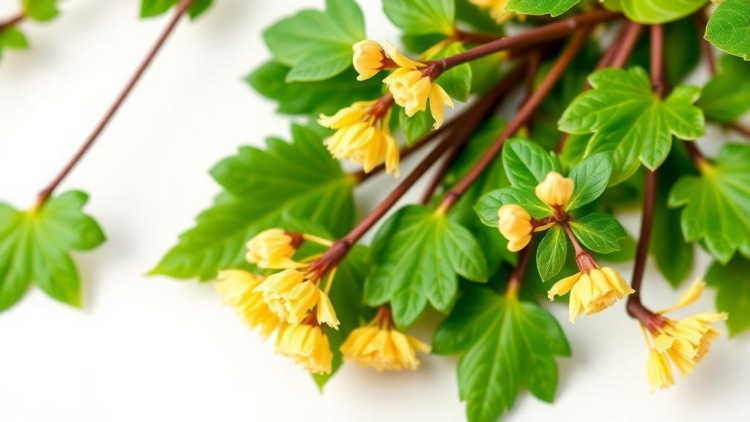
Aging quietly rewires two of the body’s most influential systems: the immune network and the trillions of microbes living in the gut. A new randomized clinical trial published in Aging Cell suggests that a traditional Chinese medicinal herb, Polygonatum odoratum—known in China as Yuzhu—may act on both at once, offering one of the first controlled glimpses into how a food-homology botanical could slow the immune decline that makes older adults vulnerable to infection. The study, conducted among community-dwelling older adults in Tianjin, China, mapped the relationships between gut bacteria and circulating immune cell subsets, and then tested whether a 90-day course of a standardized aqueous extract of the herb could shift those relationships in a healthier direction.
The research team began with an observational foundation. At baseline, they analyzed correlations between gut microbial genera and peripheral blood immune cell profiles in 125 elderly participants, using flow cytometry to distinguish dozens of T cell, B cell, and natural killer cell subsets. The dominant signal involved T cells, particularly the terminally differentiated effector memory T cells that re-express CD45RA, known as TEMRA cells. These cells are hallmarks of immunosenescence: they accumulate with age, show telomere shortening, secrete inflammatory molecules characteristic of cellular senescence, and crowd out younger, more capable immune cells in the immunological niche.
The correlation patterns were striking in their specificity. Akkermansia, a genus widely associated with healthy aging and metabolic health, was significantly negatively correlated with the senescent CD8+ TEMRA CD57− CD28− subset, CD8+ central memory T cells, and double-negative B cells, while positively correlated with naïve CD4+ T cells—the fresh, adaptable soldiers of adaptive immunity. Coprococcus, the Eubacterium eligens group, Subdoligranulum, Sutterella, and Roseburia all showed negative correlations with CD8+ TEMRA populations. In contrast, Klebsiella—a genus containing multidrug-resistant, virulent pathogens that threaten immunocompromised hosts—was positively correlated with several CD4+ and CD8+ TEMRA subsets as well as IgM+ B cells. Bifidobacterium correlated positively with double-negative B cells, and Parabacteroides negatively with long-lived memory B cells. Together, the data sketch a microbial ecosystem in which beneficial taxa track with a youthful immune phenotype and potentially harmful taxa track with immune aging.
Building on this foundation, the researchers designed a double-blind, randomized, placebo-controlled trial registered with the UMIN Clinical Trials Registry. A total of 186 participants aged 60 and older were recruited from three Tianjin communities between November 2023 and March 2024, with 70 per group randomized to receive either Yuzhu Gao—a 100 percent aqueous extract of Polygonatum odoratum rhizome—or an identically textured, packaged placebo. The extract was quality-controlled using multi-level fingerprinting of its polysaccharide content and high-resolution mass spectrometry to characterize non-polysaccharide components, which include saponins, flavonoids, anthraquinones, and lectins. Peripheral blood and fecal samples were collected at day zero and day 90, and immune cell parameters were measured by flow cytometry while gut microbiome composition was profiled by sequencing the V3-V4 regions of the 16S rRNA gene.
The immune results centered on a natural experiment in immune aging. In the placebo group over 90 days, the researchers observed significant decreases in CD8+ and CD4+ central memory T cells and CD8+ effector memory cells, alongside significant increases in CD8+ and CD4+ TEMRA cells and, most notably, the CD28− CD57+ TEMRA subsets—cells widely regarded as the most senescent and dysfunctional of the T cell lineage. This drift toward terminal differentiation is precisely the trajectory that gerontologists consider a driver of chronic inflammation and impaired pathogen clearance. In the Yuzhu Gao group, the picture differed sharply: CD8+ central memory T cells significantly increased, and the senescent CD28− CD57+ TEMRA populations showed no significant rise. Between-group analysis confirmed that the intervention group had a significantly smaller increase in naïve CD8+ T cells, CD8+ TEMRA cells, and the CD28− CD57+ TEMRA subsets compared with placebo, effectively blunting the age-related shift toward terminal T cell differentiation over the study period.
The gut microbiome data reinforced the immune findings. Alpha diversity measures—the Chao1 index and observed species counts—rose significantly from baseline to day 90 in the Yuzhu Gao group but not in the placebo group, suggesting an enrichment of microbial variety. At the phylum level, Verrucomicrobiota, the phylum that contains Akkermansia, increased significantly in the intervention group, while Actinobacteriota declined more steeply in the placebo group. At the genus level, the abundances of Akkermansia and Prevotella 9 increased significantly in the Yuzhu Gao group, whereas Klebsiella decreased significantly—a pattern that mirrors the baseline correlations, in which Akkermansia tracked with youthful immune phenotypes and Klebsiella with senescent ones. Species-level analysis further showed significant downregulation of Klebsiella pneumoniae and Lactobacillus intestinalis, alongside upregulation of several taxa whose increases were more pronounced in the treatment group than in placebo.
Perhaps the most clinically resonant outcome concerned respiratory tract infections, a leading health burden in older adults, particularly in winter. Among 116 participants who completed questionnaire follow-up during the intervention, only 6 of 56 in the Yuzhu Gao group reported a respiratory tract infection, compared with 16 of 60 in the placebo group—a statistically significant reduction. The researchers then examined whether the microbial and immune changes induced by the herb related to infection outcomes, and found that the key bacterial genera altered by the intervention, including Faecalibacterium, Prevotella 9, Akkermansia, Klebsiella, Subdoligranulum, and Sutterella, were significantly associated with respiratory infection incidence during the trial, in parallel with changes in T cell profiles.
Post-intervention correlation analysis added mechanistic texture. Prevotella 9 and Faecalibacterium were significantly negatively correlated with CD4+ effector memory T cells, while Akkermansia was negatively correlated with CD8+ effector memory cells and positively correlated with naïve CD4+ T cells. These relationships align with a plausible biological model: Akkermansia muciniphila, which is notably enriched in the guts of long-lived individuals, can synthesize short-chain fatty acids that regulate T cell differentiation by inhibiting pro-inflammatory cytokine release and mitigating chronic inflammation and oxidative stress. Other work has linked Akkermansia muciniphila to improved responses to PD-1 immune checkpoint blockade, potentially through recruitment of CCR9+ CXCR3+ CD4+ T lymphocytes and upregulation of interleukin-12. On the pathogen side, prior research has shown that T cell functional status shapes gut microbial structure, and that interventions affecting T cell exhaustion pathways can alter colonization by Klebsiella pneumoniae, underscoring the bidirectional dialogue between immunity and microbiota.
The authors are careful about the limits of their evidence. The cohort was drawn from Tianjin communities, which constrains generalizability, and confounders such as cytomegalovirus infection—a major driver of TEMRA accumulation in the elderly—were not fully assessed. Respiratory infection symptoms were self-reported, introducing potential reporting biases, and no functional immune assays, such as antiviral T cell responses, were performed. The researchers also note that 16S rRNA sequencing characterizes bacterial composition but not microbial metabolites like short-chain fatty acids, secondary bile acids, or tryptophan derivatives that could directly mediate T cell effects. The observed correlations between treatment, immune cell subsets, and self-reported cold episodes therefore do not establish causation, and functional studies will be needed to confirm anti-viral immune benefits.
Even with those caveats, the trial represents a notable first: a randomized clinical evaluation of a widely used yin-nourishing botanical against the cellular signatures of immunosenescence. By showing that Polygonatum odoratum supplementation can simultaneously enrich beneficial gut taxa, suppress a potentially pathogenic genus, blunt the accumulation of senescent TEMRA cells, and associate with fewer respiratory infections, the study provides a scientific scaffold for a remedy that older adults have long taken on faith. If future work with metabolomics and functional immunology validates these signals, a humble rhizome from traditional Chinese medicine could earn a place in evidence-based strategies for healthy aging—shifting the goal from merely treating the diseases of old age to reshaping the immune and microbial terrain from which they emerge.
Subject of Research: Gut microbiota–immune system interactions in aging and the effects of Polygonatum odoratum supplementation in older adults
Article Title: Associations Between Gut Microbiota and Immune Profiles in Community‐Dwelling Older Adults and the Regulatory Role of Polygonatum odoratum
Article References: Xia, T., Wu, H., Cui, T., Yang, W., Zhang, M., Huang, Y., Zhou, S., Wu, Y., Yan, D., Jia, F., Zhang, L., Cui, Z., An, J., Zhong, X., Lv, B., Zhao, X., Niu, K., & Gao, X. (2026). Associations Between Gut Microbiota and Immune Profiles in Community‐Dwelling Older Adults and the Regulatory Role of Polygonatum odoratum. Aging Cell, 25(10), Article e70724. https://doi.org/10.1111/acel.70724
Image Credits: AI Generated
DOI: 10.1111/acel.70724
Keywords: gut microbiota, immunosenescence, TEMRA cells, Polygonatum odoratum, Akkermansia, Klebsiella, randomized controlled trial, respiratory infection, T cells, healthy aging, flow cytometry, 16S rRNA sequencing
Cite Scienmag News
APA MLA Chicago
Morgan Morrow. (October 2, 2026). Ancient Chinese Herb Polygonatum odoratum Rejuvenates Aging Immune Cells and Gut Microbiota in Older Adults. Scienmag. https://scienmag.com/ancient-chinese-herb-polygonatum-odoratum-rejuvenates-aging-immune-cells-and-gut-microbiota-in-older-adults/
Morgan Morrow. “Ancient Chinese Herb Polygonatum odoratum Rejuvenates Aging Immune Cells and Gut Microbiota in Older Adults.” Scienmag, 2 October 2026, https://scienmag.com/ancient-chinese-herb-polygonatum-odoratum-rejuvenates-aging-immune-cells-and-gut-microbiota-in-older-adults/. Accessed 2 October 2026.
Morgan Morrow. “Ancient Chinese Herb Polygonatum odoratum Rejuvenates Aging Immune Cells and Gut Microbiota in Older Adults.” Scienmag. October 2, 2026. https://scienmag.com/ancient-chinese-herb-polygonatum-odoratum-rejuvenates-aging-immune-cells-and-gut-microbiota-in-older-adults/
Copy citation Download RIS
Tags: 16S rRNA sequencingAging immune systemaging-related immune declineAkkermansiaeffects of herbal extracts on immunosenescenceflow cytometrygut microbiotagut microbiota and aginggut-immune cell interactions in elderlyhealthy agingherbal interventions for older adultsimmune cell subset analysis in agingimmunosenescenceKlebsiellamicrobiome modulation in agingmicrobiota-immune system relationshipnatural herbs for immune rejuvenationPolygonatum odoratumPolygonatum odoratum clinical trialRandomized Controlled Trialrespiratory infectionT CellsTEMRA cellstraditional Chinese medicine for immune health