Selective neuronal overexpression of the CD47 protein, delivered through an adeno-associated virus, effectively ameliorated spatial learning and memory deficits in PS19 tau-transgenic mice, according to research published in the Journal of Neuroinflammation.
The investigators observed that enhancing neuronal CD47 signaling preserved synaptic integrity and significantly attenuated tau hyperphosphorylation in the animal model. These findings build on previous observations indicating that neuronal CD47 protects synapses and limits the activation of disease-associated microglia.
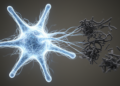
In Alzheimer’s disease and related tauopathies, microglia undergo a phenotypic transition from homeostatic surveillance to disease-associated microglia, a state characterized by aberrant synaptic pruning, persistent neuroinflammation, and cognitive decline. The neuronal CD47 and microglial SIRPα axis functions as a critical checkpoint that limits excessive phagocytosis by providing a “don’t eat me” signal.
Mechanistic analyses demonstrated that CD47 overexpression preserved homeostatic microglial features and prevented the transition toward a pro-inflammatory disease-associated profile marked by high Clec7a and low P2ry12 levels, thereby restraining pathological phagocytosis.
This microglial phenotypic shift was accompanied by attenuated signaling through the NLRP3 inflammasome pathway. The reduction in inflammasome signaling was reflected in lower Caspase-1 activation along with reduced levels of the cytokines IL-1β and IL-18.
To assess translational relevance, the authors analyzed cerebrospinal fluid biomarkers from the Alzheimer’s Disease Neuroimaging Initiative cohort. That analysis revealed that higher CD47 levels correlated inversely with microglial activation markers and positively with synaptic integrity proteins, supporting the therapeutic potential of reinforcing the CD47-SIRPα-NLRP3 axis against tau-driven neurodegeneration.
The study was authored by Wenjie Hu, Wei Shao, Haihua Guo, Ziqi Wang, Liang Yu, Letian Yin, Rui Sun, Hui Zhang, Hao Huang, Panpan Hu, Kai Wang, and Yin Xu. According to the research team, microglial cells in Alzheimer’s disease and related tauopathies undergo a transition from normal homeostatic surveillance toward a disease-associated microglia phenotype. This pathological state is characterized by persistent neuroinflammation, aberrant synaptic pruning, and progressive cognitive decline. To address this neurodegenerative progression, the researchers examined the neuronal CD47-microglial SIRPα signaling axis, which operates as a critical “don’t eat me” checkpoint that limits excessive cellular phagocytosis. The investigation builds directly on earlier findings demonstrating that neuronal CD47 protects synapses and limits disease-associated microglial activation.
In their experimental work using PS19 tau-transgenic mice carrying the Tau P301S mutation, the investigators delivered selective neuronal CD47 overexpression through an adeno-associated virus vector. This intervention successfully preserved synaptic integrity, attenuated tau hyperphosphorylation, and effectively ameliorated spatial learning and memory deficits. At the cellular level, elevating neuronal CD47 signaling prevented microglia from adopting the pro-inflammatory disease-associated profile defined by high Clec7a and low P2ry12 expression. By restraining this harmful phenotypic shift, the treatment maintained homeostatic microglial characteristics and restrained pathological phagocytosis.
Mechanistically, the research identified that this shift was accompanied by attenuated signaling through the NLRP3 inflammasome pathway. Suppression of inflammasome activity was reflected in reduced Caspase-1 activation along with lower levels of pro-inflammatory cytokines IL-1β and IL-18. Consistent with these mechanistic findings, the authors evaluated human cerebrospinal fluid biomarkers from the Alzheimer’s Disease Neuroimaging Initiative cohort. That analysis revealed that higher CD47 concentrations correlate inversely with microglial activation markers and positively with synaptic integrity proteins, reinforcing the translational relevance of the animal model.
Collectively, the findings indicate that reinforcing the CD47-SIRPα-NLRP3 axis preserves homeostatic microglial features and mitigates tau-driven neurodegeneration. The authors conclude that neuronal CD47 represents a promising therapeutic target for preserving synaptic density and cognitive function in Alzheimer’s disease and associated tauopathies. Published open access in the Journal of Neuroinflammation on 13 October 2026, this peer-reviewed study was shared early under a permanent digital object identifier ahead of its final Version of Record.
Subject of Research: Neuronal CD47 signaling and microglial synaptic pruning in tauopathy models
Article Title: Neuronal CD47 overexpression improves cognitive function in Tau P301S Mice by reducing microglial synaptic pruning and neuroinflammation
Article References: Hu, W., Shao, W., Guo, H., Wang, Z., Yu, L., Yin, L., Sun, R., Zhang, H., Huang, H., Hu, P., Wang, K., & Xu, Y. (2026). Neuronal CD47 overexpression improves cognitive function in Tau P301S Mice by reducing microglial synaptic pruning and neuroinflammation. Journal of Neuroinflammation. https://doi.org/10.1186/s12974-026-04086-6
Image Credits: AI Generated
DOI: 10.1186/s12974-026-04086-6
Keywords: CD47, SIRPα, microglia, synaptic pruning, neuroinflammation, tauopathy, Alzheimer's disease, PS19 mice, tau hyperphosphorylation, disease-associated microglia, NLRP3 inflammasome, Caspase-1, IL-1β, IL-18, Clec7a, P2ry12, ADNI cohort, adeno-associated virus
News Source: Cassandra Pierce. (November 20, 2026). Neuronal CD47 Overexpression Reduces Memory Deficits and Synaptic Loss in Mice. Scienmag.