Active bifrontal transcranial direct current stimulation selectively improves working memory performance in clinically stable outpatients diagnosed with schizophrenia, with no evidence that biological sex moderates the cognitive response, according to findings from a randomized, double-blind, sham-controlled clinical trial. The study demonstrated that while active direct current stimulation produced statistically significant gains in working memory relative to a sham control intervention, the treatment did not yield a statistically significant adjusted effect on overall neurocognition composite scores.
Cognitive impairment represents a core feature of schizophrenia and constitutes a major determinant of long-term functional outcomes for affected individuals. While transcranial direct current stimulation has demonstrated potential for cognitive enhancement in clinical populations, substantial variability in patient treatment responses remains an ongoing challenge. Researchers noted that biological sex may influence stimulation efficacy through distinct neuroanatomical and pharmacological mechanisms, although existing empirical evidence evaluating sex-related moderation of brain stimulation outcomes has historically remained limited.
To address this knowledge gap and investigate whether patient sex moderates cognitive outcomes following stimulation, investigators conducted a predefined secondary analysis of a randomized, double-blind, sham-controlled trial. The trial evaluated a clinical sample of 120 clinically stable outpatients diagnosed with schizophrenia, comprising 80 male patients and 40 female patients. The participants were assigned to undergo either an active bifrontal transcranial direct current stimulation protocol or an inactive sham procedure.
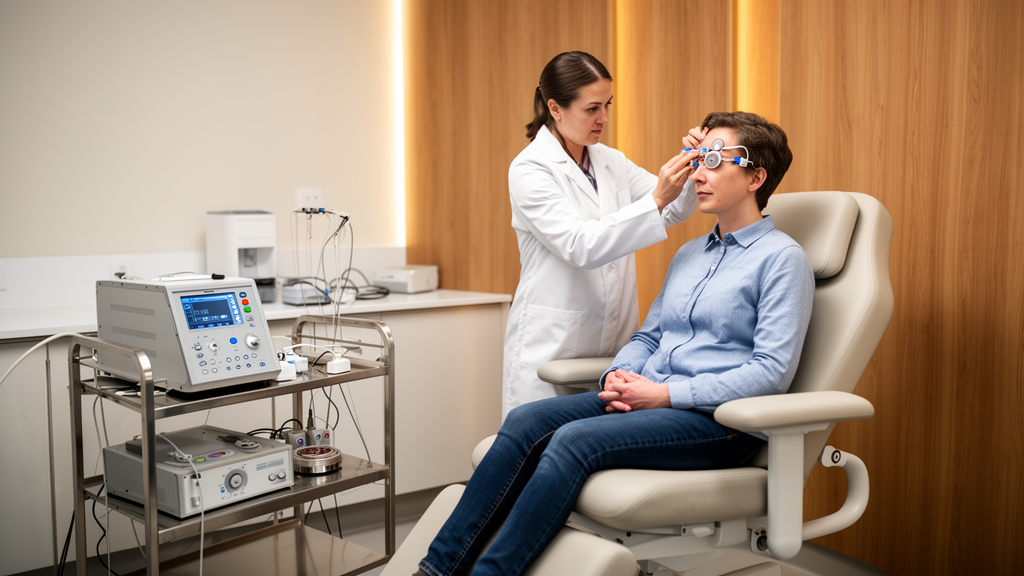
The therapeutic protocol administered active stimulation at a direct current intensity of 2 milliamperes, utilizing a bifrontal electrode montage with the anode positioned over site F3 and the cathode positioned over site F4. Each intervention session lasted for a duration of 20 minutes, delivered across 10 weekday sessions. Cognitive performance was evaluated pre- and post-intervention using the standardized MATRICS Consensus Cognitive Battery to quantify objective cognitive changes.
The trial established primary cognitive outcomes defined as the pre-to-post change in Working Memory and Neurocognition composite T-scores. To rigorously evaluate the trial data, the research team employed two-way analysis of covariance models testing the main effects of the intervention, participant sex, and the interaction between sex and the intervention. These statistical models systematically adjusted for key baseline covariates, including pre-treatment baseline cognitive scores, participant age, ongoing antipsychotic treatment, and chlorpromazine-equivalent dose calculations.
In the primary outcome analysis, active transcranial direct current stimulation generated significantly greater improvements in working memory scores than the sham control condition, yielding an ANCOVA F-statistic of 17.79, a p-value of less than 0.001, and a partial eta squared effect size of 0.14. The statistical models identified no significant main effect of biological sex and no significant interaction between sex and the stimulation intervention. In contrast to working memory, the adjusted effect of the intervention on the broader Neurocognition composite score did not reach statistical significance.
The investigators also evaluated Subjective Cognitive Improvement and examined its relationship with objective cognitive change using sex-stratified analyses, while exploring screening validity for clinically meaningful improvement. The findings demonstrated limited concordance between subjective cognitive perception and objective change, with subjective improvement correlating only modestly with working memory gains among men. Based on these observed outcomes, the authors concluded that bifrontal transcranial direct current stimulation selectively improves working memory in schizophrenia without evidence of sex-related moderation, supporting domain-targeted and precision-based neuromodulation strategies in psychiatric rehabilitation.
Subject of Research: Cognitive response to transcranial direct current stimulation in schizophrenia
Article Title: Sex-stratified cognitive response to transcranial direct current stimulation in schizophrenia: a randomized controlled trial
Article References: García-Fernández, L., Muñoz-Gualan, A. P., Romero-Ferreiro, V., Padilla, S., Moleón-Ruiz, Á., García, M. M.-B., Wynn, R., & Rodriguez-Jimenez, R. (2026). Sex-stratified cognitive response to transcranial direct current stimulation in schizophrenia: a randomized controlled trial. Journal of NeuroEngineering and Rehabilitation. https://doi.org/10.1186/s12984-026-02177-2
Image Credits: AI Generated
DOI: 10.1186/s12984-026-02177-2
Keywords: transcranial direct current stimulation, tDCS, schizophrenia, working memory, neurocognition, MATRICS Consensus Cognitive Battery, biological sex, randomized controlled trial, bifrontal stimulation, psychiatric rehabilitation, subjective cognitive improvement, cognitive impairment, neuromodulation, chlorpromazine equivalent, antipsychotic treatment, ANCOVA, sham-controlled trial
News Source: Cassandra Pierce. (November 20, 2026). Bifrontal Brain Stimulation Improves Working Memory in Schizophrenia Without Sex Differences. Scienmag.