

• HOME
  • NEWS
  • EXPLORE
    • CAREER
      • Companies
      • Jobs
    • EVENTS
    • iGEM
      • News
      • Team
    • PHOTOS
    • VIDEO
    • WIKI
  • BLOG
  • COMMUNITY
    • FACEBOOK
    • INSTAGRAM
    • TWITTER
Thursday, October 29, 2026
BIOENGINEER.ORG
No Result
View All Result
  • Login
  • HOME
  • NEWS
  • EXPLORE
    • CAREER
      • Companies
      • Jobs
        • Lecturer
        • PhD Studentship
        • Postdoc
        • Research Assistant
    • EVENTS
    • iGEM
      • News
      • Team
    • PHOTOS
    • VIDEO
    • WIKI
  • BLOG
  • COMMUNITY
    • FACEBOOK
    • INSTAGRAM
    • TWITTER
No Result
View All Result
Bioengineer.org
No Result
View All Result
Home NEWS Science News Biology

Neural Stem Cells May Rewire the Immune Response After Spinal Cord Injury

by
October 29, 2026
in Biology
Reading Time: 2 mins read
0
Neural Stem Cells May Rewire the Immune Response After Spinal Cord Injury

Neural Stem Cells May Rewire the Immune Response After Spinal Cord Injury

Share on FacebookShare on TwitterShare on LinkedinShare on RedditShare on Telegram

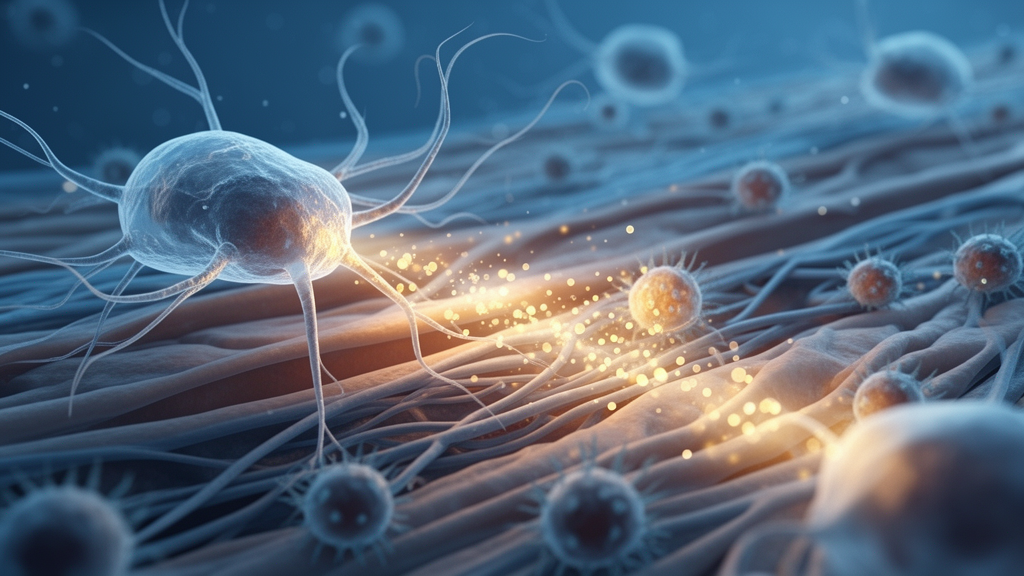
Spinal cord injury sets off a chronic neuroinflammatory cascade in which persistently activated M1 macrophages create a hostile microenvironment that inhibits axonal regeneration and drives secondary tissue damage. A review published in Molecular Biology Reports argues that neural stem cells (NSCs) offer a promising therapeutic strategy not primarily by replacing lost neurons, but by reshaping the inflammatory landscape through immunomodulation.

The review synthesizes evidence on the molecular mechanisms by which NSCs reprogram the immune response after injury. According to the authors, NSCs suppress TLR4/NF-κB signaling, shifting macrophages from a neurotoxic M1 phenotype toward a pro-regenerative M2 phenotype. The cells also engage in reciprocal dialogue with T cells and microglia, creating a neurogenic niche, and they secrete neurotrophic factors that upregulate KCC2 and restore GABAergic inhibition. In addition, NSCs modulate purinergic signaling, a mechanism the authors link to attenuation of neuropathic pain.

However, the review is candid about the limits of the evidence base. Most studies provide correlative rather than causal evidence, and the widely used M1/M2 framework does not fully capture macrophage heterogeneity after spinal cord injury. In the chronic phase in particular, foam cells, pro-fibrotic phenotypes, and disease-associated subpopulations emerge that the simple binary classification fails to describe.

On the question of when to transplant, the review notes that the subacute window is generally associated with superior outcomes, but that optimal timing varies with injury severity, the animal model used, cell source, transplantation route, and cell dose. This variability complicates efforts to draw uniform clinical guidelines from the existing literature.

Clinical translation remains at an early stage. Phase I trials have established feasibility and short-term safety, but the review emphasizes that most of these trials lacked control groups and adequate sample sizes, leaving key questions about efficacy unanswered.

The authors also caution against assuming that neural cell transplantation is inherently safe. Reported adverse effects include allodynia, tumorigenicity, and immune-related complications, underscoring the need for careful monitoring as the field moves forward.

Looking ahead, the review identifies several priorities for future progress: adequately powered clinical trials with objective endpoints, biomarker development, refined immunomodulation strategies, and systematic monitoring for adverse effects. Until such studies are completed, the therapeutic promise of NSC immunomodulation in spinal cord injury remains a hypothesis supported by early-stage and largely preclinical evidence.

Subject of Research: Immunomodulatory mechanisms of neural stem cell therapy in spinal cord injury

Article Title: Molecular Mechanisms of Immunomodulation by Neural Stem Cells in Spinal Cord Injury: From Macrophage Polarization to Therapeutic Plasticity

Article References: Gholami, A. A., babaloo, H., Rahmatov, K., Ward, A., Kubaev, A., Otajonov, I., Xaitov, A., & Moghadam, F. M. (2026). Molecular Mechanisms of Immunomodulation by Neural Stem Cells in Spinal Cord Injury: From Macrophage Polarization to Therapeutic Plasticity. Molecular Biology Reports, 53(1), Article 1827. https://doi.org/10.1007/s11033-026-13070-5

Image Credits: AI Generated

DOI: 10.1007/s11033-026-13070-5

Keywords: spinal cord injury, neural stem cells, macrophage polarization, neuroinflammation, M1/M2 macrophages, TLR4/NF-kB signaling, neurotrophic factors, neuropathic pain, clinical translation, phase I trials, Molecular, Mechanisms

News Source: Cassandra Pierce. (October 29, 2026). Neural Stem Cells May Rewire the Immune Response After Spinal Cord Injury. Scienmag.
Tags: Clinical TranslationM1/M2 macrophagesMacrophage polarizationmechanismsmolecularNeural Stem CellsNeuroinflammationneuropathic painneurotrophic factorsphase I trialsSpinal Cord InjuryTLR4/NF-kB signaling
Share12Tweet7Share2ShareShareShare1

Related Posts

LED Light and Methyl Jasmonate Boost Cepharanthine in Stephania Callus Cultures

LED Light and Methyl Jasmonate Boost Cepharanthine in Stephania Callus Cultures

October 29, 2026
Copper turns designer peptides into selective cancer-cell killers in lab tests

Copper turns designer peptides into selective cancer-cell killers in lab tests

October 29, 2026

Gaussian Process Model Learns Interpretable Graphs for Clinical Forecasting

October 29, 2026

Systematic Review Finds Dog Judgment Bias Tests Methodologically Fragile

October 29, 2026

POPULAR NEWS

  • Structured PLISSIT Counseling Improves Sexual Function in Middle-Aged Women, Trial Finds

    Structured PLISSIT Counseling Improves Sexual Function in Middle-Aged Women, Trial Finds

    29 shares
    Share 12 Tweet 7
  • CarbonBalance Framework Shifts AI Workloads to Cleaner Power, Cutting Simulated Emissions 41.6%

    29 shares
    Share 12 Tweet 7
  • Low Nutritional Risk Means Lower Remimazolam Doses for Sedation in Older Adults

    29 shares
    Share 12 Tweet 7
  • Rising seas could submerge a third of Amsterdam’s cycling network by 2100

    29 shares
    Share 12 Tweet 7

About

We bring you the latest biotechnology news from best research centers and universities around the world. Check our website.

Follow us

Recent News

LED Light and Methyl Jasmonate Boost Cepharanthine in Stephania Callus Cultures

Systematic Review Maps How Honey Compounds Might Complement Liver Cancer Therapy

New Simulation Framework Stress-Tests AI Traffic Signals Against Real-World Incidents

Subscribe to Blog via Email

Enter your email address to subscribe to this blog and receive notifications of new posts by email.

Join 85 other subscribers
  • Contact Us

Bioengineer.org © Copyright 2023 All Rights Reserved.

Welcome Back!

Login to your account below

Forgotten Password?

Retrieve your password

Please enter your username or email address to reset your password.

Log In
No Result
View All Result
  • Homepages
    • Home Page 1
    • Home Page 2
  • News
  • National
  • Business
  • Health
  • Lifestyle
  • Science

Bioengineer.org © Copyright 2023 All Rights Reserved.
