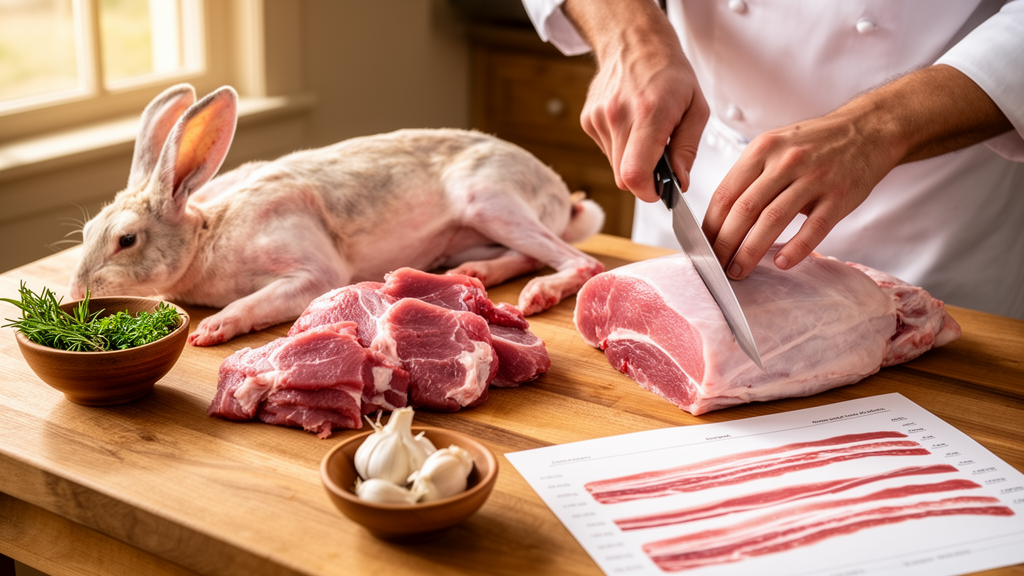
Crossbreeding between two rabbit breeds can reshape the molecular landscape of meat quality, according to a multi-omics study published in BMC Genomics that combined transcriptomics, metabolomics and volatile compound profiling to dissect how hybridization influences intramuscular fat deposition and flavor formation in the longissimus dorsi muscle.
The researchers, led by Xinyu Bo and Shuhui Wang, constructed reciprocal cross populations between the Rex and Hycole breeds, producing F1 progenies RH (Rex male × Hycole female) and HR (Hycole male × Rex female) and the derived F2 combinations RHHR and HRRH. Samples were collected at 75 and 165 days of age. The study addresses a known trade-off in rabbit production between growth efficiency and meat quality traits, since rabbit meat is a high-quality protein source with low fat and cholesterol content, and reciprocal crossing between the two breeds was chosen to integrate complementary genetic advantages.
Phenotypic evaluation showed that the RH F1 combination exhibited marked heterosis at 75 days, with higher intramuscular fat content, lower drip loss, greater pre-slaughter live weight and enriched volatile flavor profiles compared with the other combinations. In the F2 generation, most growth traits showed the typical decline in heterosis, but intramuscular fat content did not follow this segregation decline pattern, which the authors interpret as evidence of stable genetic regulation of lipid metabolism.
At the molecular level, weighted gene co-expression network analysis and differential expression analysis identified key genes including CALM1, ME3 and ASB14. According to the study, these genes coordinately regulate muscle growth, fat deposition and tenderness through calcium signaling, fatty acid synthesis and modulation of myofiber structure.
Metabolomic profiling added a chemical layer to the picture. The metabolite MG and eicosa-5,8,11,14-tetraenoic acid ester were positively correlated with both intramuscular fat content and pre-slaughter live weight, linking specific circulating muscle metabolites to the traits that matter most for producers and consumers alike.
Volatile compound analysis revealed upregulation of short-chain alcohols, the dipeptides Val-Leu and Cys-Leu, and the terpenoid Auraptene in the RH 75-day group. The authors report that these compounds can synergistically enhance meat flavor through the Maillard reaction and lipid oxidation, providing a mechanistic account of why the RH cross showed a richer flavor profile at the younger age.
The study’s conclusions position the identified genes and metabolites as potential targets for marker-assisted selection and molecular breeding strategies, aimed at developing new rabbit varieties that combine high growth efficiency with superior meat flavor. The authors frame this as a contribution to the sustainable development of the rabbit industry, since the work systematically elucidates the molecular mechanisms by which reciprocal cross breeding influences meat quality traits.
As with any genomics study of livestock populations, the findings are specific to the Rex × Hycole cross system and the ages and muscle sampled, and the identified genes and metabolites are described as potential breeding targets rather than validated selection markers. The article was published as an open-access paper on 29 October 2026, and the authors note that the early-shared version is subject to further edits before the final version of record.
Subject of Research: Multi-omics analysis of hybridization effects on intramuscular fat deposition and flavor formation in rabbits
Article Title: Multi-omics analysis of the regulatory mechanisms of hybridization on intramuscular fat deposition and flavor formation in rabbits
Article References: Bo, X., Ren, Z., Yang, M., Dong, X., Song, B., Sun, X., & Wang, S. (2026). Multi-omics analysis of the regulatory mechanisms of hybridization on intramuscular fat deposition and flavor formation in rabbits. BMC Genomics. https://doi.org/10.1186/s12864-026-13504-1
Image Credits: AI Generated
DOI: 10.1186/s12864-026-13504-1
Keywords: rabbits, crossbreeding, multi-omics, intramuscular fat, meat quality, transcriptomics, metabolomics, volatile compounds, heterosis, BMC Genomics, analysis, regulatory
News Source: Drew Townsend. (October 29, 2026). Multi-omics study maps how crossbreeding shapes fat and flavor in rabbit meat. Scienmag.