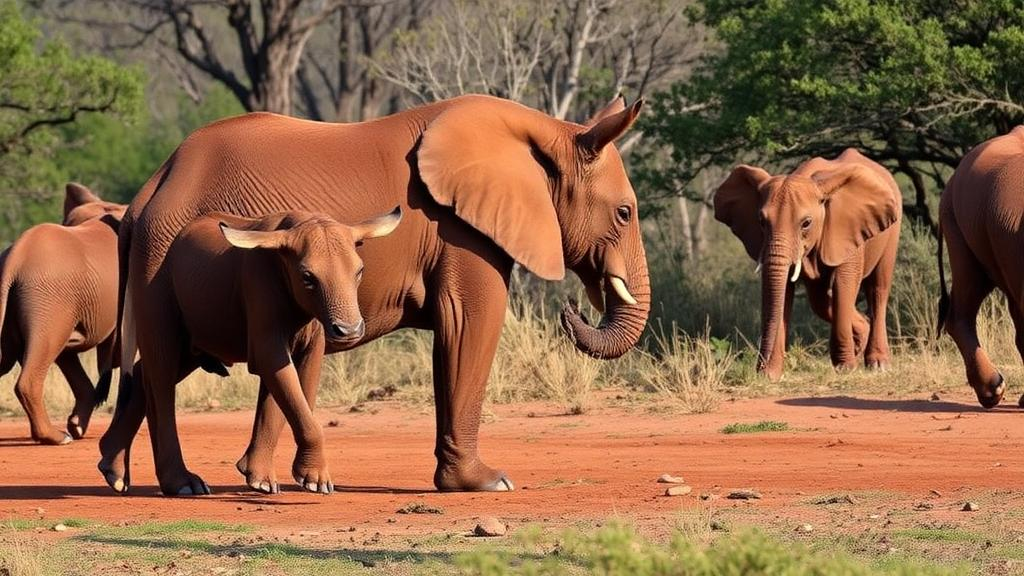
The gut microbes of wild mammals living side by side in South Africa’s Kruger National Park are shaped above all by what the animals eat, according to a new study of carnivores, non-ruminant herbivores and ruminant herbivores. The research, published in the journal Animal Microbiome, analysed faecal samples from coexisting species and found that microbial communities clustered strongly by dietary group, with smaller but still significant differences between species within the same group.
After quality filtering, 89 samples were included in the analysis: 31 from carnivores, 37 from non-ruminant herbivores and 21 from ruminants. When the researchers compared microbial communities across samples using weighted beta-diversity measures, dietary group emerged as the dominant structuring force, with a pseudo-F statistic of 27.76 and a p-value of 0.0001. A Random Forest machine-learning classifier was able to distinguish the three dietary groups with 93 percent accuracy, although six samples showed atypical clustering in the beta-diversity analyses.
Diversity patterns followed a clear hierarchy. Non-ruminant herbivores showed the highest alpha diversity, with a median Shannon index of 6.89 (interquartile range 6.53 to 7.08) and a median Faith’s phylogenetic diversity of 18.02 (interquartile range 15.25 to 20.43). Ruminants and carnivores followed, both significantly lower than non-ruminants, with p-values below 0.001. The authors suggest that the richer communities in non-ruminants likely reflect their diverse, less specialised hindgut fermentation.
Taxonomic profiling revealed group-specific microbial signatures. Both ruminant and non-ruminant herbivores carried high levels of fibre-degrading bacteria such as Rikenellaceae and Oscillospiraceae, while non-ruminants were additionally enriched in Spirochaetaceae and the p-251-o5 group, a pattern the study links to hindgut fermentation strategies.
Functional predictions reinforced these dietary divides. Using PICRUSt2 to infer metabolic pathways from the observed taxa, the researchers found carnivores enriched in amino acid biosynthesis and degradation pathways. Ruminants showed enrichment in branched amino acid and tryptophan biosynthesis, whereas non-ruminants were enriched in aerobic respiration, the TCA cycle and L-leucine degradation pathways.
Focal species comparisons added finer resolution. The analysis distinguished black from white rhinoceros, and spotted hyaena from other carnivores, a pattern consistent with diet-driven metabolic specialisation. Species-level differences were also evident at family and genus levels, and variable importance analyses identified the key taxa that best predicted group and species membership.
The study addresses a gap in microbiome research: the authors note that the gut microbiome plays a critical role in host health, yet its composition in African wild mammals remains underrepresented.
The authors conclude that diet strongly influenced gut microbiota composition and diversity, with herbivores exhibiting richer, more complex communities than carnivores. They present the findings as a foundation for future conservation and health monitoring in African ecosystems, offering baseline data on how microbial communities vary across feeding strategies in free-ranging wildlife.
Subject of Research: How dietary group shapes gut microbiome composition and diversity in sympatric wild mammals in Kruger National Park
Article Title: Dietary ecology structures gut microbiome assembly in sympatric wild mammals from Kruger National Park, South Africa
Article References: Green, S., Thongthum, T., Pietrucci, D., Chabuka, L., Villiers, S. D., Freese, L., Bassett, M., Singh, L., Loonat, T., Tshiabuila, D., Salemi, M., Chillemi, G., Baxter, C., Oliveira, T. D., Miller, M., Buss, P., Wilkinson, E., & Mavian, C. (2026). Dietary ecology structures gut microbiome assembly in sympatric wild mammals from Kruger National Park, South Africa. Animal Microbiome. https://doi.org/10.1186/s42523-026-00630-0
Image Credits: AI Generated
DOI: 10.1186/s42523-026-00630-0
Keywords: gut microbiome, wild mammals, Kruger National Park, dietary ecology, herbivores, carnivores, ruminants, hindgut fermentation, PICRUSt2, Random Forest, South Africa, Animal Microbiome
News Source: Daisy Hatcher. (October 30, 2026). Diet Shapes the Gut Microbes of Kruger’s Wild Mammals, Study Finds. Scienmag.