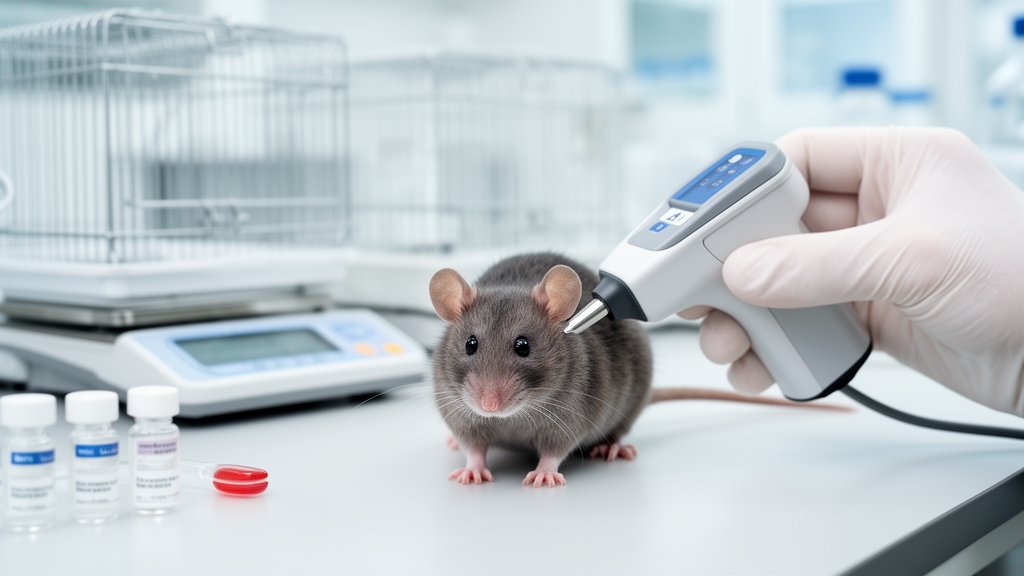
A systematic review of longevity experiments in mice proposes 12 candidate aging rate indicators, or ARIs, that could help researchers determine much sooner whether a drug or other intervention changes the pace of aging. The analysis, published in Frontiers in Science, draws on evidence from the US National Institute on Aging-supported Interventions Testing Program and suggests that ARIs may distinguish promising interventions without waiting the years or decades required to establish lifespan effects directly. The candidate indicators remain experimental and require validation in additional mammalian species and humans before they can support clinical use.
Unlike many assessments of biological age, which estimate how much age-related change has already accumulated and must be taken at least twice to show whether it has changed, an ARI is designed as a single measurement at a single age. Its proposed purpose is to indicate whether an intervention has shifted an animal into a slower-aging state. The reviewers identified molecular and physiological changes that distinguished control mice from slow-aging mice, providing the basis for candidates involving cap-independent translation; MEK1/ERK and MEK3/p38 signaling; mTORC1 activity; UCP1 levels in adipose tissue; the balance of inflammatory and anti-inflammatory macrophages in adipose tissue; FNDC5; irisin; GPLD1; brain-derived neurotrophic factor; doublecortin; and NF-κB p65. These are proposed pathways and molecular features, not established biomarkers for people.
The evidence base consisted of mouse studies in which drugs, calorie-restricted diets and single-gene mutations had significantly extended lifespan. The Interventions Testing Program had identified 14 agents or combinations that significantly extended mouse lifespan, including rapamycin, acarbose, rapamycin plus acarbose, 17α-estradiol, 16-hydroxyestradiol, canagliflozin, nordihydroguaiaretic acid and astaxanthin. Eight produced lifespan increases of 12% or more, and several were effective even when initiated in late adulthood. A central observation from the review was that many effective interventions appeared to produce overlapping molecular and physiological changes despite having different mechanisms. The authors propose that these shared patterns could help select drugs for further testing and identify new intervention families targeting a common biological state.
The proposed benefit is mainly faster and less expensive research. A full mouse lifespan study takes three to four years, while measurements of candidate ARIs could in principle provide an earlier readout. The authors estimate that, if ARIs reliably separate effective interventions from ineffective ones, mouse studies could be conducted around four times faster and at roughly one-twentieth of the cost. This is a projected research efficiency, not a demonstrated outcome. The review also identifies the need to test the robustness of individual candidates, find additional ARIs measurable in blood plasma, determine how different interventions influence them, and clarify their relationships with late-life diseases.
Translation to humans remains unresolved because the supporting findings come from mice. An ARI that appears to report an altered aging trajectory in an experimental animal may not behave similarly in people or other mammalian species. The authors also note the observation that several interventions that slowed aging in mice remained effective when started in later life, raising the possibility that therapies acting through related pathways could affect aging processes during middle age in people. That possibility has not been demonstrated in human trials, and the review does not establish that any candidate treatment benefits humans. If confirmed through further research, ARIs could provide a practical bridge between basic studies of aging and shorter trials of interventions intended to promote healthy lifespan.
Subject of Research: Candidate aging rate indicators for screening anti-aging interventions in mouse studies
Article Title: New way to assess pace of aging could accelerate anti-aging breakthroughs
Article References: New way to assess pace of aging could accelerate anti-aging breakthroughs. Original publication (Bibliographic details unavailable.)
Image Credits: AI Generated
DOI: Not provided
Keywords: aging rate indicators, anti-aging interventions, mouse longevity, drug screening, systematic review, biomarkers, rapamycin, calorie restriction, healthy lifespan, mammalian validation, assess, pace
News Source: Beatrice Stafford. (October 26, 2026). Mouse aging-rate indicators could speed anti-aging drug screening. Scienmag.