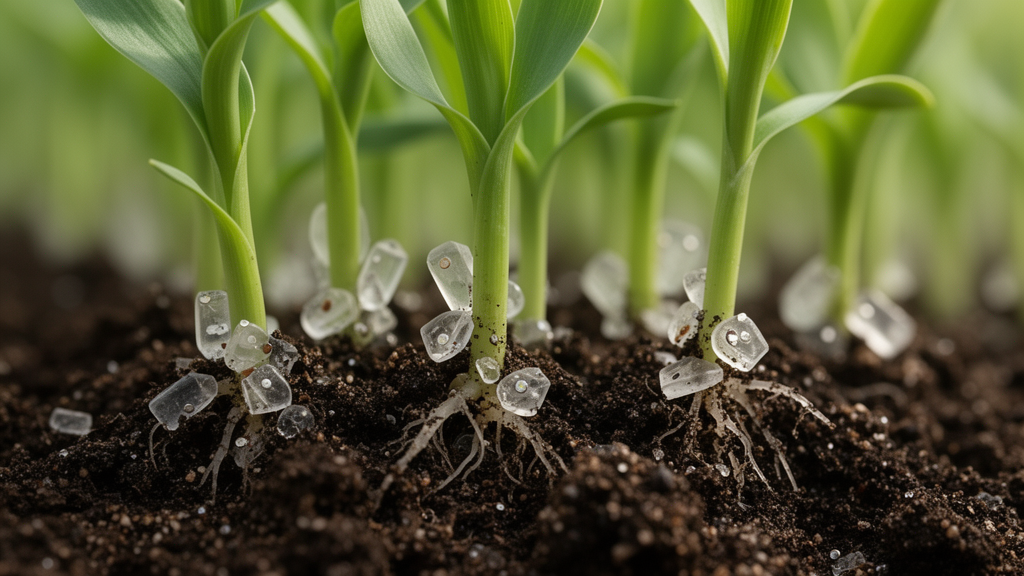
Deep beneath the surface of agricultural fields surrounding nuclear power plants, an invisible alliance is forming between two of the most persistent pollutants of our time. Heavy metals such as uranium, cadmium, mercury, cobalt, indium, and germanium, which are routinely used in reactor cores, control rods, neutron monitors, semiconductor detectors, and medical irradiation facilities, are discharged as nuclear waste into adjacent farmlands and water bodies. Now, a comprehensive review published in the journal Crop Health reveals that these rare heavy metals do not travel alone. They piggyback on microplastics, plastic fragments smaller than five millimeters that nuclear facilities also release in significant quantities, and together the two pollutants act as a combined threat to food crops, food safety, and human health.
The scale of the problem is striking. According to a 2022 U.S. Department of Energy report, nuclear power plants generate almost 2,000 metric tons of spent fuel every year. A recent investigation of 20 sites near a nuclear power plant in Northeast China found a tenfold higher abundance of microplastics in soil sediments compared with distant areas, directly verifying extensive release of plastic waste from newly constructed facilities. Groundwater used for irrigation around the Rooppur nuclear power plant in Bangladesh has been severely polluted with rare heavy metals and radionuclides of cesium, radium, and potassium, while co-contamination of nuclear waste containing heavy metals has been confirmed in water sources of Northwest Nigeria. Since any crop can be cultivated near reactors, with corn and soybean dominating across the Midwestern United States, the co-occurrence of microplastics and heavy metals in adjacent agricultural fields is a regular occurrence rather than an exception.
The physicochemical chemistry behind this alliance is what makes it so dangerous. Heavy metals adhere to microplastic surfaces through electrostatic forces between charged metal ions and the plastic surface, and also via surface complexation, pi-pi interactions, and hydrogen bonding, enhanced by oxygen-containing functional groups that develop as plastics weather. Polyamide microplastics exhibited extraordinarily strong adsorption with uranium, with an adsorption partition coefficient as high as 2,670 liters per kilogram. Alarmingly, the highest adsorption efficiency of radioactive uranium and americium-241 with plastics like polyurethane and polylactic acid occurred at neutral or near-alkaline pH, which closely resembles the conditions of soil and water bodies. In red soils polluted with polyvinyl chloride microplastics, the bioavailability of mercury significantly increased due to reduction of the metal within the soil. Researchers describe microplastics emanating from nuclear facilities as a Trojan horse for heavy metal co-toxicity in surrounding agricultural fields.
Once deposited in the rhizosphere, both pollutants find their way into crops through distinct but equally efficient routes. Microplastics smaller than 100 nanometers are readily taken up by plants, whereas larger fragments adhere to the outer surface of roots and release their piggybacked metals there. Polystyrene and polymethyl methacrylate particles are absorbed by root hairs and enter through the crack-entry route at the emergence of adjacent roots, becoming localized in the stellar regions of crops like lettuce and wheat. Polystyrene particles have even been translocated to the aerial biomass of rice, a staple food crop. Heavy metals, meanwhile, are actively imported into root cells via transporters that normally mediate the uptake of beneficial micronutrients. Uranium is transported through iron-regulated transporter 1 and ferric-chelate reductase 2, moving as uranyl-citrate or uranyl-lactate chelates driven by transpiration pull. Mercury is actively transported through calcium, copper, or zinc channels after being reduced to its elemental form, while cadmium enters via natural resistance-associated macrophage proteins, heavy metal ATPases, ATP-binding cassette transporters, and cation/hydrogen exchangers.
The molecular consequences inside plant cells are severe. Bioaccumulation of both pollutant classes triggers overproduction of reactive oxygen species, including superoxide radicals, hydrogen peroxide, and hydroxyl radicals, which impose cellular oxidative stress, lipid peroxidation of cell membranes, leakage of crucial ions and electrolytes, and DNA damage including double-strand breakages. Exposure to uranium reduced biomass and growth rates in broad bean, radish, cabbage, spinach, garden peas, and sweet potato, largely due to reduced photosystem II efficiency and the formation of malondialdehyde. Mercury toxicity in rice is particularly insidious: methylated mercury forms a complex with cysteine and translocates to the endosperm of grains, meaning it cannot be removed by seed polishing as inorganic mercury can. Indium stress profoundly activated programmed cell death in wheat roots by promoting DNA fragmentation, and it also inhibits phosphate transporters, triggering nutrient deficiency alongside oxidative stress. Polystyrene microplastics alone jeopardized crucial metabolic pathways pertaining to amino acid, fatty acid, nucleic acid, and secondary metabolite biosynthesis in rice, directly explaining reduced energy expenditure and wilting of seedlings.
Co-exposure to both pollutants further potentiates the physiological deterioration. The abundance of microplastics affects the physicochemical properties of heavy metals and reduces their soil adsorption capacity, resulting in increased bioavailability to plant roots. Polyethylene and polystyrene microplastics triggered cadmium bioaccumulation in maize and wheat seedlings respectively, leading to cophytotoxicity and reduced productivity, depicted by reduced stem diameter and root elongation in strawberry seedlings co-exposed to microplastics and cadmium. Polyvinyl chloride particles and methylmercury together affected iron and sulfate uptake and nutrition in rice fields, while cadmium-polluted soils contaminated with polyester microfibers decreased amino acid, sugar alcohol, carbohydrate, and nitrogen metabolism in plants grown in them. In human adenocarcinoma cell lines, nontoxic concentrations of polystyrene microplastics became highly toxic in the presence of heavy metals due to mutual adsorption, enhancing the detrimental effect manifolds through reversed cell membrane fluidity, compromised cytoskeletal integrity, and inhibited ABC transporter activity mediated by altered mitochondrial depolarization and ATP synthesis.
Plants are not entirely defenseless. In response to heavy metal stress, crops activate multiple phytohormonal signaling pathways. Cadmium toxicity induced the expression of abscisic acid-regulated genes involved in antioxidant synthesis and polyamine biosynthesis in rice seedlings, and exogenous ABA supplementation reduced mercury-mediated oxidative injuries in wheat by strengthening root cell walls and activating antioxidative enzymes. The gasotransmitter nitric oxide acts downstream of reactive oxygen species signaling, and application of sodium nitroprusside alleviated uranium toxicity, reduced hydrogen peroxide production, and improved seedling growth. Overexpression of nitric oxide synthase in rice downregulated genes encoding cadmium transporters, resulting in reduced uptake and enhanced tolerance in transgenic lines. Melatonin enhanced cadmium tolerance in radish seedlings via differential regulation of 14 microRNAs and activation of the antioxidant machinery, while gibberellic acid promoted cadmium tolerance in chickpea, rice, and mung bean by activating the ascorbate-glutathione cycle and glyoxalases.
For remediation, the review proposes a tiered decision framework that begins with hyperspectral imaging-based remote sensing to identify the degree of pollution caused by both microplastics and heavy metals in agricultural soils and water bodies. Cadmium levels in soil can be detected using infrared, near-infrared, and far-infrared imaging, while mercury is best identified in the 1140 to 1200 nanometer region. When contamination is low, conservative agronomic interventions like no-tillage practices, organic amendments, and crop rotation may suffice. When contamination is moderate, phytoremediation using hyperaccumulator plant species supported by rhizospheric microbes can reduce soil metal loads while maintaining agroecosystem function. When contamination is high, particularly in areas proximal to nuclear facilities where persistent microplastic-heavy metal complexes pose long-term risks to food safety, targeted interventions including controlled deployment of transgenic crops with reduced heavy metal uptake are recommended, accompanied by strict regulatory oversight.
Bioremediation offers some of the most promising tools for depolluting what researchers call the agro-plasticosphere. Multiple Bacillus strains have been found to degrade polypropylene, polystyrene, and polyethylene terephthalate with efficiencies ranging between 1.6 and 10.7 percent, while Pseudomonas aeruginosa degraded high-density polyethylene by 20 percent. Fungi including Aspergillus niger, Penicillium chrysogenum, and Phanerochaete chrysosporium release extracellular multi-enzyme complexes capable of degrading polyethylene into carbon dioxide, water, and methane. Biotechnological advances include an improved version of cutinase capable of hydrolyzing polyethylene terephthalate within 6.2 hours compared with 41.8 hours by the nonmodified enzyme, and an engineered capture-and-release system in Pseudomonas aeruginosa that binds polyvinyl chloride particles like an adhesive and releases them only under arabinose-mediated induction. Transgenic strategies have also generated crop tolerance against specific heavy metals, including tobacco overexpressing uranyl reductase from Desulfovibrio vulgaris, which ensured normal phenotypic growth even in the presence of uranyl ions, and Arabidopsis overexpressing mercuric transporter genes from Pseudomonas alcaligenes, which increased mercury tolerance through enhanced antioxidant activity.
The stakes extend far beyond the farm gate. Bioaccumulation of microplastics and heavy metals in edible plant tissues increases the risk of xenobiotic biomagnification and dietary exposure, aggravating physiological anomalies in humans and grazing ruminants. Ingestion of radioactive uranium through polluted food triggers ionizing radiation throughout the body, targeting cardiac substructures and leading to cardiovascular and cerebrovascular syndromes, while chronic exposure to alpha-particles can promote kidney, liver, and lung damage, bone degeneration, and cancers. Enhanced accumulation of polyethylene microplastics, nickel, and copper has been observed in the tissues of earthworms feeding in copolluted soils, providing a predictive insight into the calamitous consequences throughout the food web. The review emphasizes the need for intricate pangenomic studies involving genomics, transcriptomics, proteomics, and metabolomics in crops grown in the vicinity of nuclear facilities so that the synergistic toxic effect of microplastics and multiple rare heavy metals can be monitored at the molecular level, and it calls for screening hyperaccumulator species capable of removing more than one type of heavy metal along with microplastics in contaminated areas surrounding nuclear power plants.
Subject of Research: Environmental Science
Article Title: Deliberations on the microplastic-guided rare heavy metal toxicity in agricultural crops grown around nuclear reactors: molecular regulation and strategies for remediation
Article References: Banerjee, A. (2026). Deliberations on the microplastic-guided rare heavy metal toxicity in agricultural crops grown around nuclear reactors: molecular regulation and strategies for remediation. Crop Health, 4(1), Article 4. https://doi.org/10.1007/s44297-026-00066-7
Image Credits: AI Generated
DOI: 10.1007/s44297-026-00066-7
Keywords: microplastics, heavy metals, nuclear power plants, agriculture, phytoremediation, food safety, uranium, cadmium, mercury, bioremediation, Deliberations, microplastic-guided
News Source: Alan Morgan. (October 15, 2026). Microplastics Act as Trojan Horses for Rare Heavy Metals from Nuclear Reactors in Crops. Scienmag.