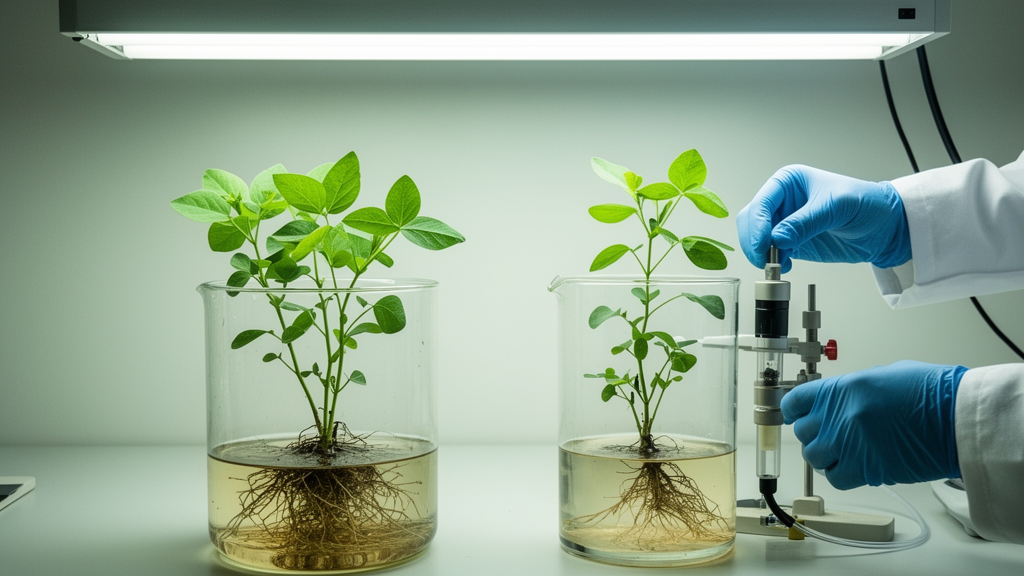
Melatonin treatment significantly improved the tolerance of Tartary buckwheat to cadmium toxicity in a study combining hydroponic and pot experiments with transcriptome analysis. Researchers exposed plants to 50 μM cadmium chloride in hydroponic culture and applied 100 μM melatonin in soil. Cadmium reduced root and shoot growth, but the combination of cadmium and melatonin largely reversed that inhibition.
In the pot experiment, melatonin also alleviated cadmium-induced growth suppression and reduced cadmium accumulation in plant tissues at both the seedling and mature stages. The reported findings link this protection with reduced cadmium movement from roots to shoots, stronger antioxidant defenses, improved cellular redox balance, and changes in the expression of genes involved in phenylpropanoid synthesis, heat-shock responses and transcription factors. Melatonin reduced malondialdehyde accumulation by 28%–33%, superoxide anion by 9%–39% and hydrogen peroxide by 29%–44% in roots and shoots.
At the same time, the treatment increased the activities of superoxide dismutase and peroxidase and raised concentrations of glutathione by 11%–15% and ascorbic acid by 11%–69%. Endogenous melatonin concentrations also increased. These physiological and biochemical changes were associated with lower oxidative stress, maintained plant biomass and reduced cadmium toxicity under the experimental conditions.
Gene-expression measurements provided additional evidence for the response to combined cadmium and melatonin treatment. Expression of FtGST1 and FtPCS1 increased; the study notes that these genes have been associated with combating cadmium toxicity in other species. By contrast, FtHMA2, a heavy-metal transporter whose expression was induced by cadmium, was unchanged in the cadmium-plus-melatonin treatment.
This expression pattern was associated with reduced cadmium transport from roots to shoots. In the soil-based pot experiment, melatonin reduced cadmium accumulation in different tissues by 66%–75% at the seedling stage and by 0.9%–57% at the mature stage, while also increasing the crop’s quercetin content. The mature-stage range shows that the size of the reduction varied substantially among the measured tissues or samples.
A full transcriptomic analysis showed that cadmium plus melatonin significantly altered the expression of genes associated with several stress-response systems. These included genes involved in redox regulation, phenylpropanoid synthesis and heavy-metal transport, as well as heat-shock proteins and transcription factors from the WRKY, Dof and AP/ERF families. The transcriptional changes fit the physiological observations: antioxidant enzyme activity and antioxidant compound concentrations increased, oxidative-damage indicators declined, tissue cadmium accumulation fell, and quercetin content rose.
Taken together, the experiments support a multi-part mechanism in which melatonin is associated with lower cadmium uptake, strengthened antioxidant defense and altered gene expression that helps maintain cellular function and growth under cadmium stress. The study was conducted in controlled hydroponic and pot systems with specific cadmium and melatonin treatments, and its conclusions concern Tartary buckwheat under those conditions. The authors describe the work as providing a mechanistic basis for genetic or agronomic strategies intended to improve the cultivation of this crop on cadmium-contaminated soils.
Whether the same magnitude of protection occurs across different soils, environmental conditions or field production systems remains a question for further testing. The results nevertheless demonstrate how melatonin treatment can improve the measured growth, biochemical and gene-expression responses of cadmium-exposed Tartary buckwheat, while identifying redox regulation and phenylpropanoid biosynthesis as important components of the response.
Subject of Research: Melatonin-mediated cadmium tolerance in Tartary buckwheat
Article Title: Melatonin enhances cadmium tolerance in Tartary buckwheat by regulating phenylpropane biosynthesis and redox gene expression
Article References: Du, H., Dong, L., Wen, C., Liu, H., Wei, C., Yi, Y., Tan, L., Yu, Q., Li, S., Ryan, P. R., Wu, D., & Wang, A. (2026). Melatonin enhances cadmium tolerance in Tartary buckwheat by regulating phenylpropane biosynthesis and redox gene expression. BMC Plant Biology. https://doi.org/10.1186/s12870-026-09901-z
Image Credits: AI Generated
DOI: 10.1186/s12870-026-09901-z
Keywords: Tartary buckwheat, melatonin, cadmium toxicity, plant stress, hydroponic experiment, pot experiment, antioxidant defense, redox regulation, phenylpropanoid synthesis, heavy-metal transport, transcriptomics, enhances
News Source: Juliet Wilcox. (October 26, 2026). Melatonin helps Tartary buckwheat tolerate cadmium stress in controlled experiments. Scienmag.