Rice University researchers have developed a laboratory method for adding a carbon group to a carbon-carbon double bond using iron, sulfur, purple light and inexpensive carboxylic acids. The reaction, reported in the peer-reviewed journal Nature Catalysis as anti-Markovnikov alkene hydroalkylation via iron photocatalysis, extends an earlier approach that was mainly suited to adding building blocks containing highly reactive elements such as fluorine. The study concerns a chemical transformation rather than a demonstrated manufacturing process, therapeutic application or clinical treatment.
Organic synthesis often involves modifying carbon bonds, including the bonds found in medicinal compounds. Julian West, an assistant professor of chemistry at Rice University and corresponding author of the study, has been developing an iron-, sulfur- and light-based system for using inexpensive, readily available building blocks to construct and modify organic molecules. His team’s earlier system could add fluorine-containing groups to alkenes, which are molecules or molecular groups containing a carbon-carbon double bond. The new work addresses the more difficult task of attaching a carbon group to that double bond.
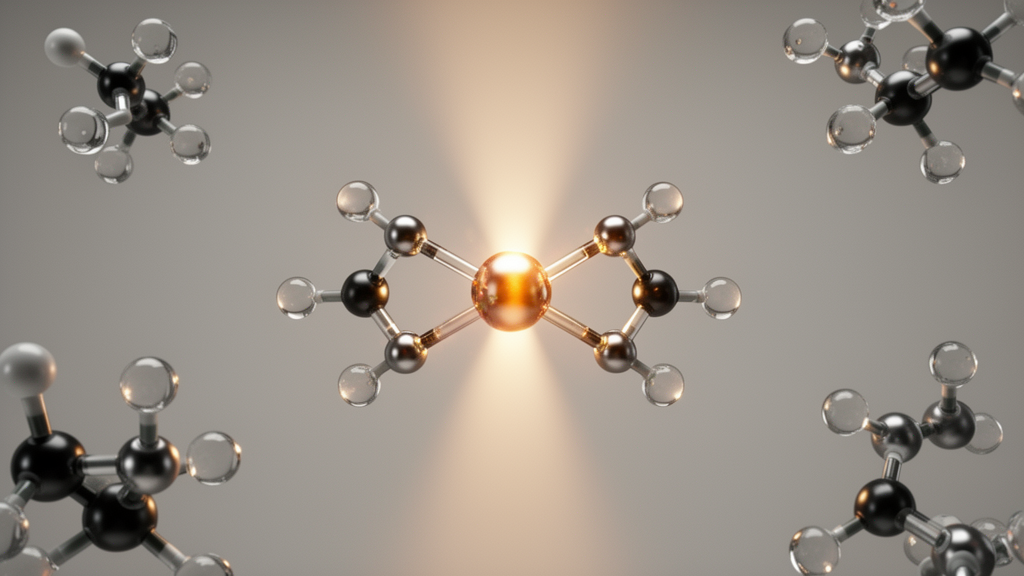
The difficulty arose from the different electronic behavior of carbon and elements such as fluorine. Fluorine strongly attracts shared electrons, giving it a partial negative charge when bonded to another element. West’s team had used that charge to form carbon bonds through the iron-, sulfur- and purple-light system. Carbon, in contrast, shares electrons readily and is comparatively stable, so it could not be manipulated in the same way to attach it to an alkene. “We realized we couldn’t manipulate the carbons when they were nicely sharing electrons,” said Shih-Chieh Kao, a Rice doctoral alumnus and co-first author. “But then we thought, what if we could, just temporarily, make a carbon behave like a fluorine?”
The researchers found a way to create that temporary change with two carboxylic acids, a class of compounds that includes vinegar. The acids induced the carbon-bearing compound to behave more like a reactive, electron-attracting element during the reaction, allowing the researchers to use a small change in the color of the light to connect the carbon group to a selected carbon-carbon double bond. “Then once the reaction is finished, we can wash it away and the carbon returns to its normal state,” said co-first author Kang-Jie Bian. The approach uses widely available reagents and, according to the researchers, produces only a small amount of carbon dioxide as waste. They describe the process as inexpensive and environmentally friendly, although the supplied report does not quantify reaction yields, energy use, solvent requirements, scale-up performance or life-cycle impacts.
Traditional approaches to adding carbon groups to alkenes commonly use rare-earth metals such as palladium, which the researchers describe as environmentally and financially costly. The new method instead relies on iron, sulfur, purple light and carboxylic acids. By demonstrating carbon-carbon bond formation with this system, the study expands the range of reactions accessible to West’s laboratory’s approach and offers a way to build organic molecules using less costly components. West said the method could support the construction and testing of entirely new molecules, including compounds that might be evaluated in future medicine-related research; the study itself did not report drug-discovery outcomes or clinical benefits.
Subject of Research: Iron photocatalysis for carbon-carbon bond formation in alkene hydroalkylation
Article Title: Researchers develop inexpensive, fast and environmentally friendly method for organic synthesis
Article References: Researchers develop inexpensive, fast and environmentally friendly method for organic synthesis. Original publication (Bibliographic details unavailable.)
Image Credits: AI Generated
DOI: Not provided
Keywords: iron photocatalysis, alkene hydroalkylation, carbon-carbon bonds, organic synthesis, carboxylic acids, purple light, anti-Markovnikov reaction, Nature Catalysis, palladium alternatives, Researchers, develop, inexpensive
News Source: Bethany Barker. (October 26, 2026). Iron photocatalysis enables carbon-carbon bond formation. Scienmag.