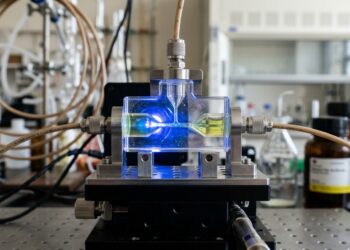
Enzyme Redesign Turns Photochemistry Into a Route to Chiral Phosphorus Compounds
A repurposed imine reductase uses photoexcited NADP+ to generate P-centred radicals and forge chiral carbon–phosphorus bonds with divergent stereocontrol.
A repurposed imine reductase uses photoexcited NADP+ to generate P-centred radicals and forge chiral carbon–phosphorus bonds with divergent stereocontrol.
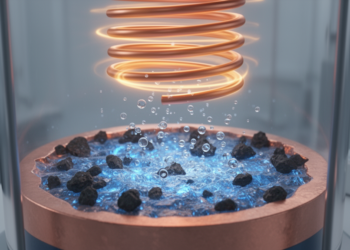
An alternating magnetic field locally heats ferromagnetic high-entropy alloy catalysts, suppressing carbonate precipitation and extending CO2 electroreduction durability beyond 200 ...
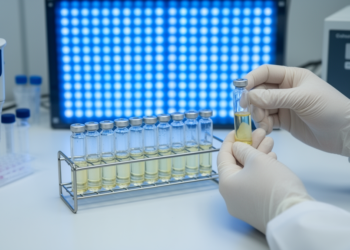
Chemists and enzymologists have long relied on mechanism-guided design to create new enzymatic reactions, but a team writing in Nature ...
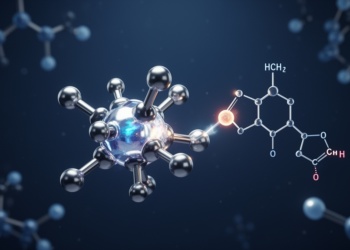
An iridium catalytic system using multiple noncovalent interactions enables para-C–H activation and borylation of free aromatic carboxylic acids without directing ...
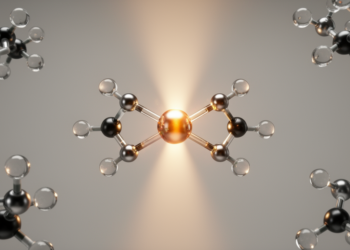
Rice University researchers used iron, sulfur, purple light and carboxylic acids to enable carbon-carbon bond formation through anti-Markovnikov alkene hydroalkylation.

Researchers at the Institute of Science and Technology Austria have developed a light-activated nickel catalyst that forms a wide range ...
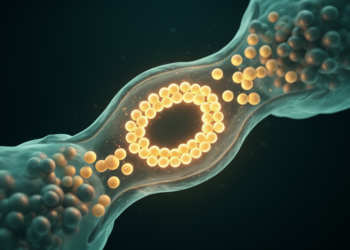
Using X-ray free-electron lasers, Oxford-led researchers have captured a frame-by-frame molecular movie revealing the previously unseen intermediates through which the ...
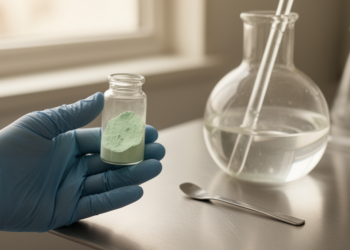
A rationally designed bipyridine ligand and a non-nucleophilic guanidine additive enable visible-light-driven nickel catalysis to couple aryl bromides with diverse ...