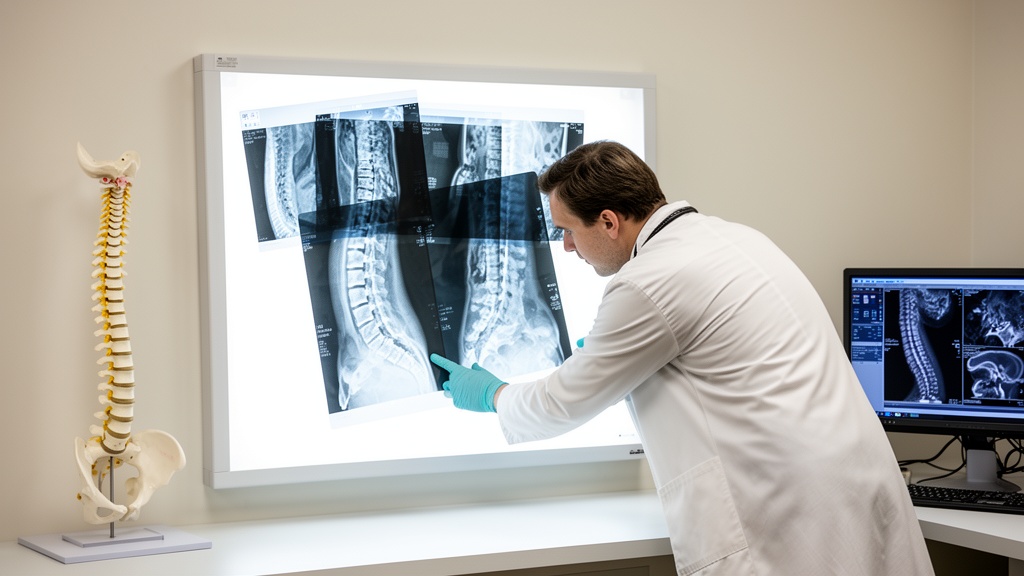
Lumbar lordosis showed the clearest cross-sectional association with age among the sagittal spinopelvic parameters measured in 344 children and adolescents undergoing standing full-spine radiography at a single tertiary orthopedic center in Turkey. The retrospective study found no statistically significant age-group differences for the T4 pelvic angle or L1 pelvic angle.
The participants were aged 6 to 17 years and included 186 boys and 158 girls. All underwent clinically indicated standing radiography. Researchers assessed pelvic incidence, pelvic tilt, sacral slope, lumbar lordosis, thoracic kyphosis and sagittal vertical axis. They also measured tilt at the cervical vertebra C2, thoracic vertebra T4 and lumbar vertebra L1, together with the T4 pelvic angle and L1 pelvic angle.
Mean pelvic incidence was 45.4 degrees, with a standard deviation of 12.3 degrees. Pelvic tilt averaged 11.3 degrees, with a standard deviation of 6.9 degrees, while sacral slope averaged 34.2 degrees, with a standard deviation of 10.4 degrees. In the spinal measurements, lumbar lordosis had a mean of 57.5 degrees and thoracic kyphosis had a mean of 46.0 degrees. Their standard deviations were 13.8 and 13.4 degrees, respectively.
The mean sagittal vertical axis was 46.6 millimetres, with a standard deviation of 27.6 millimetres. Mean C2 tilt was 5.0 degrees, with a standard deviation of 2.9 degrees; mean T4 tilt was 10.4 degrees, with a standard deviation of 4.6 degrees; and mean L1 tilt was 9.0 degrees, with a standard deviation of 4.7 degrees. The T4 pelvic angle averaged 4.1 degrees, with a standard deviation of 3.1 degrees, while the L1 pelvic angle averaged 3.4 degrees, with a standard deviation of 3.1 degrees.
Age-group comparisons and linear models adjusted for age and sex were used to evaluate the measured parameters. Lumbar lordosis produced the largest adjusted age coefficient in these models: 1.81 degrees per year, with a 95% confidence interval from 1.28 to 2.34 degrees. The adjusted R² for this model was 0.121. This estimate represents an association between age and lumbar lordosis across the study population, not a measured within-child rate of change.
By contrast, the T4 pelvic angle and L1 pelvic angle did not differ significantly across age groups, with reported P values of 0.308 and 0.966, respectively. The study therefore detected no age-group difference for either measure in its analysis. The result does not establish that either parameter remains unchanged throughout growth, because the investigators did not follow the same participants longitudinally.
The findings are intended as reference data for clinically relevant standing-radiograph measurements in children and adolescents without radiographic spinal or pelvic deformity. By reporting both central values and variability across a wide age range, the study offers a snapshot of sagittal alignment measures in a hospital population rather than universal targets for every child or adolescent.
Several features limit the conclusions. The research was retrospective and cross-sectional, and all participants were assessed at one tertiary orthopedic center in Turkey. The sample consisted of children who had undergone clinically indicated radiography, and the findings do not establish how the measurements changed within individual participants as they grew. The cross-sectional age coefficient for lumbar lordosis should therefore not be interpreted as a direct longitudinal growth trajectory.
Within those limits, the study identifies lumbar lordosis as the measured sagittal spinopelvic parameter with the clearest statistical association with age in the cohort. It also reports no statistically significant age-group differences for the T4 and L1 pelvic angles, adding detailed reference measurements for evaluating standing spinal radiographs during childhood and adolescence.
Subject of Research: Age associations with sagittal spinopelvic alignment in children and adolescents
Article Title: Sagittal spinopelvic parameters in children and adolescents: a retrospective cross-sectional radiographic study from Turkey
Article References: Dursun, M. A., Kaya, S., Karabak, B., & Kocaslan, M. (2026). Sagittal spinopelvic parameters in children and adolescents: a retrospective cross-sectional radiographic study from Turkey. Pediatric Radiology. https://doi.org/10.1007/s00247-026-06815-8
Image Credits: AI Generated
DOI: 10.1007/s00247-026-06815-8
Keywords: pediatric spine, sagittal alignment, lumbar lordosis, pelvic incidence, standing radiography, children, adolescents, cross-sectional study, orthopedics, Sagittal, spinopelvic, parameters
News Source: Harold Sullivan. (October 20, 2026). Lumbar lordosis shows clearest age association in Turkish pediatric radiograph study. Scienmag.