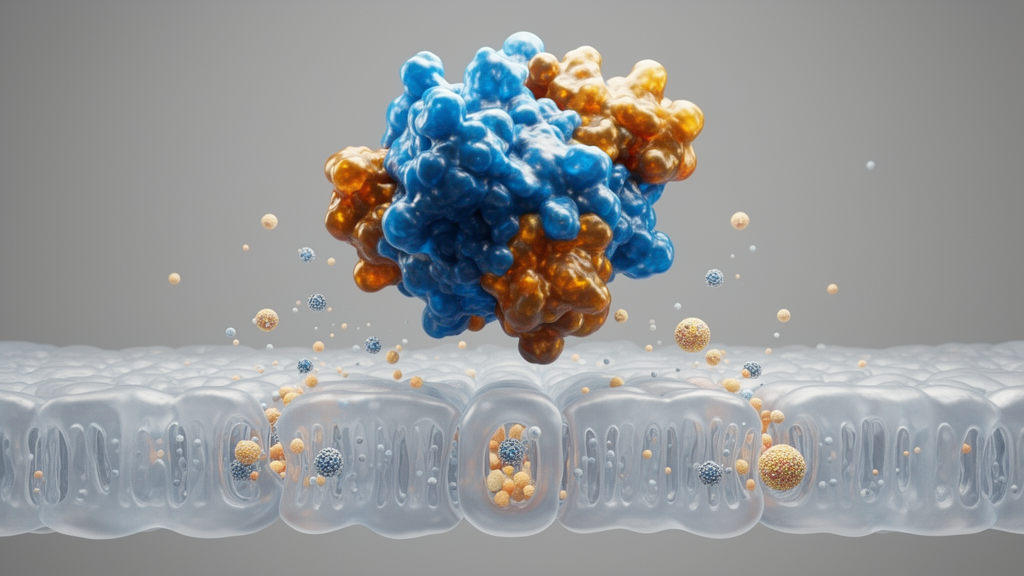
Large molecule therapeutics, including monoclonal antibodies, recombinant proteins, and nucleic acids, have transformed the treatment of complex diseases such as autoimmune disorders, cancers, and genetic disorders. A mini-review published in AAPS Open examines why these powerful drugs still struggle to reach patients efficiently, and how advances in formulation science and delivery devices are reshaping care around the patient rather than the clinic.
The core problem is physical. The large size, structural complexity, and inherent biological instability of these molecules create significant barriers to effective delivery, which frequently necessitates invasive parenteral administration through intravenous, subcutaneous, or intramuscular routes. While effective, these traditional routes often require frequent healthcare visits, limiting accessibility, increasing the risk of administration errors, and affecting patient adherence.
Recent advancements in formulation science and drug delivery device technologies are enabling what the review describes as a paradigm shift toward patient-centric care. Technologies such as prefilled syringes, autoinjectors, wearable injectors, transdermal patches, and smart delivery systems facilitate self-administration and home-based treatment, offering improved dose accuracy, greater convenience, and enhanced patient adherence.
Beyond familiar devices, progress in formulation science, nanotechnology, innovative device technologies, and digital health is pioneering new minimally to non-invasive and direct delivery routes, including pulmonary, transdermal, ophthalmic, and neurological approaches. Emerging trends like smart devices and sustainable practices are redefining therapeutic strategies with an emphasis on effectiveness, accessibility, and personalized care.
The review highlights clear operational trade-offs across modern delivery modalities. Formulation approaches, such as rHuPH20 co-formulation or viscosity-reducing amino acid excipients, offer rapid pathways to market, lower regulatory friction, and high commercial feasibility because they avoid the dual-component manufacturing challenges inherent to mechanical hardware. Device approaches, such as high-volume wearable injectors, introduce substantial regulatory complexity and higher manufacturing costs, yet they offer strong capability in automating home-based self-administration.
Choosing between these strategies involves balancing clinical maturity against patient burden. According to the review, formulation modifications excel at reducing immediate training requirements and acute injection pain, while device-driven sustained-release platforms provide a long-term adherence solution by substantially reducing overall dosing frequency.
While parenteral delivery remains the primary method for large molecule therapeutics, emerging solutions including oral, pulmonary, transdermal, and CNS-targeted systems are creating new opportunities to enhance patient convenience, compliance, and accessibility. Innovations such as microneedle capsules, intestinal patches, and stimuli-responsive systems are pushing the boundaries of non-invasive delivery, paving the way for broader applications in chronic disease management.
The integration of materials science, biotechnology, digital health, and human factors engineering is driving the evolution of drug delivery from traditional methods toward intelligent, adaptive platforms. Functionalized nanocarriers, biosensor-integrated devices, and engineered cell and gene therapies are enabling precise, minimally invasive delivery of biologics. The review concludes that continued interdisciplinary collaboration, prioritizing advanced formulation science alongside patient-centered device design, will be critical to addressing the remaining complexities of delivering macromolecules and simplifying the clinical experience for patients worldwide.
Subject of Research: Advances and challenges in delivery technologies for large molecule therapeutics
Article Title: Advancements and challenges in large molecule drug delivery and devices for patient-centric care
Article References: Bowen, M., Adam, Y., & Chang, D. (2026). Advancements and challenges in large molecule drug delivery and devices for patient-centric care. AAPS Open, 12(1), Article 50. https://doi.org/10.1186/s41120-026-00190-2
Image Credits: AI Generated
DOI: 10.1186/s41120-026-00190-2
Keywords: large molecule therapeutics, monoclonal antibodies, drug delivery devices, autoinjectors, wearable injectors, formulation science, nanotechnology, patient-centric care, self-administration, digital health, non-invasive delivery, biologics
News Source: Ophelia Keating. (October 29, 2026). Large Molecule Drugs Face Delivery Barriers as Devices and Formulations Advance. Scienmag.