


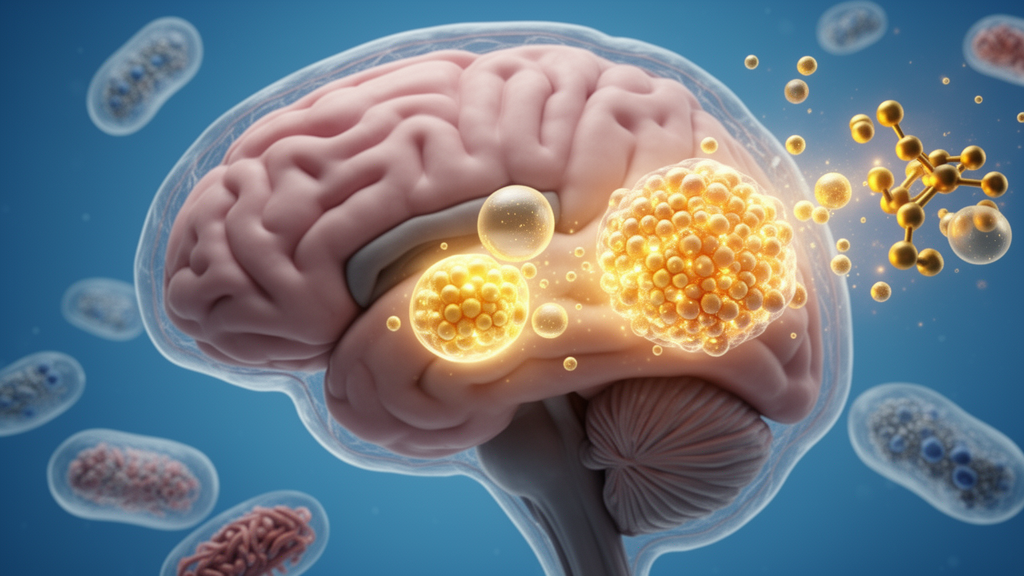
Glioblastoma, the most malignant form of glioma, remains one of the most lethal cancers in adults. Even with maximal safe surgical resection followed by the Stupp protocol of adjuvant radiotherapy and chemotherapy, median overall survival for IDH-wildtype glioblastoma is only 14 to 16 months. A newly published review in the Chinese Neurosurgical Journal argues that a major reason for this stagnation lies in tumor metabolism, and specifically in the way glioma cells rewire their handling of fatty acids. The review, authored by Xiao Zhou, Di Wang, Wei Zhang and Guanzhang Li, systematically synthesizes the molecular mechanisms through which abnormal fatty acid metabolism fuels glioma proliferation, invasion, angiogenesis, immune evasion and resistance to chemoradiotherapy, and maps the emerging targets that could finally translate metabolic intervention into clinical benefit.
Fatty acids are far more than fuel. The review emphasizes that they generate adenosine triphosphate through beta-oxidation, form the structural backbone of cellular membranes via phospholipid and glycolipid synthesis, and act as signaling molecules. Derivatives of polyunsaturated fatty acids, such as arachidonic acid metabolized through the cyclooxygenase and lipoxygenase pathways, produce prostaglandins, thromboxane A2 and leukotrienes that regulate proliferation and differentiation. This multifunctionality means that when tumor cells distort fatty acid handling, they simultaneously alter their energy supply, their membrane composition and their communication with the surrounding tumor microenvironment. Metabolic rewiring is widely recognized as a hallmark of malignant tumors, and the review positions fatty acid metabolic reprogramming as a widespread and consequential feature of glioma in particular.
The first major target discussed is fatty acid synthase, or FASN, the key enzyme of de novo fatty acid synthesis that catalyzes acetyl-CoA and malonyl-CoA into palmitic acid. FASN expression has been shown to correlate with World Health Organization grade in gliomas, and its overexpression floods tumor cells with palmitate that feeds downstream desaturation, elongation and protein palmitoylation. The mechanistic detail is striking: radiotherapy induces DNA damage that impairs endoplasmic reticulum function and triggers ER stress in glioblastoma cells, but Freitas-Cortez and colleagues demonstrated that radiation also drives lipid metabolic remodeling, producing a marked accumulation of unsaturated fatty acids. These unsaturated fatty acids act as metabolic signals that alleviate ER stress, protect tumor cells from apoptosis and serve as an alternative energy source, while also promoting lipid droplet formation. Those lipid droplets become a major site of prostaglandin E2 synthesis, which supports tumor proliferation, cancer stemness and immunosuppression. Inhibiting FASN-mediated synthesis is therefore proposed as a way to undermine the metabolic adaptations that let glioblastoma cells survive radiation.
FASN also appears to reshape the immune landscape of the tumor. Tumor-associated macrophages, comprising microglia and monocyte-derived macrophages, are the most abundant immune cell subset in the glioblastoma microenvironment, and most are polarized toward an anti-inflammatory M2 phenotype that promotes tumor growth. According to Zhang and colleagues, a FASN/STAT1 signaling axis regulates the secretion of intercellular adhesion molecule 1, or ICAM1: FASN-induced STAT1 phosphorylation in glioma cells elevates soluble ICAM1, which attracts microglia to tumor cells and strengthens the immunosuppressive microenvironment. This axis suggests that glioblastoma patients with heavy macrophage infiltration might respond particularly well to FASN inhibitors, which could suppress tumor proliferation while limiting macrophage recruitment. Under hypoxic stress, FASN-derived fatty acids additionally supply energy through beta-oxidation, and William Kelly’s research showed that combining FASN inhibitors with bevacizumab can enhance the therapeutic effect of the antiangiogenic drug.
A second, less-explored layer of fatty acid biology is protein S-palmitoylation, a reversible post-translational modification in which medium- or long-chain fatty acids, most commonly palmitate, are covalently attached to cysteine residues by ZDHHC acyltransferases. The human genome encodes 23 ZDHHC family members, nearly all expressed in the brain. In a 2025 Neuro-Oncology study, Wang and colleagues reported that ZDHHC15-mediated palmitoylation enhances O-glycosylation, homodimerization and activation of the c-MET receptor, thereby preserving the stemness of glioblastoma stem cells. Treatment with the FASN inhibitor TVB-3166 blocked this process, inhibited intracranial tumor progression and prolonged survival in tumor-bearing mice. The review argues that palmitoylation, acting as a dynamic molecular switch comparable to phosphorylation, may provide a mechanistic bridge linking fatty acid metabolic rewiring to DNA damage repair and microenvironment remodeling, and represents a highly promising direction for future glioma research.
The fatty acid binding protein FABP7 emerges as a third hub. High FABP7 expression is an independent poor prognostic factor in glioblastoma, and multi-database analyses by Hou and colleagues linked it to patient age, tumor grade, chemotherapy status, 1p19q codeletion and IDH1 mutation status, as well as tumor angiogenesis. Mechanistically, Kagawa and colleagues showed that FABP7 interacts with ATP citrate lyase to regulate nuclear acetyl-CoA, increasing histone H3 lysine 27 acetylation at the caveolin-1 promoter and thereby driving tumor cell proliferation through epigenetic control. Umaru and colleagues found that binding of oleic acid drives FABP7 into the nucleus, generating nuclear lipid droplets that epigenetically regulate the secretion of proliferation-related proteins. In glioblastoma stem cells, Liu and colleagues reported in Neuro-Oncology in 2023 that free polyunsaturated fatty acids transported by FABP7 activate the nuclear receptor RXRalpha, upregulating epithelial-mesenchymal transition and stemness markers and inducing the stationary-to-migratory transition of stem cells.
The review then surveys targets spanning fatty acid storage, lipolysis and elongation, while cautioning that most of this knowledge rests on preclinical data. SCD1, which synthesizes monounsaturated fatty acids, is upregulated by D-2-hydroxyglutarate in IDH-mutant glioma cells, where Lita and colleagues showed it expands the Golgi apparatus and endoplasmic reticulum, and is markedly elevated in temozolomide-resistant glioblastoma cells, where Dai and colleagues found it activates Akt/GSK3beta/beta-catenin signaling to drive growth and migration. DGAT1, the key enzyme storing fatty acids as triglycerides in lipid droplets, is upregulated after ionizing radiation; inhibiting it disrupts lipid homeostasis, floods mitochondria with fatty acids, generates excess reactive oxygen species and triggers tumor cell apoptosis, while the drug cladribine can reverse radiation-induced DGAT1 upregulation and restore radiosensitivity. MAGL, a lipolytic enzyme, supports glioma stem cell self-renewal through prostaglandin E2 and beta-catenin signaling and promotes M2 macrophage polarization, with the upstream regulator ARS2 identified by Yin and colleagues. ELOVL2, driven by a glioma stem cell-specific super-enhancer as shown by Gimple and colleagues, produces long-chain polyunsaturated fatty acids that stabilize cell membranes and support EGFR signaling, suggesting that dual inhibition of ELOVL2 and EGFR may overcome the failure of single-target EGFR therapy.
Clinical translation has begun, though no fatty acid metabolism-targeting drug is yet approved for glioma. The phase II trial NCT03032484 tested the oral FASN inhibitor TVB-2640 combined with bevacizumab in recurrent high-grade astrocytoma and reported a six-month progression-free survival rate of 31.4 percent, significantly higher than the historical 16 percent with bevacizumab alone (P = 0.008), with favorable tolerability. These results support an ongoing phase III trial, NCT05118776, evaluating a FASN inhibitor with bevacizumab in recurrent glioblastoma, though results have not yet been published. Separately, a phase II trial combining the PPAR-gamma agonist pioglitazone, the COX-2 inhibitor rofecoxib and temozolomide did not significantly improve median overall survival, but two patients achieved partial responses lasting 32 to 44 months, hinting at efficacy in a specific subset. The obesity drug orlistat, a FASN inhibitor, has shown antitumor activity in preclinical studies by promoting apoptosis, reducing PD-L1 expression and blocking STAT3/NF-kappaB signaling.
The authors are candid about the obstacles ahead. Metabolic therapy may affect normal metabolism in neurons, natural killer cells, T cells and macrophages, creating off-target risks that demand more tumor-specific targets. The blood-brain barrier remains a major obstacle to small-molecule delivery, although recent strategies such as intracalvariosseous injection of drug-loaded nanoparticles exploiting skull-meninges immune cell migration, and intraventricular administration via Ommaya reservoir, may bypass it. The review concludes that combination approaches, including FASN inhibitor-based radiosensitization, MAGL inhibitors to reshape the immunosuppressive microenvironment for immunotherapy, and dual EGFR-ELOVL2 blockade, offer the most credible path forward. For a disease whose standard of care has barely changed in two decades, the fatty acid machinery of glioma cells may finally be the crack in the armor that clinicians have been searching for.
Subject of Research: Fatty acid metabolic reprogramming in glioma and emerging therapeutic targets
Article Title: Fatty acid metabolism in glioma: a review of novel targets and therapeutic strategies
Article References: Zhou, X., Wang, D., Zhang, W., & Li, G. (2026). Fatty acid metabolism in glioma: a review of novel targets and therapeutic strategies. Chinese Neurosurgical Journal, 12(1), Article 23. https://doi.org/10.1186/s41016-026-00442-w
Image Credits: AI Generated
DOI: 10.1186/s41016-026-00442-w
Keywords: glioblastoma, fatty acid metabolism, FASN, S-palmitoylation, FABP7, SCD1, DGAT1, MAGL, ELOVL2, temozolomide resistance, radioresistance, clinical trials
News Source: Daisy Hatcher. (October 29, 2026). Research report: Fatty acid metabolism in glioma: a review of novel targets and therapeutic strategies. Scienmag.



