


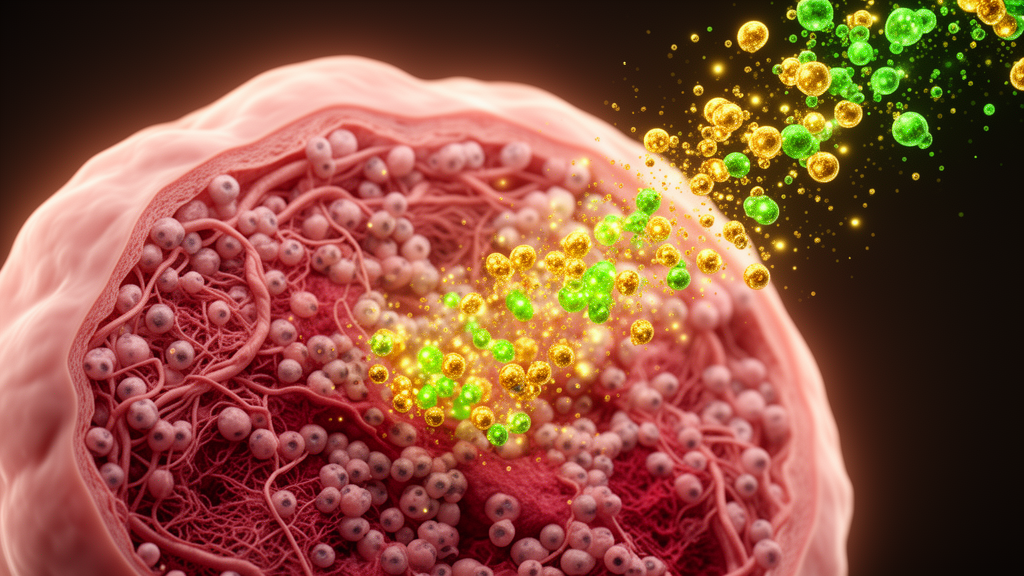
Curcumin from turmeric, epigallocatechin gallate from green tea, quercetin from hawthorn, and ginsenosides from ginseng share a common ambition: not to kill breast cancer cells directly, but to remodel the ecosystem those cells depend on. A new review published on 25 August 2026 in the journal Food, Nutrition and Health compiles the evidence that bioactive ingredients drawn from traditional Chinese medicine’s “food and medicine homology” concept can regulate the breast cancer tumor microenvironment, the dense web of fibroblasts, immune cells, blood vessels, and scaffolding proteins that surrounds a tumor and often decides whether therapy succeeds or fails.
The review’s authors, led by Yimao Wu and Meng-Yao Li, argue that conventional treatments such as chemotherapy and targeted therapy, while effective at attacking tumor cells, frequently bring systemic toxicity including myelosuppression, cardiotoxicity, and interstitial lung disease, and leave the microenvironment largely untouched. Compounds from edible medicinal plants, they contend, offer low toxicity and multi-target action that fits the complexity of that environment. The authors stress, however, that most of the evidence comes from cell cultures and animal models, mechanistic depth is limited, and clinical translation remains sparse.
The stakes are considerable. According to the International Agency for Research on Cancer, breast cancer was the second most commonly diagnosed cancer worldwide in 2022, with an estimated 2.3 million new cases, and new cases are projected to rise 38 percent by 2050 compared with current levels, with deaths rising 68 percent. In China, breast cancer ranks second in incidence among malignant tumors in women, according to the National Cancer Center.
The tumor microenvironment the review describes is a crowded, negotiated space. Its cellular cast includes cancer-associated fibroblasts, the most abundant stromal population, which exist as functionally distinct subtypes revealed by single-cell RNA sequencing: myofibroblastic, inflammatory, antigen-presenting, and even tumor-restraining variants. These fibroblasts secrete TGF-β, HGF, and IL-6, release exosomes that feed tumor cells, remodel the extracellular matrix, suppress immune cells, and promote angiogenesis, proliferation, invasion, and drug resistance. The immune contingent includes CD8+ T cells that would normally eliminate tumor cells but become exhausted under persistent antigen stimulation and immunosuppressive pressure, regulatory T cells that secrete IL-10 and TGF-β, and myeloid cells such as macrophages and neutrophils that polarize toward tumor-promoting phenotypes.
Against this backdrop, the review organizes the bioactive compounds by chemical class: polyphenols such as curcumin, quercetin, and resveratrol; terpenoids such as ursolic acid; polysaccharides such as lentinan from shiitake mushroom; alkaloids such as berberine; sterols such as β-sitosterol; and phenylpropanoids such as cinnamaldehyde. The authors’ screening criteria require that candidates appear in China’s official National Catalogue of Food and Medicinal Homologs, have in vivo or in vitro evidence from the past five years showing activity against the breast cancer microenvironment, and act through reasonably well-defined molecular targets.
The mechanistic core of the review concerns three signaling modules. The first targets cancer-associated fibroblasts through the TGF-β, NF-κB, and Hedgehog pathways. Quercetin suppresses TGF-β–Smad2/3 signaling, blocking fibroblast activation and the malignant behavior of triple-negative breast cancer cells. Resveratrol suppresses TGF-β1 signaling via the SIRT3/AMPK/autophagy axis, and artemisinin derivatives from Artemisia annua have inactivated fibroblasts and inhibited fibroblast-driven tumor growth and metastasis in vitro and in vivo. Curcumin prevents the degradation of IκB proteins, sequestering NF-κB dimers in the cytoplasm, while EGCG blocks NF-κB activation in stromal cells exposed to breast cancer cell secretions, an effect linked to reduced reactive oxygen species and lower expression of COX-2, TNF-α, IL-1β, and MMP9. Curcumin also downregulates Gli1, a key Hedgehog transcription factor, and suppressed proliferation, invasion, migration, and mammosphere formation in triple-negative breast cancer cells.
The second module aims at immune cells through STAT3 and PI3K/Akt signaling. Piperine from black pepper blocked STAT3 activation and relieved immunosuppression in breast cancer models. Resveratrol reduced phosphorylated STAT3 in tumor cells and myeloid-derived suppressor cells, blunted MDSC recruitment, and enhanced cytotoxic T lymphocyte infiltration. Quercetin directly blocks PI3K kinase activity and epigenetically upregulates PTEN, while genistein, a soy isoflavone, suppressed PI3K and STAT3 phosphorylation in obese mouse tumor models, restrained M2 polarization of tumor-associated macrophages, lowered IL-10 and TGF-β release, and promoted infiltration of effector T cells and natural killer cells. Licorice downregulated TGF-β and Foxp3, reduced regulatory T cell accumulation, and enhanced Th1 immunity in 4T1 tumor-bearing mice.
The third module remodels the extracellular matrix and cytokine networks through MMP, Wnt, and Hippo pathways. Kaempferol, a flavonoid abundant in tomatoes, broccoli, and tea, suppressed MMP-3 and MMP-9 expression, blocking matrix breakdown, angiogenesis, and metastasis, particularly in triple-negative disease. EGCG binds the catalytic zinc ions of MMP-2 and MMP-9 directly, inhibiting their enzymatic activity. Curcumin inhibited Wnt/β-catenin signaling in MCF-7 cell studies, and berberine downregulated nuclear β-catenin and reduced stemness and invasion in breast cancer cells. Apigenin suppressed YAP activity, diminished CTGF expression and collagen crosslinking, and reversed matrix stiffening, while resveratrol inactivated YAP to reduce type I collagen deposition and tissue stiffness, removing the physical scaffold that supports invasion.
The preclinical and clinical picture is mixed but instructive. In vitro, a combined quercetin, resveratrol, and curcumin preparation induced apoptosis in MCF-7 cells and achieved a tumor inhibition rate of 47.14 percent in chronically dosed mice. Paclitaxel-loaded ginsenoside Rg3 liposomes raised the tumor inhibition rate to 90.3 percent in mice with paclitaxel-resistant breast tumors, nearly 20 percentage points above paclitaxel alone, while downregulating cancer-associated fibroblast and PD-L1 markers. EGCG alleviated MDSC-mediated immunosuppression in the 4T1 mouse model. On the clinical side, the evidence is thin but not empty. In a randomized, double-blind, placebo-controlled trial of 150 women with advanced or metastatic breast cancer, paclitaxel plus intravenous curcumin produced a significantly higher objective response rate and better self-assessed physical performance than paclitaxel plus placebo. A Phase Ia presurgical trial of Boswellia serrata extract in 22 patients with invasive breast cancer showed a 13.8 percent reduction in tumor cell proliferation between baseline and surgery, compared with a 54.6 percent increase in untreated controls. Broccoli sprout extract in 30 postmenopausal patients showed favorable trends in proliferation and apoptosis markers. By contrast, ginger supplementation at 500 milligrams twice daily in 44 patients was safe but no better than placebo at reducing chemotherapy-induced nausea.
The review is candid about the obstacles. Curcumin’s oral bioavailability is extremely low due to hydrophobicity, instability, and rapid metabolism, and nanoformulations, while promising, need better tumor targeting. Multi-pathway compounds such as EGCG act on Wnt/β-catenin and NF-κB simultaneously, and their behavior in the human microenvironment is not fully understood, producing substantial individual variation. Most clinical studies enroll fewer than 100 participants, lack long-term follow-up, and have not demonstrated effects on disease-free or overall survival. Standardization of purity across geographic origins and extraction processes remains unresolved. The authors propose nanocarrier systems, including PLGA nanoparticles that raised tumor drug concentrations fivefold in preclinical work, stimuli-responsive carriers, multi-omics mechanistic studies, and large, multi-center randomized trials with survival and quality-of-life endpoints. Until such trials arrive, these compounds remain, at most, promising adjuvants: laboratory evidence of microenvironment remodeling is substantial, but proof of clinical benefit in breast cancer patients rests on a handful of small early-phase studies.
Subject of Research: Regulation of the breast cancer tumor microenvironment by bioactive compounds from food and medicine homology substances
Article Title: Breast cancer microenvironment regulation by food and medicine homology substances
Article References: Wu, Y., Zeng, Z., Hu, Y., Chen, Z., Zengin, G., Miao, H., & Li, M.-Y. (2026). Breast cancer microenvironment regulation by food and medicine homology substances. Food, Nutrition and Health, 3(1), Article 31. https://doi.org/10.1007/s44403-026-00077-w
Image Credits: AI Generated
DOI: 10.1007/s44403-026-00077-w
Keywords: breast cancer, tumor microenvironment, food and medicine homology, curcumin, EGCG, quercetin, cancer-associated fibroblasts, TGF-beta, NF-kappaB, STAT3, preclinical research, clinical translation
News Source: Nathaniel Bowman. (October 29, 2026). Kitchen Compounds That Rewire the Breast Cancer Tumor Microenvironment. Scienmag.



