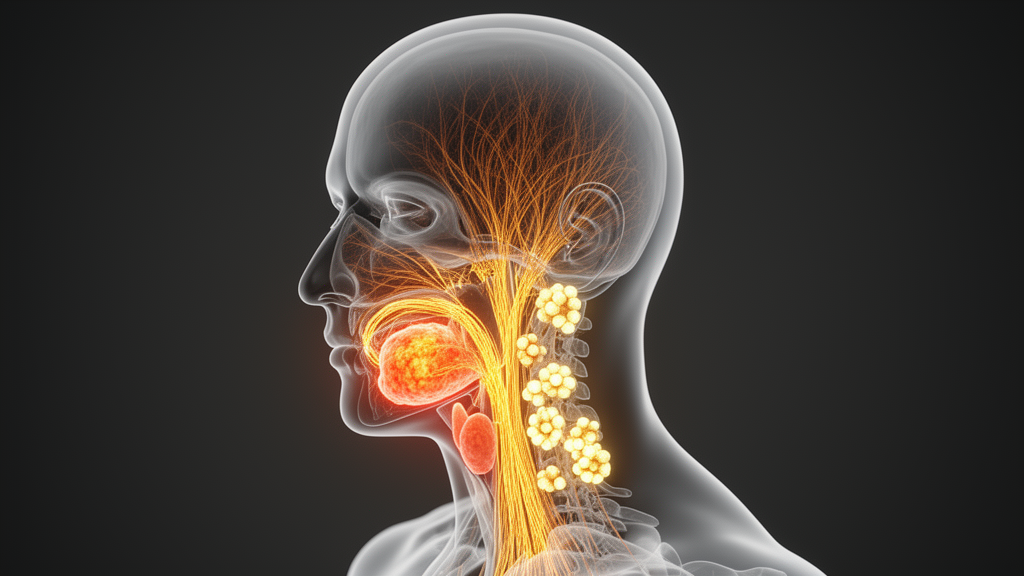
The research links KRT18 not only to tumor aggressiveness but also to the remodeling of blood and lymphatic vessels that accompanies cervical lymph node metastasis, a major determinant of prognosis and treatment planning in this cancer.
The research team, led by Xiaojia Zheng and Jiaxin Zhang with senior author Yong Xu, combined single-cell transcriptomic datasets, TCGA and GEO cohorts, and 154 clinical HNSCC specimens to map where KRT18 is expressed and how its levels relate to disease features. They found that KRT18 is expressed predominantly in malignant epithelial cells and is upregulated in HNSCC tissues compared with non-malignant tissue.
Clinically, high KRT18 expression was associated with advanced T stage, advanced clinical stage, nodal metastasis, and poorer survival. These associations position KRT18 as a marker of aggressive disease, although the study design establishes correlations in patient cohorts rather than proving that the protein causes worse outcomes in humans.
To probe function, the researchers generated stable KRT18-knockdown HNSCC cell lines and ran a battery of assays. Reducing KRT18 lowered cell proliferation and clonogenicity, and it impaired migration and invasion. Knockdown also altered epithelial–mesenchymal transition (EMT)-associated marker remodeling, a process by which cancer cells gain motile, invasive properties.
The vascular–lymphatic connection emerged from experiments on how tumor cells interact with the lymphatic system. KRT18-deficient cells were less able to migrate across monolayers of lymphatic endothelial cells in trans-lymphatic endothelial migration assays, a laboratory model of the step by which tumor cells enter lymphatic vessels. In addition, conditioned medium from KRT18-knockdown tumor cells showed attenuated angiogenic and lymphangiogenic activity, meaning the cells stimulated fewer new blood and lymphatic vessels.
In vivo work supported these observations. In a 4-nitroquinoline-1-oxide (4NQO)-induced tongue carcinogenesis model, increasing KRT18 expression paralleled vascular and lymphatic remodeling as tumors developed. In an orthotopic tongue tumor model, KRT18 knockdown was accompanied by reduced primary tumor growth, attenuated vascular and lymphatic remodeling, and a lower proportion of metastatic cervical lymph nodes.
Matrigel plug assays provided further in vivo validation of the vessel-forming activity associated with KRT18-expressing tumor cells. Together, the cell-based and animal experiments suggest that KRT18 may contribute to disease progression by linking tumor-intrinsic malignant behavior with the vascular and lymphatic changes that facilitate spread.
The authors conclude that KRT18 is associated with aggressive HNSCC and nodal metastasis and may contribute to progression through this dual mechanism. Because cervical lymph node metastasis strongly influences both prognosis and treatment decisions in HNSCC, a molecule that connects tumor cell behavior to lymphatic remodeling is of considerable clinical interest.
Several caveats apply. The clinical findings are associative, and the mechanistic results come from cell lines and animal models, including chemically induced and orthotopic tongue tumors, which may not fully recapitulate human disease. The article was published as an accepted, peer-reviewed manuscript shared early with a permanent DOI and remains subject to further edits before the final Version of Record.
Subject of Research: The role of keratin 18 in head and neck squamous cell carcinoma progression and lymph node metastasis
Article Title: KRT18 promotes HNSCC progression through tumor aggressiveness and vascular–lymphatic remodeling
Article References: Zheng, X., Zhang, J., Su, H., Bao, W., Rong, C., Xin, H., Wang, Y., Li, B., & Xu, Y. (2026). KRT18 promotes HNSCC progression through tumor aggressiveness and vascular–lymphatic remodeling. Cellular Oncology. https://doi.org/10.1007/s13402-026-01317-z
Image Credits: AI Generated
DOI: 10.1007/s13402-026-01317-z
Keywords: KRT18, head and neck squamous cell carcinoma, lymph node metastasis, lymphangiogenesis, angiogenesis, epithelial-mesenchymal transition, tumor progression, biomarker, Cellular Oncology, cancer research, promotes, HNSCC
News Source: Nathaniel Bowman. (October 27, 2026). Keratin 18 linked to aggressive head and neck cancer and lymph node spread. Scienmag.