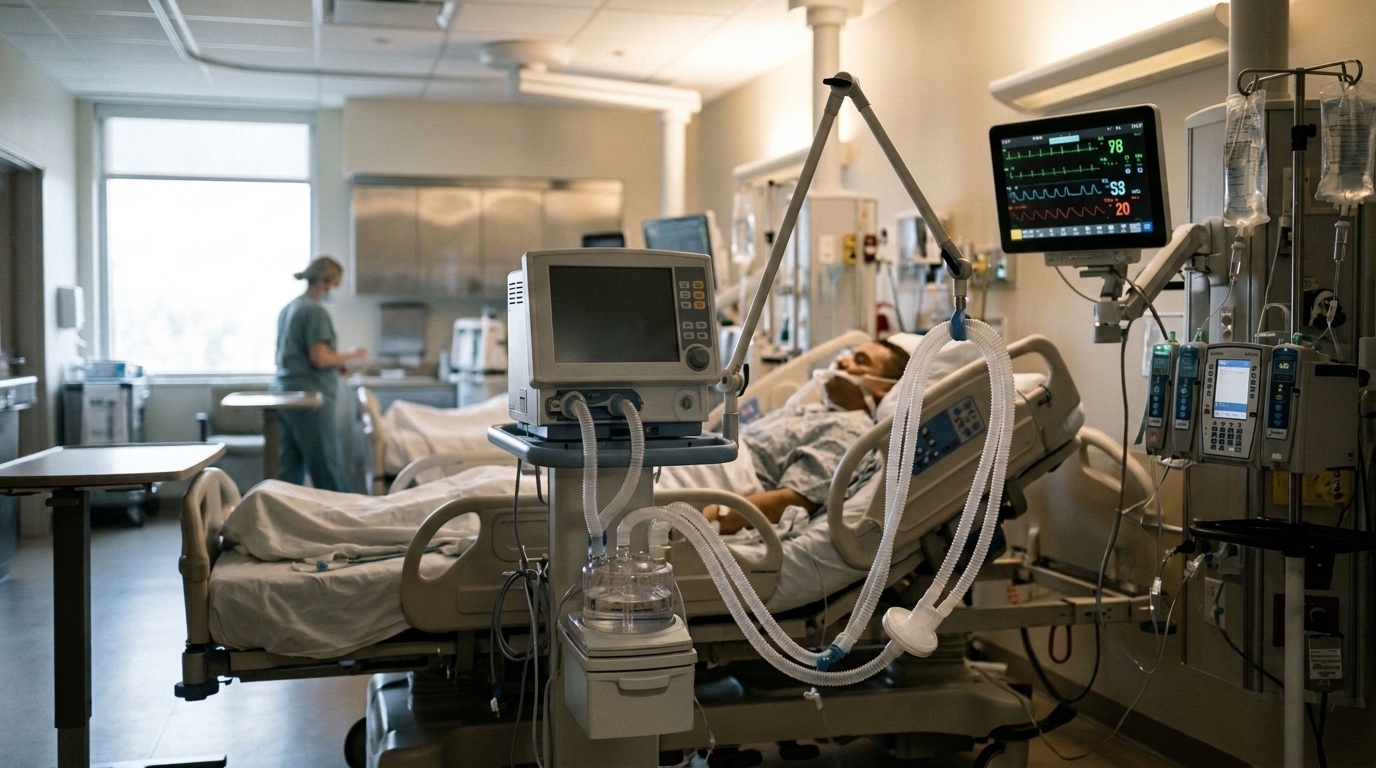
An international multidisciplinary panel has established the first core outcome set and a hierarchical composite endpoint for clinical trials evaluating mechanical ventilation liberation in critically ill patients with acute brain injury. Published in Intensive Care Medicine, the Delphi consensus project addresses the substantial outcome heterogeneity that has historically limited evidence synthesis across neurocritical care research. The project was formally registered with the Core Outcome Measures in Effectiveness Trials Initiative under registration number 2320.
Following COS-STAD and COS-STAP methodological standards, the investigators conducted a four-round international Delphi study after identifying candidate outcomes through an initial scoping review. A multidisciplinary panel representing 31 countries evaluated candidate measures using a 9-point GRADE scale. Inclusion required more than 70 percent of participants to score an outcome as critical, defined as a score of 7 to 9, and no more than 15 percent to rate it as not important, defined as a score of 1 to 3. Overall, 78 stakeholders participated in the first Delphi round and 60 completed all four rounds, reflecting an attrition rate of 23.1 percent.
A total of 54 candidate outcomes reached Delphi consensus and were evaluated across two consensus meetings. During the first consensus meeting, these outcomes were organized into 16 categories, and the panel selected the highest-scoring outcome within each category. Three outcomes were not ratified for the final set: the National Institutes of Health Stroke Scale was excluded due to disease-specificity, while brain death and coma-free days were excluded because they lacked universal applicability across all acute brain injury presentations.
The final core outcome set comprises 13 outcomes distributed across five core domains: respiratory function, survival, complications, functional status, and quality of life. At the second consensus meeting, the panel ratified a three-level hierarchical composite endpoint consisting of intensive care unit survival, freedom from reintubation within 72 hours, and days alive without mechanical ventilation. The authors reported that widespread adoption of these 13 outcomes and the composite endpoint will standardize future trial reporting, enable evidence synthesis, and facilitate clinical translation in neurocritical care.
Subject of Research: Core outcome set and composite endpoint for neurocritical care ventilation trials
Article Title: Consensus on a core outcome set for ventilation trials in critically ill patients with acute brain injury: results of an international Delphi consensus study
Article References: Fong, N., Burns, G., Phillips, J., Digitale, J., Ghasemian, A., Cinotti, R., Bösel, J., Robba, C., Stevens, R. D., & Pirracchio, R. (2026). Consensus on a core outcome set for ventilation trials in critically ill patients with acute brain injury: results of an international Delphi consensus study. Intensive Care Medicine. https://doi.org/10.1007/s00134-026-08659-0
Image Credits: AI Generated
DOI: 10.1007/s00134-026-08659-0
Keywords: acute brain injury, mechanical ventilation, core outcome set, Delphi study, neurocritical care, ventilator weaning, composite endpoint, intensive care unit, Consensus, core, outcome, ventilation
News Source: Cassandra Pierce. (November 6, 2026). International Delphi Study Establishes Core Outcomes for Brain Injury Ventilation Trials. Scienmag.