• HOME
  • NEWS
  • EXPLORE
    • CAREER
      • Companies
      • Jobs
    • EVENTS
    • iGEM
      • News
      • Team
    • PHOTOS
    • VIDEO
    • WIKI
  • BLOG
  • COMMUNITY
    • FACEBOOK
    • INSTAGRAM
    • TWITTER
Tuesday, May 12, 2026
BIOENGINEER.ORG
No Result
View All Result
  • Login
  • HOME
  • NEWS
  • EXPLORE
    • CAREER
      • Companies
      • Jobs
        • Lecturer
        • PhD Studentship
        • Postdoc
        • Research Assistant
    • EVENTS
    • iGEM
      • News
      • Team
    • PHOTOS
    • VIDEO
    • WIKI
  • BLOG
  • COMMUNITY
    • FACEBOOK
    • INSTAGRAM
    • TWITTER
  • HOME
  • NEWS
  • EXPLORE
    • CAREER
      • Companies
      • Jobs
        • Lecturer
        • PhD Studentship
        • Postdoc
        • Research Assistant
    • EVENTS
    • iGEM
      • News
      • Team
    • PHOTOS
    • VIDEO
    • WIKI
  • BLOG
  • COMMUNITY
    • FACEBOOK
    • INSTAGRAM
    • TWITTER
No Result
View All Result
Bioengineer.org
No Result
View All Result
Home NEWS Science News Health

IDIBELL-researchers negatively correlate a neuropeptide with executive functions

Bioengineer by Bioengineer
June 12, 2019
in Health
Reading Time: 2 mins read
0
IMAGE
Share on FacebookShare on TwitterShare on LinkedinShare on RedditShare on Telegram

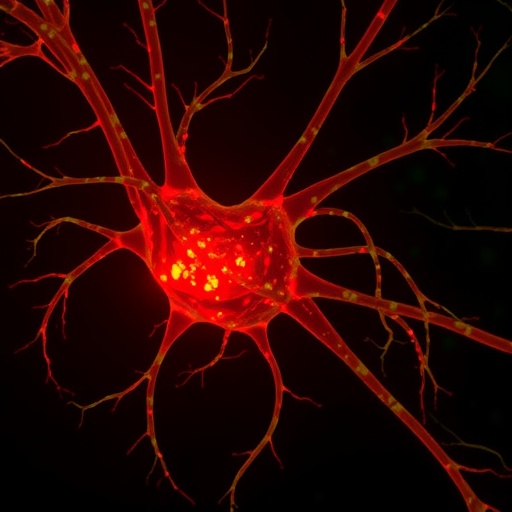
The researchers emphasize the potential role of this orexin in the global understanding of eating disorders and associated cognitive processes

IMAGE

Credit: Gemma Fornons

Researchers from the Bellvitge Biomedical Research Institute (IDIBELL) and the group of Eating Disorders, of the Bellvitge University Hospital (HUB), led by Dr. Fernando Fernández-Aranda, published in Scientific Reports (Nature) a study that negatively correlates the concentration of orexin A (a neuropeptide) with the executive functions in anorexic patients. The study is part of the research program “Neurocognition and extreme weight conditions: from anorexia to obesity”, carried out at the Centro de Investigación Biomédica en Red de Obesidad y Nutrición (CIBEROBN).

“We have evaluated the association between the concentration of the neuropeptide orexin A from blood plasma and the neuropsychological faculties in adult women, and we have been able to establish a negative correlation, i.e. the more concentration of orexin, lesser the adequacy of executive functions in patients” comments Dr. Fernández-Aranda. 102 adult women, 51 of them with anorexia nervosa, all of whom were treated in the HUB, participated in the study; the other half were healthy women. Male representatives have been excluded due to the low prevalence of men in this disorder.

In patients with anorexia, there are usually changes in decision making, difficulties in adapting to new situations (inflexibility) and to see the general context of what they observe (excessive fixation in details), high rigidity and perfectionism and, in some cases, high levels of impulsivity.

Orexins, also called hypocretins, are neuropeptides (substances of the nervous system) used by neurons to communicate with each other. In previous studies it has been observed that orexins are involved in a variety of mechanisms, such as food intake and cognition, sleep disorders, among others.

One of the main objectives of Dr. Fernández Aranda’s research group is studying the interaction between biological, cognitive and clinical factors. To achieve this, they are looking for neurobiological markers that can explain cognitive processes and those of diseases (such as anorexia, bulimia or obesity) and behavioral addictions. “That’s why we wanted to study whether orexin A could play an important role in psychiatric disorders such as anorexia,” justifies Dr. Fernández Aranda.

Once patients with anorexia have recovered, the decision-making levels are also more appropriate, meaning that they are reversible. For this reason, it would be of great interest to explore if the improvement of decision-making observed during the recovery of anorexia is related to changes in levels of orexin A. This way, we could assure a biomarker with potential clinical applications.

###

Media Contact
Gemma Fornons
[email protected]

Original Source

http://www.idibell.cat/en/whats-on/noticies/researchers-idibell-hub-negatively-correlate-neuropeptide-executive-functions

Related Journal Article

http://dx.doi.org/10.1038/s41598-019-44450-6

Tags: Decision-making/Problem SolvingMedicine/HealthMental HealthneurobiologyNutrition/NutrientsPerception/Awareness
Share13Tweet8Share2ShareShareShare2

Related Posts

Toloo Taghian Secures $3.2M Grant to Advance Gene Therapy for Rare Genetic Disorder

May 12, 2026

AI Models Analyze Patient Data to Forecast Cardiac Arrest Risk

May 12, 2026

Monovalent Degraders Enable Tunable SMARCA 2/4 Degradation

May 12, 2026

How Neighborhood Environments Influence Teen Smoking: Exploring the Rural-Urban Divide

May 12, 2026
Please login to join discussion

POPULAR NEWS

  • Research Indicates Potential Connection Between Prenatal Medication Exposure and Elevated Autism Risk

    842 shares
    Share 337 Tweet 211
  • New Study Reveals Plants Can Detect the Sound of Rain

    728 shares
    Share 290 Tweet 182
  • Salmonella Haem Blocks Macrophages, Boosts Infection

    62 shares
    Share 25 Tweet 16
  • Breastmilk Balances E. coli and Beneficial Bacteria in Infant Gut Microbiomes

    57 shares
    Share 23 Tweet 14

About

We bring you the latest biotechnology news from best research centers and universities around the world. Check our website.

Follow us

Recent News

AI Enhances Component Inspections with Advanced Visual Technology

Toloo Taghian Secures $3.2M Grant to Advance Gene Therapy for Rare Genetic Disorder

Cutting-Edge Genomic Techniques Reveal Unexpected Cellular Changes in the Aging Brain

Subscribe to Blog via Email

Enter your email address to subscribe to this blog and receive notifications of new posts by email.

Join 82 other subscribers
  • Contact Us

Bioengineer.org © Copyright 2023 All Rights Reserved.

Welcome Back!

Login to your account below

Forgotten Password?

Retrieve your password

Please enter your username or email address to reset your password.

Log In
No Result
View All Result
  • Homepages
    • Home Page 1
    • Home Page 2
  • News
  • National
  • Business
  • Health
  • Lifestyle
  • Science

Bioengineer.org © Copyright 2023 All Rights Reserved.