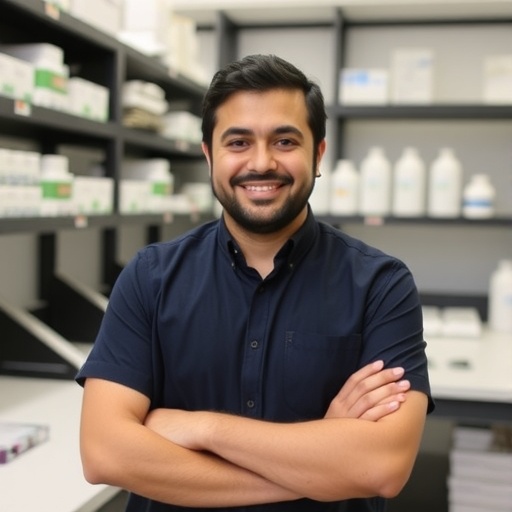
The National Institute of Neurological Disorders and Stroke (NINDS) has awarded Toloo Taghian, PhD, an assistant professor of genetic and cellular medicine as well as radiology at UMass Chan Medical School, a significant five-year grant totaling $3.2 million. This grant is designated to propel groundbreaking research into gene therapy solutions targeting UBA5 disorder, a rare and devastating genetic condition that often manifests in infancy, resulting in severe neurological impairments.
UBA5 disorder, also clinically recognized as developmental and epileptic encephalopathy 44 (DEE44), represents a profound challenge in pediatric neurology. This progressive condition arises from mutations in the UBA5 gene, which codes for an essential enzyme partaking in the process called UFMylation. UFMylation is a critical post-translational modification pathway that maintains cellular protein homeostasis by regulating protein stability and function, particularly under cellular stress. Disruption in this pathway due to UBA5 mutations leads to profound neurological dysfunction, yet the underlying molecular pathology remains insufficiently understood.
Dr. Taghian emphasizes the “black box” of rare disease biology. Because UBA5 disorder is extremely rare—with only around 40 diagnosed cases worldwide—the cellular and molecular cascades driving this disease’s onset and progression remain largely enigmatic. The scarcity of clinical cases and limited prior research hinder effective therapeutic development. Dr. Taghian’s team intends to leverage this unprecedented federal support to elucidate the disease’s initiating cellular defects and molecular dysregulations, uncover biomarkers that accurately reflect disease status, and design innovative gene therapies tailored to correct the genetic defect at its source.
Gene therapy, an emergent and transformative biomedical intervention, typically involves delivering functional copies of genes or modulating the expression of malfunctioning genes to restore normal cellular function. In the context of UBA5 disorder, vector-mediated delivery of a normal UBA5 gene copy could potentially compensate for the defective protein, thereby reinstating UFMylation and normalizing cellular operations. This strategy employs viral vectors such as adeno-associated virus (AAV), which are engineered to target specific cell types efficiently with minimal immunogenicity.
A critical component of Dr. Taghian’s research involves developing clinically relevant and sensitive metrics to monitor UBA5 disease progression. Such metrics are essential for assessing therapeutic efficacy in future clinical trials, particularly given the rarity and variability of symptom manifestation in genetic neurological disorders. Establishing reliable biomarkers and functional assays will accelerate bench-to-bedside translation and ensure that emerging gene therapies deliver tangible clinical benefits to afflicted children.
Dr. Taghian’s entry into UMass Chan Medical School in 2016 marked the beginning of a notable trajectory in rare disease research. Initiating her postdoctoral work under Alexi Bogdanov Jr., PhD, she gained expertise in advanced imaging and molecular diagnostics. By 2018, she transitioned to the lab led by Heather Gray-Edwards, DVM, PhD, where she contributed to gene therapy development for Tay-Sachs disease, another devastating hereditary neurological disorder. This diverse training forged a multidisciplinary skill set, merging genetic medicine with radiological techniques and gene delivery technologies, uniquely positioning her to tackle UBA5 disorder.
The grant from NINDS allows Dr. Taghian not only to deepen the fundamental biological understanding of UBA5 disorder but also to accelerate the development of next-generation gene therapies. The funding supports integrative approaches—combining genomics, molecular biology, and in vivo modeling—to identify the molecular consequences of UBA5 mutations and validate therapeutic candidates. Moreover, this project underlines the potential for precision medicine approaches to shift paradigms in treating genetic epileptic encephalopathies.
Since joining UMass Chan as an instructor in radiology and as a member of the Horae Gene Therapy Center in 2021—where she was promoted to assistant professor in 2025—Dr. Taghian has been recognized for her contributions to rare disease biology and gene therapy innovation. Her prior accolades include the Excellence in Research Award from the American Society of Gene & Cell Therapy (ASGCT) and the Uplifting Athletes Young Investigator Draft Award, underscoring the scientific community’s confidence in her pioneering work.
The technical complexity of gene therapy development for UBA5 disorder encompasses sophisticated challenges, including targeted gene delivery to the central nervous system, long-term gene expression, immune responses to viral vectors, and the heterogeneity of patient-specific mutations. Dr. Taghian’s research will use advanced vector engineering and newly developed transgenic models to refine treatment specificity and maximize therapeutic efficacy, laying groundwork for personalized interventions.
UMass Chan Medical School itself, with its integration of the T.H. Chan School of Medicine, the Morningside Graduate School of Biomedical Sciences, and MassBiologics—the sole nonprofit, FDA-licensed U.S. manufacturer of viral vector gene therapies—provides a uniquely fertile environment for translational biomedical research. This robust institutional framework enhances the potential for bringing gene therapy candidates from concept through regulatory approval and into clinical practice.
The broader impact of this research initiative lies in its potential to revolutionize outcomes for children suffering from UBA5 disorder, who currently have no effective treatment and often face early mortality. The knowledge gained will not only deepen understanding of UFMylation-related neurobiology but may also inform therapeutic strategies for other related epileptic and neurodevelopmental disorders characterized by protein homeostasis disruption.
As gene therapy continues to transform medical paradigms, efforts like Dr. Taghian’s epitomize the convergence of cutting-edge science and urgent clinical need. This multi-year project stands to redefine therapeutic possibilities for UBA5 disorder and marks a pivotal step towards eradicating the devastating effects of rare genetic neurological diseases in infancy.
Subject of Research: Development of gene therapy for UBA5 disorder, a rare genetic neurological disease
Article Title:
UMass Chan Researcher Secures $3.2 Million NINDS Grant to Advance Gene Therapy for Devastating UBA5 Disorder
News Publication Date:
2024
Web References:
https://www.umassmed.edu/advancingtogether/
https://www.umassmed.edu/news/news-archives/2024/07/umass-chan-ranked-best-in-northeast-for-primary-care-education/
https://www.umassmed.edu/umasschan
Image Credits:
Photo: Faith Ninivaggi
Keywords:
UBA5 disorder, gene therapy, UFMylation, developmental and epileptic encephalopathy, neurogenetics, rare genetic diseases, viral vectors, adeno-associated virus, molecular mechanisms, translational medicine, pediatric neurology, genomic medicine
Tags: challenges in rare disease biologyDEE44 neurological impairmentsdevelopmental and epileptic encephalopathy 44gene therapy for rare genetic disordersmolecular pathology of UBA5 mutationsNINDS rare disease grantspediatric neurology genetic conditionspost-translational modification in rare diseasestherapeutic development for UBA5 disorderUBA5 disorder researchUFMylation pathway in neurogeneticsUMass Chan Medical School gene therapy