• HOME
  • NEWS
  • EXPLORE
    • CAREER
      • Companies
      • Jobs
    • EVENTS
    • iGEM
      • News
      • Team
    • PHOTOS
    • VIDEO
    • WIKI
  • BLOG
  • COMMUNITY
    • FACEBOOK
    • INSTAGRAM
    • TWITTER
Monday, May 11, 2026
BIOENGINEER.ORG
No Result
View All Result
  • Login
  • HOME
  • NEWS
  • EXPLORE
    • CAREER
      • Companies
      • Jobs
        • Lecturer
        • PhD Studentship
        • Postdoc
        • Research Assistant
    • EVENTS
    • iGEM
      • News
      • Team
    • PHOTOS
    • VIDEO
    • WIKI
  • BLOG
  • COMMUNITY
    • FACEBOOK
    • INSTAGRAM
    • TWITTER
  • HOME
  • NEWS
  • EXPLORE
    • CAREER
      • Companies
      • Jobs
        • Lecturer
        • PhD Studentship
        • Postdoc
        • Research Assistant
    • EVENTS
    • iGEM
      • News
      • Team
    • PHOTOS
    • VIDEO
    • WIKI
  • BLOG
  • COMMUNITY
    • FACEBOOK
    • INSTAGRAM
    • TWITTER
No Result
View All Result
Bioengineer.org
No Result
View All Result
Home NEWS Science News Chemistry

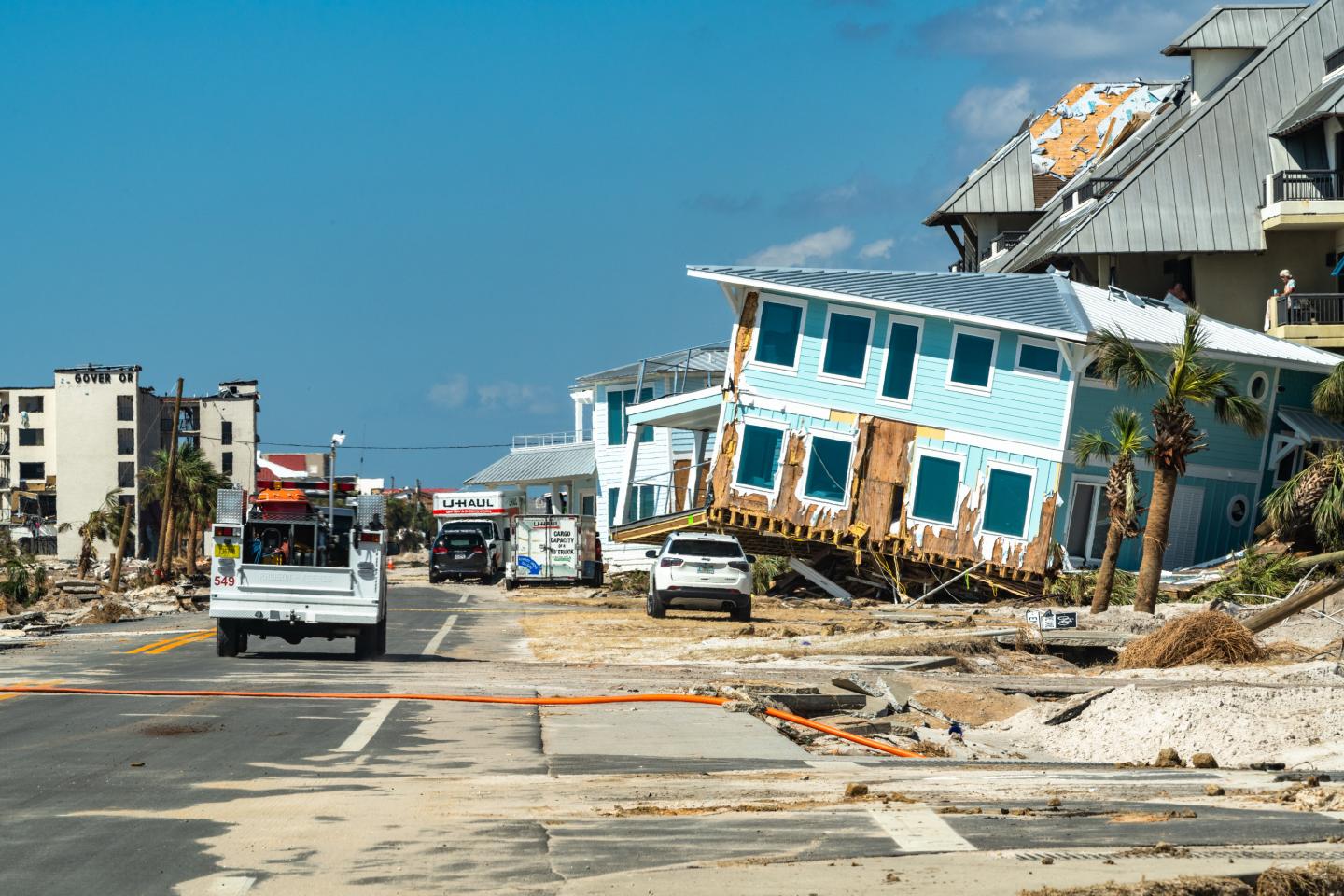
Hurricanes have become bigger and more destructive for USA; new study from the Niels Bohr Institute

Bioengineer by Bioengineer
November 11, 2019
in Chemistry
Reading Time: 2 mins read
0
IMAGE
Share on FacebookShare on TwitterShare on LinkedinShare on RedditShare on Telegram

IMAGE

Credit: K.C. Wilsey, FEMA

A new study by researchers at the Niels Bohr Institute, University of Copenhagen, Aslak Grinsted, Peter Ditlevsen and Jens Hesselbjerg shows that hurricanes have become more destructive since 1900, and the worst of them are more than 3 times as frequent now than 100 years ago. A new way of calculating the destruction, compensating for the societal change in wealth, unequivocally shows a climatic increase in the frequency of the most destructive hurricanes that routinely raise havoc on the North American south- and east coast. The study is now published in PNAS.

Climate change used to be obscured by the statistical uncertainty

The traditional way of calculating hurricane damage, in order to be able to compare hurricanes and follow their development over time, was to survey the subsequent cost of the damage done by each hurricane. In other words, what would a hurricane from the 1950s cost, if it made landfall today? Using this method, a typical find is that the majority of the rising tendency in damage can be attributed to the fact that there are more of us and we are more wealthy, and there is quite simply more costly infrastructure to suffer damage. But evidence of a climatic change in destructive force by hurricanes has been obscured by statistical uncertainty.

Hurricanes are becoming bigger, stronger and more dangerous – an improved calculation method now shows a clear tendency

Aslak Grinsted has calculated the historical figures in a new way. Instead of comparing single hurricanes and the damage they would cause today, he and his colleagues have assessed how big an area could be viewed as an “area of total destruction”. Meaning how large an area would you have to completely destroy in order to account for the financial loss. Simultaneously, this makes comparison between rural areas and more densely populated areas like cities easier, as the unit of calculation is now the same: The size of the “area of total destruction”.

The climate signal in the new method has suddenly become apparent

In previous studies it proved difficult to isolate the “climate signal”. The climate signal should be understood as the effect climate change has had on hurricane size, strength and destructive force. It lay hidden behind variations due to the uneven concentration of wealth and it was statistically uncertain whether there was anytendency in the destruction. But with the new method this doubt has been eradicated. The weather has indeed become more dangerous on the south- and east coast of the USA. Furthermore, the result obtained by the research team has turned out to be more congruent with the climate models we use to predict and understand the development in extreme weather. It fits with the physics, quite simply, that global warming has the effect that there is an increase in the force released in the most extreme hurricanes.

###

Media Contact
Aslak Grinsted
[email protected]
45-31-38-07-16

Related Journal Article

http://dx.doi.org/10.1073/pnas.1912277116

Tags: Climate ChangeClimate ScienceEarth ScienceGeophysicsMeteorologySpace/Planetary ScienceTemperature-Dependent PhenomenaWeather/Storms
Share13Tweet8Share2ShareShareShare2

Related Posts

Miniature Sensor Uses Light to Detect Touch — Chemistry

Miniature Sensor Uses Light to Detect Touch

May 8, 2026
Iron Minerals Determine Whether Dissolved Organic Matter Fuels Microbes or Becomes Long-Term Carbon Storage — Chemistry

Iron Minerals Determine Whether Dissolved Organic Matter Fuels Microbes or Becomes Long-Term Carbon Storage

May 8, 2026

Kate Evans Appointed Associate Lab Director for Biological and Environmental Systems Science at ORNL

May 8, 2026

Advancing Multiscale Modeling and Overcoming Operational Challenges in Autothermal COâ‚‚-to-Methanol Reactors

May 8, 2026
Please login to join discussion

POPULAR NEWS

  • Research Indicates Potential Connection Between Prenatal Medication Exposure and Elevated Autism Risk

    841 shares
    Share 336 Tweet 210
  • New Study Reveals Plants Can Detect the Sound of Rain

    728 shares
    Share 290 Tweet 182
  • Salmonella Haem Blocks Macrophages, Boosts Infection

    62 shares
    Share 25 Tweet 16
  • Breastmilk Balances E. coli and Beneficial Bacteria in Infant Gut Microbiomes

    57 shares
    Share 23 Tweet 14

About

We bring you the latest biotechnology news from best research centers and universities around the world. Check our website.

Follow us

Recent News

HIV-1 Strains Reveal Varied Paths to Antibody Escape

Rapid Nanopore Genomics Tracks Malaria Across Africa

Global City Growth Decouples from Fossil Fuels

Subscribe to Blog via Email

Enter your email address to subscribe to this blog and receive notifications of new posts by email.

Join 82 other subscribers
  • Contact Us

Bioengineer.org © Copyright 2023 All Rights Reserved.

Welcome Back!

Login to your account below

Forgotten Password?

Retrieve your password

Please enter your username or email address to reset your password.

Log In
No Result
View All Result
  • Homepages
    • Home Page 1
    • Home Page 2
  • News
  • National
  • Business
  • Health
  • Lifestyle
  • Science

Bioengineer.org © Copyright 2023 All Rights Reserved.