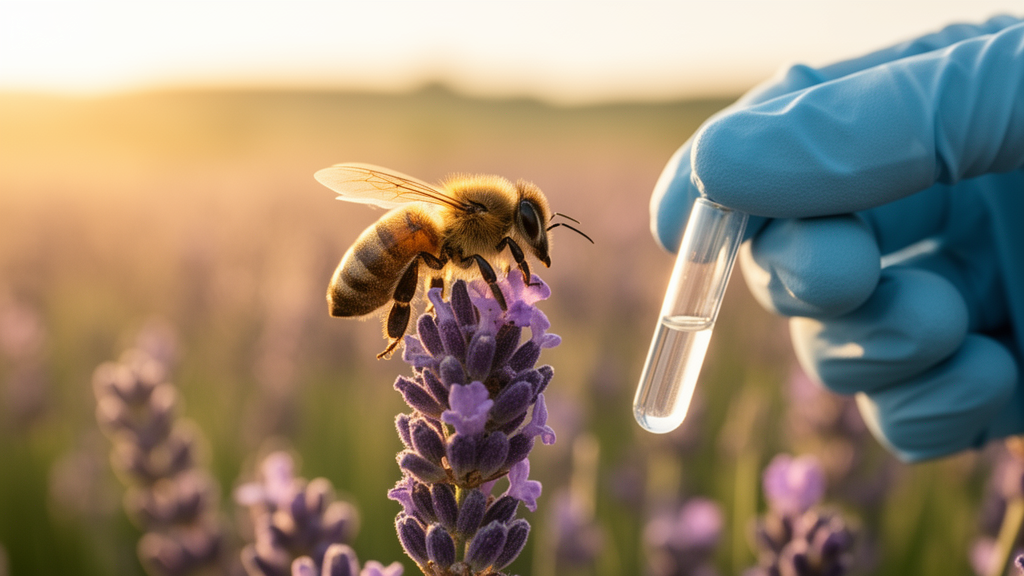
Honeybees face a barrage of environmental threats, from heat waves and cold snaps to pesticides and ultraviolet radiation, and their survival often hinges on the molecular machinery that responds to these insults. A new study published in Frontiers in Physiology examines one such component in the Asian honeybee Apis cerana cerana: a heat shock protein gene called DnaJC28, designated AccDnaJC28 in this species. Researchers at Qufu Normal University report that this gene is switched on by a wide range of stressors and that its activity influences whether bees survive lethal heat, positioning it as a candidate biomarker for environmental stress exposure.
The team, led by Guilin Li, began by characterizing the gene itself. The AccDnaJC28 coding sequence spans 1,125 base pairs and encodes a protein of 374 amino acids. Sequence analysis confirmed that it belongs to the DnaJC subfamily of DnaJ proteins, a large group of heat shock proteins that act as cochaperones for Hsp70, assisting with protein folding, refolding of damaged proteins, and disposal of misfolded ones. The J domain, the defining structural feature of these proteins, sits between amino acids 41 and 125 and adopts the canonical architecture of four alpha helices, with the characteristic HPD tripeptide positioned between helices II and III.
Because honeybee cells are difficult to culture, the researchers used Drosophila S2 cells to determine where the protein resides within the cell. After transfecting the cells with a tagged AccDnaJC28 construct and immunostaining with an anti-Myc antibody, they found the protein localized to the cytoplasm. According to the authors, this is the first experimental determination of DnaJC28 subcellular localization in any animal, providing a baseline for future comparative work.
Expression profiling across tissues and developmental stages revealed a distinctive pattern. AccDnaJC28 was transcribed broadly in the head, abdomen, stinger, midgut, epidermis, muscle, antennae, legs, and rectum, but the thorax showed the highest levels. The authors note that thorax temperature is actively regulated in bees during cold and heat exposure and correlates with flight performance and foraging activity, suggesting a possible link between high thoracic expression and thermoregulation. Across development, expression peaked in one-day-old adult workers, with moderate elevations in two-day-old larvae and white-eyed pupae.
The core of the study involved exposing nineteen-day-old worker bees to a panel of stressors and tracking gene expression by reverse transcription quantitative PCR. Heat treatment produced a clear temperature- and time-dependent response: expression did not change significantly at 33 degrees Celsius over five hours, but rose when bees were held at 40, 43, or 46 degrees Celsius, peaking after two, five, and four hours respectively. When the heat exposure was extended to 48 hours at 40 degrees Celsius, expression remained markedly elevated from 12 hours onward. Cold stress triggered a sharp spike at one hour before levels returned to baseline by four to five hours.
Chemical and radiation stressors induced the gene as well. Because these stressors are known to elevate reactive oxygen species, which damage DNA, lipids, and proteins at high concentrations, the authors suggest that ramping up AccDnaJC28 may be part of a protective strategy against oxidative stress.
To test whether the gene actually matters for survival, the team silenced it by feeding bees double-stranded RNA targeting AccDnaJC28, with double-stranded RNA targeting GFP as a control. Knockdown efficiency reached 86.95 percent at 24 hours. When silenced bees were then subjected to a heat tolerance test at 43 degrees Celsius, their survival rate was significantly lower than that of controls. Conversely, when AccDnaJC28 was overexpressed in Drosophila S2 cells exposed to 37-degree heat stress, cell density and viability were markedly higher than in vector-transfected controls, and trypan blue staining after 48 hours showed a notably lower percentage of dead cells in the overexpression group.
The mechanistic analysis pointed to the antioxidant defense system. Knocking down AccDnaJC28 significantly reduced the enzymatic activities of peroxidase and total superoxide dismutase, while catalase activity was unchanged. Gene expression measurements told a more nuanced story: silencing decreased the mRNA levels of CYP336A1, GSTZ1, and TrxR1, but paradoxically increased the expression of fifteen other antioxidant-related genes, including CYP4G11, several thioredoxin and peroxiredoxin family members, glutathione S-transferases, SOD1, and Hsp22.6. The authors interpret this compensatory upregulation as a partial backup response to the functional deficit created by the knockdown.
The authors acknowledge limitations in their experimental design. The in vivo RNAi experiments lacked an untreated or vehicle-only control group alongside the GFP dsRNA control, which would have ruled out nonspecific effects of dsRNA administration itself, although they argue that because all other conditions were identical between groups, the observed phenotype can be attributed to sequence-specific knockdown. They also note that the overexpression work was performed in a heterologous insect cell line rather than in bees, since transgenic technology is not currently feasible in honeybees, so the heat-tolerance benefit in cells does not directly demonstrate the same effect in living colonies.
DnaJC28 has previously been implicated in thermoregulation and climate adaptation in mammals, including Chinese rhesus macaques and Nellore cattle, but its function in insects had not been characterized before this work. Within Apis cerana cerana, a species unique to China that pollinates many native plants, other DnaJ genes such as DnaJA1, DnaJB12, and DnaJC8 have already been tied to stress responses, and the new findings place DnaJC28 in that network. The authors propose that AccDnaJC28 could serve as an early indicator of stress exposure in honeybees, potentially helping researchers and beekeepers detect when colonies are under environmental pressure before visible damage occurs. As they conclude, the gene appears to mitigate oxidative damage through the antioxidant signaling pathway, contributing to survival under heat and, by extension, to the resilience of colonies confronting the multiple stresses that threaten pollinators worldwide.
Subject of Research: The role of the DnaJC28 heat shock protein gene in the environmental stress response of the Asian honeybee Apis cerana cerana
Article Title: Functional analyses of Apis cerana cerana DnaJC28: a new biomarker for environmental stress
Article References: Li, G., Zou, X., Yin, S., Sun, Y., & Wen, Q. (2026). Functional analyses of Apis cerana cerana DnaJC28: a new biomarker for environmental stress. Frontiers in Physiology, 17, Article 1945469. https://doi.org/10.3389/fphys.2026.1945469
Image Credits: AI Generated
DOI: 10.3389/fphys.2026.1945469
Keywords: honeybees, Apis cerana cerana, heat shock proteins, DnaJC28, environmental stress, oxidative stress, antioxidant enzymes, RNA interference, biomarker, pesticides, thermotolerance, gene expression
News Source: Juliet Wilcox. (October 29, 2026). Honeybee Heat Shock Gene AccDnaJC28 Emerges as Environmental Stress Biomarker. Scienmag.