• HOME
  • NEWS
  • EXPLORE
    • CAREER
      • Companies
      • Jobs
    • EVENTS
    • iGEM
      • News
      • Team
    • PHOTOS
    • VIDEO
    • WIKI
  • BLOG
  • COMMUNITY
    • FACEBOOK
    • INSTAGRAM
    • TWITTER
Friday, November 6, 2026
BIOENGINEER.ORG
No Result
View All Result
  • Login
  • HOME
  • NEWS
  • EXPLORE
    • CAREER
      • Companies
      • Jobs
        • Lecturer
        • PhD Studentship
        • Postdoc
        • Research Assistant
    • EVENTS
    • iGEM
      • News
      • Team
    • PHOTOS
    • VIDEO
    • WIKI
  • BLOG
  • COMMUNITY
    • FACEBOOK
    • INSTAGRAM
    • TWITTER
No Result
View All Result
Bioengineer.org
No Result
View All Result
Home NEWS Science News Health

Heat-Triggered ATF3 Drives Ferroptosis in Sperm-Producing Cells, Mouse Study Finds

by
November 5, 2026
in Health
Reading Time: 3 mins read
0
Heat-Triggered ATF3 Drives Ferroptosis in Sperm-Producing Cells, Mouse Study Finds

Heat-Triggered ATF3 Drives Ferroptosis in Sperm-Producing Cells, Mouse Study Finds

Share on FacebookShare on TwitterShare on LinkedinShare on RedditShare on Telegram

Elevated temperatures are known to impair male fertility, but the precise chain of events leading to the damage and death of spermatogenic cells has remained poorly defined. A new study published in Reproductive Sciences reports that a transcription factor called ATF3 may be a central player, linking heat exposure in the testes to a form of regulated cell death known as ferroptosis.

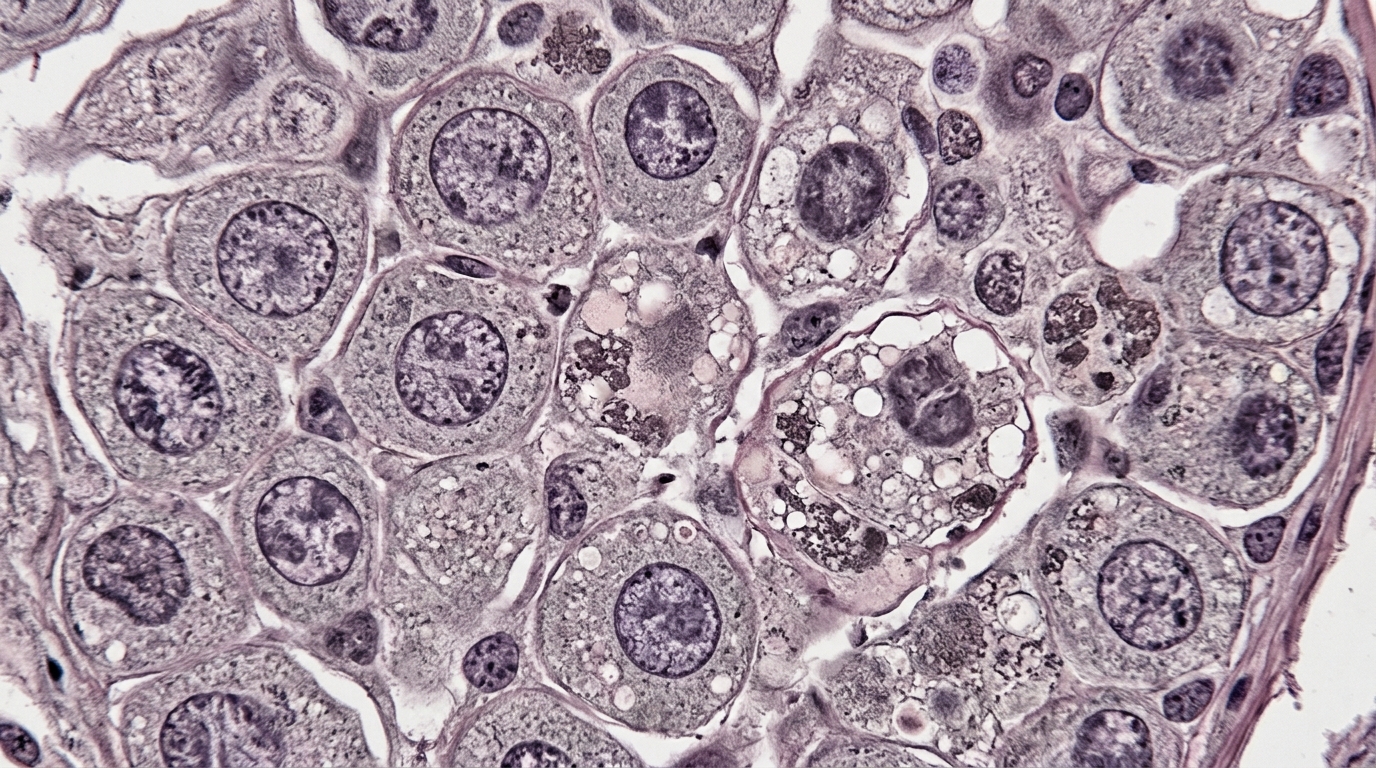
The research team, led by Chen Wang and Meng Liang with colleagues, examined how increasing temperatures affect the testes of mice. Their results showed that the testes sustained different degrees of damage as temperature rose, indicating a temperature-dependent pattern of injury to the tissue responsible for producing sperm.

To probe the cellular mechanism, the researchers turned to in vitro experiments using the GC-2 spermatocyte cell line, a laboratory model of developing sperm cells. They found that these cells suffered the most severe damage six hours after heat exposure, pinpointing a critical window in which heat stress inflicts the greatest harm on spermatogenic cells.

Transcriptome sequencing of the heat-treated cells identified activating transcription factor 3, or ATF3, as a gene whose expression changed in response to elevated temperature. Follow-up experiments confirmed that ATF3 expression increased after heat exposure, both in cultured cells and in animal tissue.

The rise in ATF3 had downstream consequences. The researchers observed that increased ATF3 expression was accompanied by decreased expression of two key protective proteins: SLC7A11, a solute carrier protein, and GPX4, glutathione peroxidase 4.

Consistent with this shift, the treated cells also accumulated reactive oxygen species, or ROS. The combination of falling SLC7A11 and GPX4 levels together with ROS buildup indicates that heat exposure pushed the cells toward ferroptosis, with ATF3 acting upstream of this process.

The study also examined hormonal and reproductive outcomes. Glucocorticoid analysis showed that high-temperature treatment led to an abnormal ratio of female-to-male offspring in mice after heat exposure, suggesting that heat-induced changes in the testes may extend beyond sperm cell survival to influence offspring sex ratios in this animal model.

According to the authors, the findings explain the underlying causes of low male fertility caused by heat exposure. By identifying ATF3 as a mediator that suppresses SLC7A11 and GPX4 and thereby triggers ferroptosis, the study proposes a specific molecular pathway through which testicular heat damage translates into impaired spermatogenesis.

The work was conducted in mice and in the GC-2 spermatocyte cell line, so its conclusions rest on animal and cellular models rather than direct human data. The abstract describes the study as an original research article in the field of male reproduction, published on 4 November 2026.

Subject of Research: How testicular heat exposure regulates spermatogenesis through ATF3-mediated ferroptosis in mice and spermatocyte cells.

Article Title: Atf3 Regulates Spermatogenesis by Mediating Ferroptosis During Testicular Heat Exposure

Article References: Wang, C., Li, X., Yang, X., Xu, S., Sun, B., Zhu, Q., An, C., Pei, Z., Liu, L., Hua, M., & Liang, M. (2026). Atf3 Regulates Spermatogenesis by Mediating Ferroptosis During Testicular Heat Exposure. Reproductive Sciences. https://doi.org/10.1007/s43032-026-02257-7

Image Credits: AI Generated

DOI: 10.1007/s43032-026-02257-7

Keywords: ATF3, ferroptosis, spermatogenesis, testicular heat exposure, SLC7A11, GPX4, reactive oxygen species, male fertility, GC-2 spermatocytes, Reproductive Sciences, glucocorticoids, transcriptome sequencing

News Source: Ophelia Keating. (November 5, 2026). Heat-Triggered ATF3 Drives Ferroptosis in Sperm-Producing Cells, Mouse Study Finds. Scienmag.


Tags: ATF3ferroptosisGC-2 spermatocytesglucocorticoidsGPX4Male Fertilityreactive oxygen speciesReproductive SciencesSLC7A11Spermatogenesistesticular heat exposureTranscriptome sequencing
Share12Tweet7Share2ShareShareShare1

Related Posts

VR Retrieval–Extinction Training Shows Only Short-Lived Cue Reactivity Reductions in Methamphetamine Use Disorder

VR Retrieval–Extinction Training Shows Only Short-Lived Cue Reactivity Reductions in Methamphetamine Use Disorder

November 6, 2026
Mediterranean diet shows no significant protection against prostate cancer in meta-analysis

Mediterranean diet shows no significant protection against prostate cancer in meta-analysis

November 6, 2026

Self-medication with antibiotics reaches up to 92% of children in Sub-Saharan Africa

November 6, 2026

Male and female cardiovascular cells differ under the microscope, review finds

November 6, 2026

POPULAR NEWS

  • Quantum SVM matches classical kernels on imbalanced attrition data, study finds

    Quantum SVM matches classical kernels on imbalanced attrition data, study finds

    29 shares
    Share 12 Tweet 7
  • Composite Metabolic Index Evaluated for Predicting Diabetes and Arthritis Comorbidity

    29 shares
    Share 12 Tweet 7
  • Novel Lachnospirales Gut Symbiont Discovered in Mid-Atlantic Ridge Hydrothermal Vent Shrimp

    29 shares
    Share 12 Tweet 7
  • Giloy Extract Attenuates D-Galactose-Induced Aging in Mice via AMPK-SIRT1 Pathway

    29 shares
    Share 12 Tweet 7

About

We bring you the latest biotechnology news from best research centers and universities around the world. Check our website.

Follow us

Recent News

Virtual avatar eyes that reveal gaze targets improve decoding but risk uncanny discomfort in VR

New Feature Selection Methods Boost MinHash Classifiers Across Five Real-World Tasks

Carbon atoms mapped in 3D with record precision in twisted bilayer graphene

Subscribe to Blog via Email

Enter your email address to subscribe to this blog and receive notifications of new posts by email.

Join 86 other subscribers
  • Contact Us

Bioengineer.org © Copyright 2023 All Rights Reserved.

Welcome Back!

Login to your account below

Forgotten Password?

Retrieve your password

Please enter your username or email address to reset your password.

Log In
No Result
View All Result
  • Homepages
    • Home Page 1
    • Home Page 2
  • News
  • National
  • Business
  • Health
  • Lifestyle
  • Science

Bioengineer.org © Copyright 2023 All Rights Reserved.