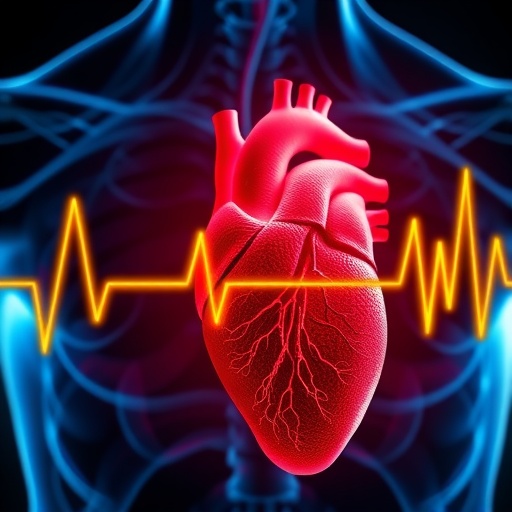
In a groundbreaking new study, researchers have uncovered a remarkable natural defense mechanism within the mammalian heart that actively suppresses cancer growth. This phenomenon appears to be fundamentally linked to the heart’s relentless mechanical activity—the continuous contractile force exerted during each heartbeat. The findings unveil how the heart’s unique mechanical environment influences gene regulation within cancer cells, effectively curtailing their ability to proliferate. This revelation opens promising avenues for the development of innovative cancer therapies that harness mechanical stimulation to inhibit tumor formation.
Heart cancer, also known as cardiac neoplasia, is exceptionally rare in mammals despite the organ’s constant exposure to mutagenic factors that typically prompt tumor development in other tissues. One of the paradoxes that has puzzled scientists is the heart’s notably low regenerative capacity; adult cardiomyocytes renew at an estimated rate of approximately 1% annually, much lower than many other cell types in the body. This limited self-renewal has traditionally been viewed as a vulnerability, yet it coincides with an extraordinary resilience to cancer, suggesting that the heart’s biology encompasses protective mechanisms that extend beyond mere cellular turnover.
The study spearheaded by Giulio Ciucci and colleagues explores the hypothesis that the mechanical stresses imposed on cardiac tissues—the immense and persistent pressure exerted during each contraction—might underpin this resistance to malignancy. The heart constantly pumps blood against high vascular resistance, subjecting its cells to sustained strain and shear forces. Such biomechanical challenges have long been known to influence cellular behavior, but their role in modulating tumor dynamics had remained largely uncharted territory until now.
Utilizing a sophisticated genetically engineered mouse model, Ciucci’s team introduced mutations with known oncogenic potential into cardiac tissues. Remarkably, even under these conditions designed to provoke tumorigenesis, the heart demonstrated a strong resistance to cancer formation. To dissect the contribution of mechanical load, the researchers devised an ingenious transplantation model. Hearts were transplanted into the neck region of compatible recipient mice, creating a scenario in which the grafted heart remained fully perfused yet was devoid of its typical physiological mechanical workload.
This “mechanically unloaded” cardiac graft served as a unique platform to study the direct impact of mechanical forces on tumor progression. By injecting human cancer cells directly into both the native, mechanically active hearts and the unloaded transplanted hearts, the researchers were able to compare the influence of mechanical stress on cancer cell behavior in vivo. The results were unequivocal: mechanical load consistently suppressed tumor growth, whereas its absence (mechanical unloading) permitted robust proliferation of cancer cells within the cardiac tissue.
At the core of the molecular mechanism underlying this phenomenon lies a protein called Nesprin-2, an integral component of the Linker of Nucleoskeleton and Cytoskeleton (LINC) complex. Nesprin-2 acts as a mechanosensor, transmitting extracellular mechanical signals from the cellular membrane to the nucleus, where it influences chromatin architecture and consequently gene expression programs. This mechanical-to-genomic signaling pathway was found to remodel chromatin and regulate histone methylation patterns, particularly suppressing genes that drive cell division and tumor growth.
When the researchers silenced Nesprin-2 in cancer cells, the suppression of proliferation by mechanical load was effectively reversed. These modified cancer cells regained their ability to grow unabated even within the native, mechanically active heart environment, forming tumors despite the usual biomechanical constraints. This compelling evidence confirms the critical role of Nesprin-2-mediated mechanotransduction in enforcing the heart’s natural resistance to cancer.
The implications of these findings are profound, extending beyond cardiac biology into the wider oncology field. The discovery that biomechanical forces can modulate the epigenetic landscape of cancer cells—effectively restraining their malignant potential—suggests that therapies incorporating controlled mechanical stimulation could become a novel strategy to combat tumors in various tissues. This mechanobiological approach heralds a paradigm shift, emphasizing the importance of physical forces as intrinsic regulators of cellular fate.
Moreover, the study’s insights offer potential explanations for the longstanding observation of cardiac cancer rarity and underscore the importance of the mechanical microenvironment in shaping disease susceptibility. By revealing how mechanical load can reprogram cancer cells at a genomic level, this research opens up new questions regarding the interplay between tissue mechanics, cellular architecture, and oncogenesis.
In a wider context, these findings tie into the burgeoning field of mechanobiology, which examines how mechanical forces influence biological processes. They highlight the need for rigorous methodological standards to reproduce complex mechanobiology experiments, recognizing both the promise and the challenges involved. As noted by study co-author Serena Zacchigna, ensuring reproducibility and developing standardized protocols for mechanical stimulation are critical for translating these discoveries into clinical applications, alongside careful ethical consideration and patient involvement in technology design.
Given the revolutionary potential of this research, further investigations are anticipated to delineate the precise molecular networks involved and to explore whether similar mechanical inhibitory effects operate in other tissues prone to cancer. Additionally, the mechanotransductive pathway involving Nesprin-2 could become a target for pharmaceutical development, aimed at mimicking or enhancing the protective mechanical signals to suppress tumor growth.
As the scientific community digests these novel insights, related commentary by experts such as Wyatt Paltzer and James Martin further contextualizes the work, underscoring its significance and urging a reevaluation of cancer biology through the lens of physical forces. Their perspectives enrich the ongoing dialogue about integrating biomechanics into cancer research paradigms.
This study not only contributes a crucial piece to the puzzle of cardiac cancer resistance but also propels the broader quest to understand how mechanical environments influence health and disease. It exemplifies how interdisciplinary research combining genetics, biomechanics, and oncology can yield transformative knowledge with far-reaching clinical potential.
For those intrigued by the interplay of mechanical forces and cancer biology, the forthcoming episode of the Science podcast featuring Giulio Ciucci will delve deeper into the research. This accessible discussion promises to illuminate the nuances of the study, offering listeners an engaging exploration of how the heart’s ceaseless beat guards against malignancy.
In summary, the heart’s mechanical workload emerges as a previously underappreciated barrier to cancer progression, mediated by the Nesprin-2 complex that translates physical strain into genetic repression of tumor proliferation. This mechanobiological defense highlights the exquisite integration of physical and molecular systems in maintaining organ integrity and opens exciting new frontiers for therapeutic innovation against cancer.
Subject of Research: Mechanobiology of cancer suppression in cardiac tissues
Article Title: Mechanical load inhibits cancer growth in mouse and human hearts
News Publication Date: 23-Apr-2026
Web References:
DOI: 10.1126/science.ads9412
Keywords: cardiac cancer resistance, mechanotransduction, Nesprin-2, LINC complex, mechanical load, cancer proliferation, chromatin remodeling, histone methylation, tumor suppression, cardiomyocytes, mechanobiology, gene regulation
Tags: cancer therapy developmentcardiac cancer suppressioncardiac neoplasia raritycardiac tissue mechanical stresscardiomyocyte renewal rategene regulation in cancer cellsheart cancer researchheart’s natural cancer defenseheartbeats inhibit tumor growthmechanical activity and cancermechanical forces in tumor inhibitionmechanical stimulation for cancer treatment