


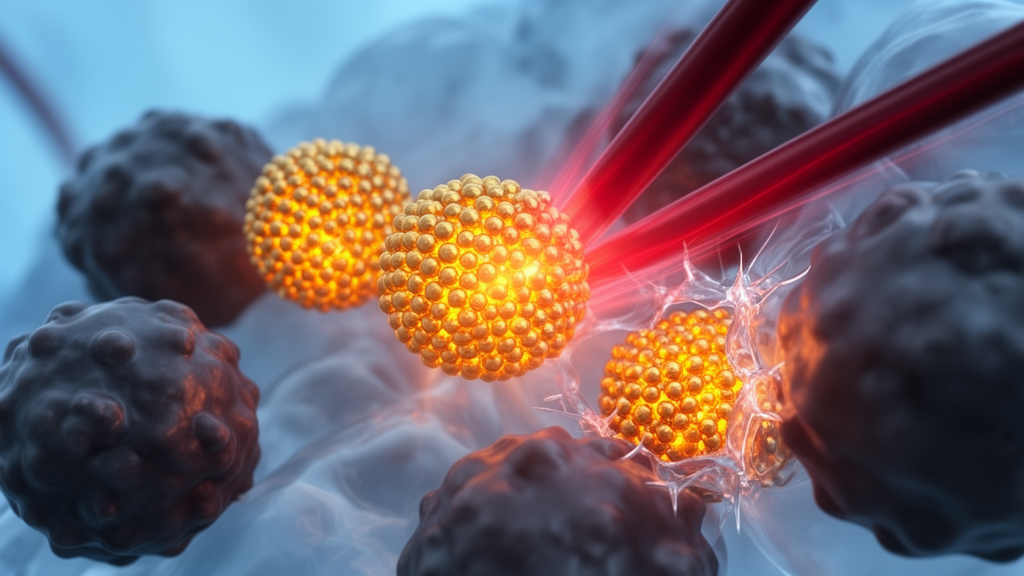
Gold nanoparticles heated by near-infrared laser light can sharply raise tumor temperatures and shrink tumor volumes in preclinical studies, according to a systematic review and meta-analysis published in Cancer Nanotechnology. The work, described by its authors as the first global quantitative synthesis of gold nanoparticle-mediated photothermal therapy, pooled data from preclinical studies published between 2015 and 2025.
The research team, led by Emad Khoshdel and Farzaneh Ghorbani, conducted a systematic search across four major databases and followed PRISMA guidelines, with the protocol registered as PROSPERO CRD420251250129. In total, 162 studies satisfied the inclusion criteria for the systematic review, of which 113 were in-vitro and 72 were in-vivo investigations. A smaller subset of 64 studies provided enough data for the quantitative meta-analysis.
The pooled analysis focused on two primary outcomes: how much tumors heated up during treatment, and how much they shrank relative to controls. Across the included studies, the mean intra-tumoral temperature elevation was 15.30 degrees Celsius, with a 95% confidence interval of 13.06 to 17.54 degrees Celsius and a p-value below 0.001. Tumor volume fell by a mean of 832.21 cubic millimeters relative to controls, with a 95% confidence interval ranging from 1016.08 to 648.34 cubic millimeters below the control value, also with p below 0.001.
Beyond the headline effect sizes, the review mapped out the physical conditions under which gold nanostructures performed best. The optimal photothermal setup identified was a wavelength of 808 nanometers, a laser intensity between 0.5 and 3.0 watts per square centimeter, and an irradiation time of 5 to 10 minutes. Among the different nanoparticle shapes examined, gold nanorods showed superior photothermal efficiency, with an optimal size of approximately 80 nanometers.
A dose–response meta-regression revealed a nonlinear relationship between nanoparticle concentration and therapeutic effect. Efficacy rose with concentration up to a plateau between 50 and 100 micrograms per milliliter, beyond which the analysis suggested minimal additional gains. This plateau pattern, the authors note, offers a quantitative benchmark for designing future preclinical experiments and avoiding unnecessarily high doses.
The synthesis also examined combination strategies. Approaches that combined photothermal therapy with two additional treatment modalities achieved the highest synergy index reported in the analysis, a value of 2.45. Safety evaluations across the included studies indicated favorable biocompatibility at doses of 15 milligrams per kilogram or below.
Methodologically, the team used random-effects models to pool effect sizes and applied the OHAT and SYRCLE tools to rate the quality and risk of bias in the included studies. The analysis was restricted to preclinical research, meaning the findings describe cell culture and animal models rather than outcomes in human patients.
In their conclusion, the authors state that the study quantitatively validates gold nanoparticle photothermal therapy as an effective preclinical modality, characterized by a distinct dose–response profile, predictable biological outcomes, and substantial synergistic potential when combined with other therapies. The article was published on 21 August 2026 as an open-access paper in Cancer Nanotechnology, and the version currently available is a shared early version that remains subject to further editorial edits before the final version of record appears.
By synthesizing hundreds of preclinical experiments into pooled effect sizes and a dose–response curve, the new analysis provides one of the most detailed quantitative pictures to date of how nanoparticle concentration, particle shape, laser parameters, and treatment duration interact to determine therapeutic outcome in laboratory models of cancer.
Subject of Research: Preclinical efficacy and dose–response of gold nanoparticle-mediated photothermal cancer therapy
Article Title: Gold nanostructure-based cancer photothermal therapy: a comprehensive systematic review, meta-analysis, and dose–response evaluation
Article References: khoshdel, E., Jadid, M. S., Heravi, M. A. Y., Fazlkhah, B., Gholami, S., Mehrabifard, M., Shifteh, N., Malekzadeh, R., & Ghorbani, F. (2026). Gold nanostructure-based cancer photothermal therapy: a comprehensive systematic review, meta-analysis, and dose–response evaluation. Cancer Nanotechnology. https://doi.org/10.1186/s12645-026-00418-6
Image Credits: AI Generated
DOI: 10.1186/s12645-026-00418-6
Keywords: gold nanoparticles, photothermal therapy, cancer, meta-analysis, systematic review, dose–response, gold nanorods, tumor growth inhibition, preclinical research, nanomedicine, hyperthermia, combination therapy
News Source: Nathaniel Bowman. (October 30, 2026). Gold nanoparticle laser therapy shows strong preclinical tumor-killing power in major meta-analysis. Scienmag.



