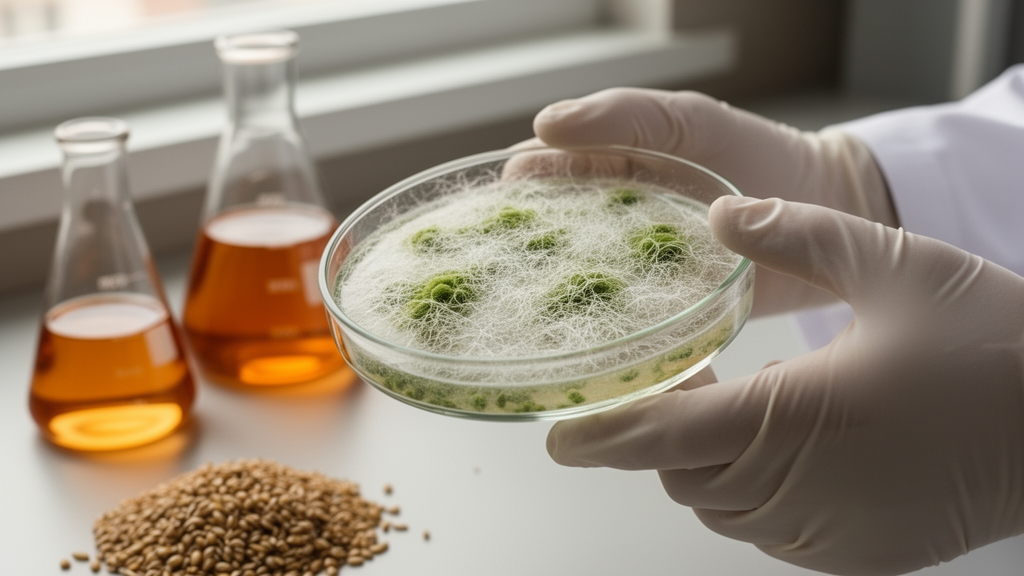
Fungi may offer a way to tackle some of the most stubborn chemical contaminants in the food supply, from pesticides and endocrine disruptors to synthetic dyes, mycotoxins, microplastics and heavy metals, according to a narrative review published on 16 October 2026 in the open-access journal Food Safety and Risk. The review, written by Victoria Bell, Jorge Ferrão, José Guina and Tito Fernandes, argues that mycoremediation, the use of fungal-based clean-up approaches, deserves a central place in environmental biotechnology research, while cautioning that applying it directly to food remains in its initial stages.
The authors frame the problem against a backdrop of rapid industrialization, intensive farming and urban development, which have turned environmental pollution into a major global challenge. Poor handling and inadequate management of waste and effluents from households, industries and agricultural fields harm ecosystems, and the resulting contaminants enter the food supply chain through contaminated soil, water and packaging. Food contamination may involve biological, chemical, physical or allergenic agents, and the review focuses primarily on chemical hazards, which can taint edible material and cause illness or injury if not properly controlled during production, handling or preparation.
Mycoremediation exploits several distinct fungal capabilities. Biodegradation is the natural breakdown of organic matter into simpler compounds, water and biomass, mediated by fungi, bacteria, algae and mixed microbial communities. Biotransformation is any structural change of a chemical mediated by living organisms or enzymes, whether the product becomes less or more toxic. Mineralization, sometimes called ultimate biodegradation, is the complete breakdown of an organic compound into inorganic end products such as carbon dioxide, water and mineral ions. Biosorption, by contrast, is a passive, metabolism-independent process in which fungal cell walls bind inorganic pollutants, particularly heavy metals, through functional groups such as carboxyl, amino, phosphate, chitosan, glucan and phenolic moieties, and it can operate with both live and dead fungal biomass. Bioaccumulation is the active, metabolism-dependent uptake of a substance faster than it is excreted, concentrating it within tissues or cells.
Among fungi, white-rot fungi stand out for their ability to degrade lignin through extensive and non-selective extracellular oxidative enzyme systems, including lignin peroxidase, manganese peroxidase and, in many species, laccase. The review highlights that these highly unspecific enzymes allow organisms such as Trametes versicolor to attack a wide range of xenobiotics without an adaptation period, since no lag phase is required in the degradation of foreign compounds. Trametes versicolor produces laccases, members of the blue multicopper oxidase family, which have demonstrated high efficiency in degrading endocrine-disrupting chemicals, positioning fungal remediation as a potential ecological alternative to conventional technologies.
The review surveys the scope of contaminants that fungi can address. Fungi produce extracellular specialized enzymes such as laccases, peroxidases, dehalogenases, xylanases and cytochrome P450 monooxygenases, giving them the metabolic machinery to eliminate, decompose or reduce pollution from different types of xenobiotics, including drugs, detergents, fire retardants and building materials. Certain mushrooms, notably Pleurotus species, along with bacteria and yeasts, can degrade mycotoxins into less toxic or non-toxic compounds, and studies show effective enzymatic detoxification of major toxins such as aflatoxin B1, zearalenone and deoxynivalenol. More than 500 mycotoxins have been identified, produced primarily by filamentous fungi from the genera Aspergillus, Fusarium, Claviceps, Alternaria and Penicillium, and roughly 60 to 80 percent of consumed food in developing countries contains detectable levels of these toxins.
On endocrine-disrupting chemicals, the review notes that of approximately 140,000 chemicals registered under the European Union’s REACH regulation, more than 1,000 natural and synthetic substances are known or suspected to have endocrine-disrupting properties. These agents mimic, block or interfere with hormones such as oestrogens, androgens and thyroid hormones, and dietary intake is a basic point of exposure, since EDCs enter food and beverages through packaging migration, processing, environmental pollution and pesticide or fertilizer use. The potential of fungal biodegradation, particularly using Trametes versicolor, in mitigating the estrogenic activity of EDCs in wastewater has been verified, and fungi can mineralize a wide range of dyes, including azo, triphenylmethane and anthraquinone classes, into less toxic or non-toxic by-products through their ligninolytic enzymes.
Heavy metals present a special case because they cannot be biodegraded or destroyed. Fungi can change, trap or hold onto these metals, but they cannot destroy them. Mushrooms act as highly effective bioaccumulators, filtering and retaining heavy metals such as lead, cadmium, mercury, nickel, copper and zinc from their environment through extensive absorbent mycelium networks. While this ability makes them potent tools for cleaning contaminated soils and water, it renders many wild edible mushrooms risky for human consumption. Fungal genera recorded in heavy metal remediation include Aspergillus, Penicillium, Rhizopus, Fusarium, Trichoderma, Mucor and many others, and mechanisms proposed for metal tolerance include extracellular chelation and cell wall binding as well as intracellular sequestration.
On micro- and nanoplastics, the review describes particles smaller than 5 mm as microplastics and those smaller than 100 nm as nanoplastics, both of which act as physical and chemical pollutants and can act as carriers and sources of EDCs such as bisphenol A, phthalates and flame retardants. Bisphenol A can be biodegraded by microorganisms including bacteria, fungi and algae, notably by edible white-rot fungi at environmentally relevant concentrations. However, the authors stress that the fact fungi biodegrade plastics does not demonstrate that the process is a ready-to-use, large-scale solution, that it works quickly in natural settings, or that it leaves behind no harmful by-products. Biodegradable plastic fragments can break into micro-sized particles under natural conditions or during fungal remediation without achieving complete mineralization, meaning these particles may remain in the environment for extended periods. Microbial consortia demonstrate superior degradation efficiency compared with single-species cultures, reflecting the enzymatic complexity required for complete polymer mineralization.
The review is candid about the limitations. Mycoremediation of food hazards remains in its initial stages due to strict safety regulations and the risk of potential toxic by-product accumulation. Translating in vitro capabilities to predictable, scalable in vivo and field applications is heavily limited by mass-transfer constraints, regulatory bottlenecks and incomplete metabolic mapping. Fungal degradation processes face slow field-scale reaction rates, poor long-term survival of inoculated strains in harsh soils, low chemical bioavailability of target compounds, sensitivity to harsh environmental conditions, and the risk of creating intermediate breakdown products that are more toxic than the original pollutants. Detoxification does not guarantee safety, because degradation products can be more toxic or mobile than the original compound, and proper verification requires identifying transformation intermediates, assessing bioaccumulation potential and measuring direct biological responses. A further recognized risk is that fungi used in mycoremediation, particularly genera such as Aspergillus, Penicillium and Fusarium, may themselves produce mycotoxins under environmental stress. In most cases, microbial and fungal degradation of microplastics takes years or even decades to yield meaningful results.
The authors conclude that mycoremediation processes are cost-effective and environmentally friendly clean-up solutions and a sustainable alternative to conventional sanitising methods of air, soil and water, but they emphasize that findings have been restricted to pre-clinical animal and lab models. Potential ecological risks, such as horizontal gene transfer and unintended interactions with native microbiota, must be assessed through contained field trials and biosafety regulations. For mycoremediation to reach its full potential, the review argues, research must focus on key fungal enzymes, their specific degradation pathways, and how environmental factors regulate their activity, while the focus in food safety still remains on prevention and reducing exposure rather than detoxification.
Subject of Research: Fungal-based remediation of chemical contaminants in the food supply
Article Title: Mycoremediation a promising strategy to challenge chemical food hazards
Article References: Bell, V., Ferrão, J., Guina, J., & Fernandes, T. (2026). Mycoremediation a promising strategy to challenge chemical food hazards. Food Safety and Risk, 13(1), Article 45. https://doi.org/10.1186/s40550-026-00167-9
Image Credits: AI Generated
DOI: 10.1186/s40550-026-00167-9
Keywords: mycoremediation, food safety, chemical contaminants, fungi, biodegradation, endocrine disruptors, mycotoxins, heavy metals, microplastics, white-rot fungi, biosorption, environmental pollution
News Source: Roger Howard. (October 28, 2026). Fungi Show Promise for Breaking Down Chemical Food Hazards, Review Finds. Scienmag.