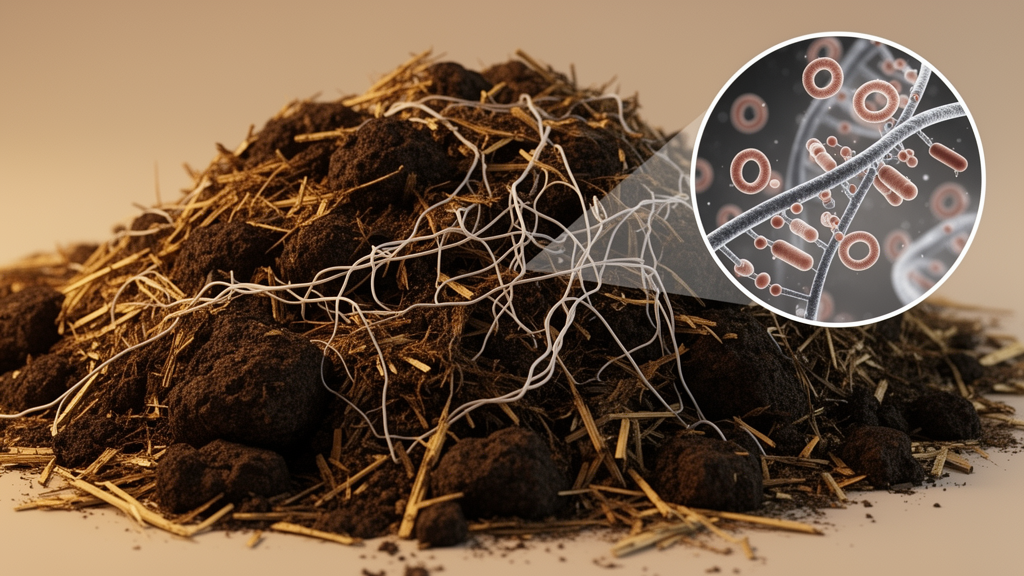
Antibiotic resistance is one of the most pressing global health threats, and a new study suggests that an unexpected group of organisms may be quietly helping it persist: fungi. Research published in the journal Agricultural Ecology and Environment reports that fungi play a previously overlooked role in supporting the survival and potential spread of antibiotic resistance genes during livestock manure composting, a process widely used to recycle animal waste into organic fertilizer.
Livestock manure is a valuable resource for agriculture, but it can carry antibiotic residues, heavy metals, and bacteria harboring antibiotic resistance genes. If these genes survive the composting process, they may enter agricultural soils and contribute to the broader environmental dissemination of resistance. Until now, most research on this problem has concentrated on bacteria, while the contribution of fungi has received far less attention.
To probe this hidden relationship, researchers at China Agricultural University and collaborating institutions conducted a 30-day composting experiment using pig manure. They applied different concentrations of cycloheximide, a chemical that inhibits fungal activity, to examine how changes in fungal populations affected the bacterial communities and the resistance genes they carry.
The results revealed a striking pattern. When fungal activity was suppressed, the removal of antibiotic resistance genes from the composting material increased from 34.32 percent to 51.50 percent. The removal of mobile genetic elements, which can help resistance genes move between bacteria, also improved substantially, rising from 38.61 percent to 68.02 percent. In addition, the treatment enhanced the removal of high-risk antibiotic resistance genes and reduced the accumulation of genes associated with heavy metal resistance.
“Fungi are more than just decomposers in composting systems. Our findings suggest that they also help create microbial connections that allow antibiotic resistance genes to persist and potentially spread,” said Jing Yuan, corresponding author of the study at China Agricultural University.
The mechanism appears to be indirect but consequential. Fungi maintain complex microbial networks through their thread-like structures, known as hyphae, which can provide pathways for bacterial movement, while fungal secretions may influence bacterial growth and interactions. When fungal activity was suppressed in the experiment, these microbial connections weakened, and the abundance of certain bacterial groups, including Lactobacillus and Anaerococcus, declined. These bacteria were identified as potential carriers of multiple resistance genes.
Taken together, the findings suggest that fungi may indirectly support antibiotic resistance by promoting the survival and interactions of bacteria that carry resistance genes. Disrupting these relationships, the researchers propose, could reduce both the persistence of resistance genes and their potential transfer between microorganisms in composting systems.
The study offers a new perspective on managing antibiotic resistance in agricultural waste. Rather than focusing exclusively on bacteria, future composting strategies could also consider the relationships between fungi and bacterial communities. By identifying fungi as an important biological factor in resistance gene dynamics, the research opens new directions for improving manure treatment and reducing the environmental risks associated with livestock waste recycling.
However, the researchers emphasize that important caveats remain. The experiments were conducted in a controlled, small-scale composting system, and the precise mechanisms linking fungi to resistance gene transfer remain unresolved. The findings do not establish that applying fungicides to agricultural compost is a safe or practical treatment, and further investigation is needed before any management recommendations can be made.
Ultimately, the study underscores a broader lesson for microbiology: understanding how microorganisms cooperate may be just as important as understanding how individual microorganisms behave. As livestock manure continues to be recycled into fertilizer worldwide, the microscopic partnerships within compost heaps could prove decisive in determining whether antibiotic resistance genes are destroyed or carried back into the food-producing environment.
Subject of Research: The role of fungi in the persistence and spread of antibiotic resistance genes during livestock manure composting.
Article Title: Hidden fungal networks may help antibiotic resistance spread during manure composting
Article References: Hidden fungal networks may help antibiotic resistance spread during manure composting. Original publication (Bibliographic details unavailable.)
Image Credits: AI Generated
DOI: Not provided
Keywords: antibiotic resistance, fungi, manure composting, livestock waste, resistance genes, mobile genetic elements, hyphae, microbial networks, organic fertilizer, environmental health, pig manure, composting
News Source: Juliet Wilcox. (October 29, 2026). Fungi may help antibiotic resistance genes survive livestock manure composting. Scienmag.