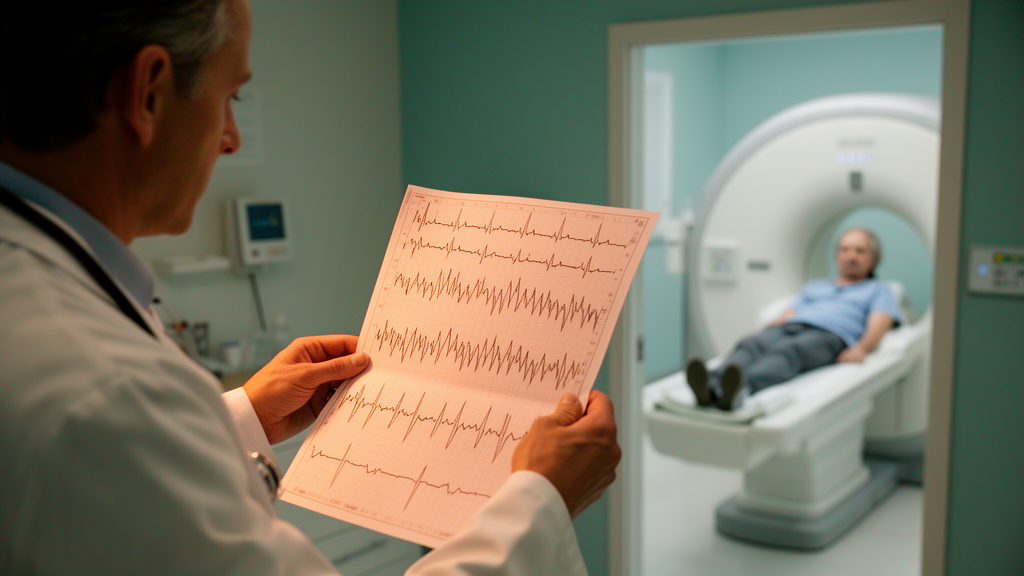
Lung cancer patients who receive curative-intent thoracic radiotherapy show fragmented QRS complexes on their electrocardiograms far more often than matched controls, according to a controlled observational study published in the journal Cardio-Oncology. In the study, fragmented QRS appeared in 9 of 34 patients (26.5%) after radiotherapy, compared with 3 of 40 sociodemographically matched controls (7.5%), a difference the authors report as statistically significant (p = 0.027).
It is considered a marker of myocardial scarring and conduction heterogeneity and has previously been linked to adverse cardiac outcomes.
The research team enrolled patients treated between September 2020 and September 2023. All participants were aged 18 or older and had locally advanced lung cancer. The radiotherapy group comprised 34 patients, each of whom underwent a standard 12-lead electrocardiogram after completing curative-intent thoracic radiotherapy. The recordings were taken during routine follow-up visits at a median of 4 months after the end of radiotherapy, with a range of 2 to 12 months.
To strengthen the comparison, the investigators matched the patients with 40 controls of similar sociodemographic characteristics. The study excluded individuals with cardiac implantable electronic devices, acute coronary syndrome, systemic connective tissue disease, sarcoidosis, or inadequate electrocardiographic data, since these conditions could themselves produce fragmented QRS or otherwise confound the ECG reading. Fragmented QRS was identified according to established criteria.
The higher prevalence in the irradiated group led the authors to suggest that fragmented QRS may represent an early electrocardiographic marker of radiation-induced cardiotoxicity in this population. They note that few studies have evaluated fragmented QRS in the setting of radiation-induced cardiotoxicity, and that data focusing specifically on lung cancer patients receiving thoracic radiotherapy remain limited, which frames the study as an early contribution to a sparse evidence base.
The authors conclude that careful attention to cardiac dose during treatment planning, routine ECG surveillance, and additional cardiac evaluation should be considered in patients in whom fragmented QRS is detected. This positions the finding as a potential trigger for closer monitoring rather than a diagnostic verdict on its own.
Several limitations deserve emphasis. The study is observational and relatively small, with 74 participants in total, so it cannot establish that radiotherapy caused the fragmented QRS complexes, and unmeasured differences between groups could contribute to the observed association. The ECGs were recorded at varying intervals, from 2 to 12 months after treatment, and the article reports a single post-treatment assessment rather than serial measurements within each patient. As a shared early-access version, the text is subject to further edits before the final version of record.
Subject of Research: Fragmented QRS as a potential early electrocardiographic marker of radiation-induced cardiotoxicity in lung cancer patients treated with thoracic radiotherapy
Article Title: Fragmented QRS as an early marker of radiation-induced cardiotoxicity in lung cancer patients: a controlled observational study
Article References: Kapıcıbaşı, H. O., Akşit, E., & Yildirim, Ö. (2026). Fragmented QRS as an early marker of radiation-induced cardiotoxicity in lung cancer patients: a controlled observational study. Cardio-Oncology. https://doi.org/10.1186/s40959-026-00570-3
Image Credits: AI Generated
DOI: 10.1186/s40959-026-00570-3
Keywords: fragmented QRS, electrocardiography, radiation-induced cardiotoxicity, lung cancer, thoracic radiotherapy, myocardial scarring, ECG surveillance, observational study, cardio-oncology, treatment planning, Fragmented, early
News Source: Nathaniel Bowman. (October 27, 2026). Fragmented QRS on ECG may flag radiation heart injury in lung cancer patients. Scienmag.