• HOME
  • NEWS
  • EXPLORE
    • CAREER
      • Companies
      • Jobs
    • EVENTS
    • iGEM
      • News
      • Team
    • PHOTOS
    • VIDEO
    • WIKI
  • BLOG
  • COMMUNITY
    • FACEBOOK
    • INSTAGRAM
    • TWITTER
Friday, May 15, 2026
BIOENGINEER.ORG
No Result
View All Result
  • Login
  • HOME
  • NEWS
  • EXPLORE
    • CAREER
      • Companies
      • Jobs
        • Lecturer
        • PhD Studentship
        • Postdoc
        • Research Assistant
    • EVENTS
    • iGEM
      • News
      • Team
    • PHOTOS
    • VIDEO
    • WIKI
  • BLOG
  • COMMUNITY
    • FACEBOOK
    • INSTAGRAM
    • TWITTER
  • HOME
  • NEWS
  • EXPLORE
    • CAREER
      • Companies
      • Jobs
        • Lecturer
        • PhD Studentship
        • Postdoc
        • Research Assistant
    • EVENTS
    • iGEM
      • News
      • Team
    • PHOTOS
    • VIDEO
    • WIKI
  • BLOG
  • COMMUNITY
    • FACEBOOK
    • INSTAGRAM
    • TWITTER
No Result
View All Result
Bioengineer.org
No Result
View All Result
Home NEWS Science News Biology

Fish sex organs boosted under high-CO2

Bioengineer by Bioengineer
January 21, 2021
in Biology
Reading Time: 2 mins read
0
IMAGE
Share on FacebookShare on TwitterShare on LinkedinShare on RedditShare on Telegram

IMAGE

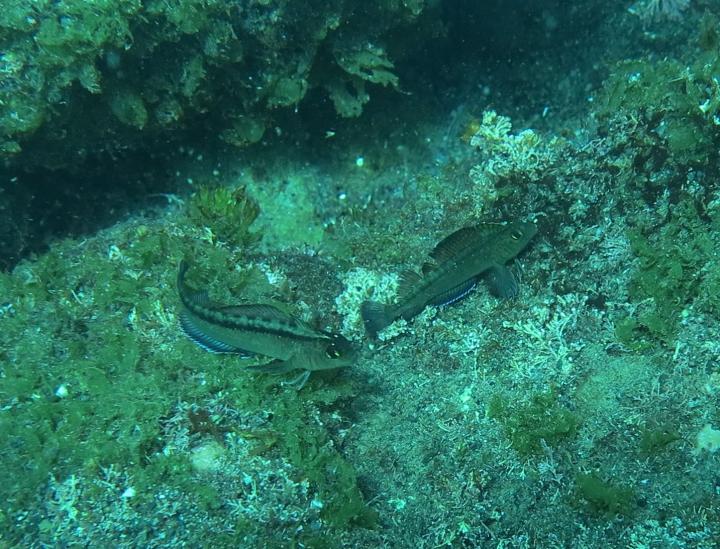
Credit: Southern Seas Ecology Laborator

Research from the University of Adelaide has found that some species of fish will have higher reproductive capacity because of larger sex organs, under the more acidic oceans of the future.

Published in PLOS Biology, the researchers say that far from the negative effects expected under the elevated CO2 levels in our oceans predicted for the end of the century, these fish capitalise on changes to the underwater ecosystems to produce more sperm and eggs. They also look after them better, enhancing the chances of reproductive success.

“The warming oceans absorb about one-third of the additional CO2 being released into the atmosphere from carbon emissions, causing the oceans to acidify,” says lead author Professor Ivan Nagelkerken from the University’s Environment Institute and Southern Seas Ecology Laboratories.

“We know that many species are negatively affected in their behaviour and physiology by ocean acidification. But we found that in this species of temperate fish – the common triplefin – both males and females had larger gonads under conditions of ocean acidification. This meant increased egg and sperm production and therefore more offspring.”

The team used natural volcanic CO2 underwater seeps to compare ecosystems with the levels of CO2 that are predicted for the end of this century with fish communities living under today’s ‘normal’ levels of CO2.

They found that there were no negative effects of ocean acidification for the triplefins. The larger gonads did not come at a physiological cost.

“We found males were eating more. They showed intensified foraging on more abundant prey – which was more abundant because of the increased biomass of algae that grows under the elevated CO2,” says Professor Nagelkerken.

“The females, on the other hand, did not eat more. They instead reduced their activity levels to preserve energy and then invested this in larger ovaries.

“We also found there were more mature males under elevated CO2 and, in this species where it is the males that take care of the eggs, that means we have more parents nurturing the egg nests, which could increase offspring.”

The researchers found that other, less dominant, fish species did not show such an effect of reproductive output, perhaps due to their less competitive nature.

“We think it likely that the triplefin and similar species will do very well under increased ocean acidification,” says co-author Professor Sean Connell. “The study shows that some, more dominant, species will be able to capitalise on changes to ecosystems under ocean acidification, increasing their population.”

###

Media Contact:

Professor Ivan Nagelkerken, Southern Seas Ecology Laboratories and Environment Institute, The University of Adelaide. Mobile: +61(0)477 320 551, [email protected]

Robyn Mills, Senior Media and Communications Officer, University of Adelaide. Phone: +61 (0)8 8313 6341, Mobile: +61 (0)410 689 084, [email protected]

Media Contact
Professor Ivan Nagelkerken
[email protected]

Related Journal Article

http://dx.doi.org/10.1371/journal.pbio.3001033

Tags: BiodiversityBiologyClimate ChangeDevelopmental/Reproductive BiologyEcology/EnvironmentMarine/Freshwater BiologyPhysiologyZoology/Veterinary Science
Share12Tweet8Share2ShareShareShare2

Related Posts

Supercomputer Simulations Uncover How Bacterial Enzyme Pumps Sodium Ions, Opening Doors to Novel Antibiotics — Biology

Supercomputer Simulations Uncover How Bacterial Enzyme Pumps Sodium Ions, Opening Doors to Novel Antibiotics

May 15, 2026
New Astrobiology Special Collection Highlights Emerging Evidence Supporting Land-Based Origins of Life — Biology

New Astrobiology Special Collection Highlights Emerging Evidence Supporting Land-Based Origins of Life

May 14, 2026

Revolutionizing Textiles: Engineered Protein Fibers Pave the Way for Sustainable, Recyclable Fabrics

May 14, 2026

URI Master’s Student Emilio Pedroza Lopez Awarded Prestigious NSF Graduate Research Fellowship

May 14, 2026
Please login to join discussion

POPULAR NEWS

  • Research Indicates Potential Connection Between Prenatal Medication Exposure and Elevated Autism Risk

    843 shares
    Share 337 Tweet 211
  • New Study Reveals Plants Can Detect the Sound of Rain

    729 shares
    Share 291 Tweet 182
  • Salmonella Haem Blocks Macrophages, Boosts Infection

    62 shares
    Share 25 Tweet 16
  • Breastmilk Balances E. coli and Beneficial Bacteria in Infant Gut Microbiomes

    58 shares
    Share 23 Tweet 15

About

We bring you the latest biotechnology news from best research centers and universities around the world. Check our website.

Follow us

Recent News

Digital Health Fear Patterns in Older Cancer Patients

A*STAR Scientists Unveil Novel Technique to Decipher RNA Structure’s Impact on Health and Disease

Smart Hydrogels Revolutionize Information Security with Photo-Patterning and Multi-Stimuli Responsive Structural Colors

Subscribe to Blog via Email

Enter your email address to subscribe to this blog and receive notifications of new posts by email.

Join 82 other subscribers
  • Contact Us

Bioengineer.org © Copyright 2023 All Rights Reserved.

Welcome Back!

Login to your account below

Forgotten Password?

Retrieve your password

Please enter your username or email address to reset your password.

Log In
No Result
View All Result
  • Homepages
    • Home Page 1
    • Home Page 2
  • News
  • National
  • Business
  • Health
  • Lifestyle
  • Science

Bioengineer.org © Copyright 2023 All Rights Reserved.