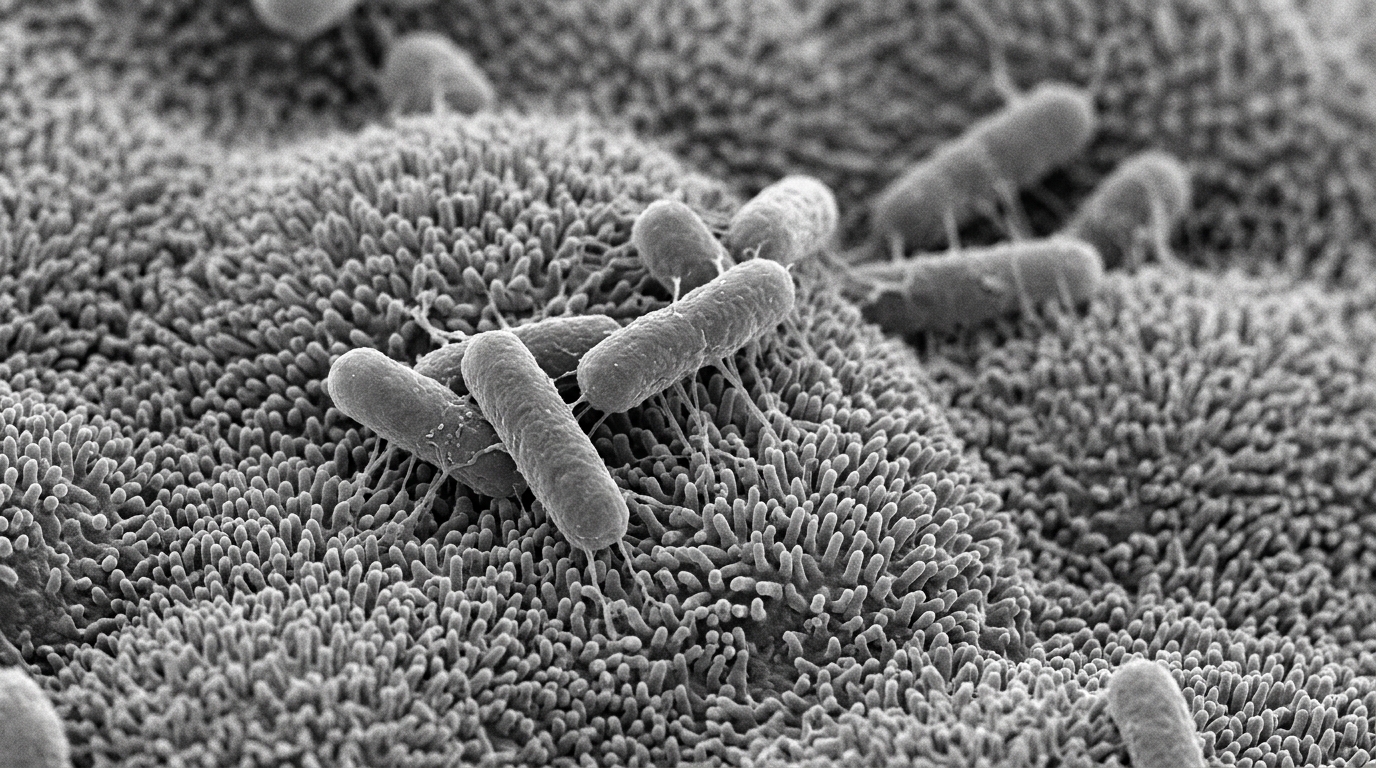
Photobacterium damselae subsp. piscicida, a bacterium that causes severe septicemic infections in marine fish and substantial economic losses in aquaculture, has yielded a fresh set of molecular suspects. Researchers report the identification and characterization of trimeric autotransporter adhesins, surface proteins that many Gram-negative pathogens use to stick to host tissues, in this important fish pathogen for the first time. The work combines comparative protein profiling, mass spectrometry, functional assays and comparative genomics to map a family of adhesins that had previously gone unnoticed.
The starting point was a practical problem. Although Phdp, as the bacterium is abbreviated, is well known as the agent of photobacteriosis, the bacterial factors it needs to colonize its host remain poorly characterized. To find candidates, the team carried out comparative SDS-PAGE protein profiling of Phdp field isolates, looking for proteins that varied between strains, and then used mass spectrometry to identify what they saw. This screen pointed to candidate trimeric autotransporter adhesins, which the researchers then pursued with molecular, functional and comparative genomic approaches.
That follow-up work paid off with the discovery of two previously unrecognized plasmid-encoded TAAs, named PadA and PadB. Unlike most genes of this kind, which sit on the bacterial chromosome, these adhesin genes are carried on plasmids, the mobile DNA elements that bacteria exchange. The researchers showed that PadA and PadB are expressed during experimental infection of European sea bass, Dicentrarchus labrax, a commercially important marine species and a natural target of the pathogen, which suggests the proteins are produced in the relevant context of a real host infection rather than only under laboratory conditions.
Functional assays then probed what these proteins actually do. When PadA and PadB were present, bacterial pellets showed increased resistance to disaggregation, a sign that the proteins help cells cling to one another and hold together as a mass. The adhesins also bound fish mucus and extracellular matrix components, the molecular scaffolding that pathogens encounter when they contact host surfaces. Not every tested function changed, however: the proteins did not significantly affect biofilm formation, indicating that their contribution is more specific than a general boost to surface community growth.
A key test concerned virulence. When the researchers expressed PadA or PadB in a strain that naturally lacks both, the modified bacteria did not show increased virulence in sea bass. In other words, adding these adhesins to a background missing them was not sufficient on its own to make infections more severe. This result does not diminish the interest of the proteins as surface-associated factors; rather, it indicates that their role in host-pathogen interactions, if any, depends on other features of the bacterial background or on conditions not reproduced by this single-gene expression experiment.
Comparative genomic analysis extended the family. Beyond the two plasmid-borne adhesins, the researchers identified a third putative TAA, designated PadC, which is encoded by chromosomal genes and is present in both subspecies of P. damselae. This broader distribution contrasts with the plasmid-encoded PadA and PadB, which were found in Phdp field isolates, and suggests that adhesin repertoire in this species is shaped by both core chromosomal genes and mobile elements.
The technical significance lies in the methods as much as the findings. Comparative SDS-PAGE followed by mass spectrometry allowed the team to detect proteins that differ among field isolates without prior assumptions about which adhesins might matter. Molecular characterization then confirmed the identity and expression of the candidates, while functional assays separated aggregation and binding activities from biofilm effects. Comparative genomics placed the new adhesins in context, distinguishing plasmid-borne from chromosomal copies and revealing a relative shared across both subspecies of the pathogen.
For aquaculture, photobacteriosis remains a costly disease, and understanding how Phdp attaches to host tissues is a step toward understanding how infections establish. Adhesins that bind fish mucus and extracellular matrix components are plausible contributors to early colonization steps, and the fact that PadA and PadB are plasmid-encoded raises questions about how these factors move among strains and how widespread they are in field populations. The authors position the work as expanding understanding of surface-associated factors potentially involved in host-pathogen interactions rather than as a demonstration of how photobacteriosis is caused.
The study, published in Frontiers in Cellular and Infection Microbiology, is described by its authors as the first characterization of TAAs in Phdp. They present it as a foundation for future studies on the role of these adhesins in photobacteriosis, a field that now has concrete molecular targets to investigate. Whether PadA, PadB or PadC prove to be essential for host colonization, useful markers of strain diversity, or leads for control strategies will depend on the experiments that this characterization makes possible.
Subject of Research: Trimeric autotransporter adhesins in the fish pathogen Photobacterium damselae subsp. piscicida
Article Title: Identification and characterization of trimeric autotransporter adhesins from Photobacterium damselae subsp. piscicida
Article References: Lisboa, J., Viveiros, J., Teixeira, A., Loureiro, I., Freitas, I. L., Afonso, G., Cavadas, B., Oliveira, P., Azevedo, J. E., dos Santos, N. M. S., & do Vale, A. (2026). Identification and characterization of trimeric autotransporter adhesins from Photobacterium damselae subsp. piscicida. Frontiers in Cellular and Infection Microbiology, 16, Article 1964857. https://doi.org/10.3389/fcimb.2026.1964857
Image Credits: AI Generated
DOI: 10.3389/fcimb.2026.1964857
Keywords: Photobacterium damselae subsp. piscicida, trimeric autotransporter adhesins, aquaculture, photobacteriosis, European sea bass, fish mucus, extracellular matrix, plasmid-encoded adhesins, bacterial adhesion, host-pathogen interaction, Identification, characterization
News Source: Kristina Jarvis. (November 6, 2026). Fish pathogen’s plasmid-borne adhesins offer new clues to aquaculture disease. Scienmag.