In a groundbreaking advancement in cancer therapeutics, researchers have unveiled a novel approach to combat resistance to osimertinib, a frontline treatment for advanced non-small cell lung cancer (NSCLC) patients harboring epidermal growth factor receptor (EGFR) mutations. The study, led by Professor Kenneth To from The Chinese University of Hong Kong and Dr. William Cho from Queen Elizabeth Hospital, harnesses computational drug repurposing to identify fexofenadine, a well-known antihistamine, as a potent inhibitor of the MET pathway — a critical driver of osimertinib resistance. This discovery opens promising avenues for enhancing therapeutic efficacy in NSCLC by overcoming acquired drug resistance mechanisms.
Over the past decade, third-generation EGFR tyrosine kinase inhibitors (TKIs) like osimertinib have revolutionized the treatment landscape for NSCLC, particularly for patients exhibiting EGFR mutations. Despite dramatic improvements in clinical outcomes, the inevitable emergence of drug resistance remains a formidable challenge, often mediated by secondary genetic alterations such as MET amplification. This amplification leads to compensatory bypass signaling, rendering EGFR-targeted therapies less effective and limiting long-term patient survival.
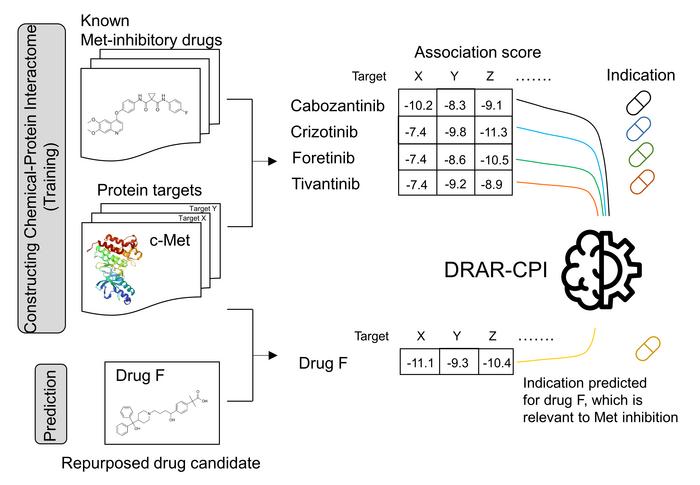
The innovative research team adopted an in silico drug repurposing tool known as DRAR-CPI (Drug Repositioning Approach based on the Chemical-Protein Interactome), which leverages chemical-protein interactome analysis to systematically probe existing drugs for their potential to interfere with oncogenic proteins. By analyzing a comprehensive profile of known MET inhibitors, the team computationally screened for candidate molecules that could suppress MET activity, ultimately pinpointing fexofenadine as a unexpected but highly promising MET inhibitor candidate.
Fexofenadine, widely prescribed globally for allergic rhinitis and chronic urticaria, has an established clinical safety profile and well-characterized pharmacodynamics, making it an attractive candidate for repositioning in oncology. To validate the computational predictions, the researchers conducted a series of biochemical and cellular assays. Fexofenadine was confirmed to inhibit recombinant MET kinase activity in cell-free systems, demonstrating direct target engagement. Furthermore, in osimertinib-resistant NSCLC cell lines with MET amplification, fexofenadine significantly reduced phosphorylation of MET and downstream signaling molecules, indicating disruption of oncogenic signaling pathways responsible for therapeutic resistance.
The study extended its molecular characterization through kinome-wide profiling (KINOME scan), revealing that fexofenadine’s kinase inhibition spectrum closely resembled that of cabozantinib, an FDA-approved MET inhibitor with known anticancer efficacy. This similarity underscores the potential of fexofenadine to mimic MET-targeted pharmacological effects, albeit with an established safety and dosing paradigm derived from its long-term use in allergy treatment.
Crucially, the combinatorial treatment of fexofenadine with osimertinib in MET-amplified and EGFR T790M-mutated NSCLC cellular models produced a pronounced synergistic anticancer effect. This combination effectively restored drug sensitivity and inhibited cellular proliferation more robustly than either agent alone. Transcriptomic analyses of cancer cells following fexofenadine treatment revealed significant modulation of gene expression profiles enriched in metastasis-related biological pathways, suggesting that fexofenadine might impact tumor progression and metastatic potential beyond merely overcoming resistance.
To bridge laboratory findings with potential clinical utility, the research leveraged patient-derived tumor xenograft (PDX) models—a gold standard in cancer research for recapitulating the molecular heterogeneity and biological complexity of human tumors. Remarkably, mice implanted with osimertinib-resistant NSCLC PDX tumors exhibited significant tumor regression upon combined fexofenadine and osimertinib treatment compared to control or single-agent groups. Importantly, this antitumor effect was achieved without inducing notable toxicity or adverse effects in the animal models, highlighting the safety of the repurposed drug combination.
The implications of this study are profound, as it demonstrates the feasibility of repurposing a common antihistamine to target a pivotal resistance pathway in cancer therapy. By circumventing the costly and time-consuming traditional drug development pipeline, this approach expedites the translation of existing medications to address unmet clinical needs in oncology. Moreover, it underscores the power of integrating computational biology and chemical-protein interactome analyses to uncover hidden therapeutic potentials within the pharmacopeia.
Beyond the immediate impact on NSCLC treatment paradigms, these findings illuminate a broader principle: that drug resistance in cancer can be tactically reversed by rational drug repositioning guided by molecular interactome insights. This methodology could be generalized across various cancer types exhibiting resistance through distinct molecular mechanisms, heralding a new era of precision oncology therapeutics optimized through data-driven repurposing strategies.
Future clinical trials are warranted to evaluate the efficacy and safety of fexofenadine as an adjuvant to osimertinib in NSCLC patients exhibiting MET amplification-driven resistance. If successful, this could transform standard care protocols and greatly enhance patient outcomes by integrating an affordable, accessible drug into complex cancer regimens. Furthermore, comprehensive biomarker analyses may identify subpopulations most likely to benefit from this combination, facilitating personalized medicine approaches that are both effective and economically sustainable.
In summary, the pioneering work by Prof. Kenneth To, Dr. William Cho, and their collaborators underscores an exciting intersection of computational drug discovery, molecular oncology, and clinical pharmacology. By unveiling fexofenadine’s unexpected role as a MET inhibitor capable of overcoming osimertinib resistance, this research paves the way for innovative therapeutic combinations poised to extend survival and improve quality of life for lung cancer patients worldwide.
—
Subject of Research: Overcoming osimertinib resistance in non-small cell lung cancer through drug repurposing of fexofenadine as a MET inhibitor.
Article Title: Fexofenadine Overcomes Osimertinib Resistance by Inhibiting c‐Met in Non‐Small Cell Lung Cancer
News Publication Date: 14-Apr-2025
Web References: http://dx.doi.org/10.1002/mog2.70019
Image Credits: Kenneth To
Tags: computational drug repurposing methodsdrug repurposing for cancer treatmentEGFR mutation-targeted therapiesenhancing NSCLC treatment efficacyFexofenadine in cancer treatmentMET pathway inhibition in cancernon-small cell lung cancer therapiesosimertinib resistance in NSCLCovercoming drug resistance in oncologysecondary genetic alterations in cancertherapeutic strategies for advanced lung cancerthird-generation EGFR TKIs