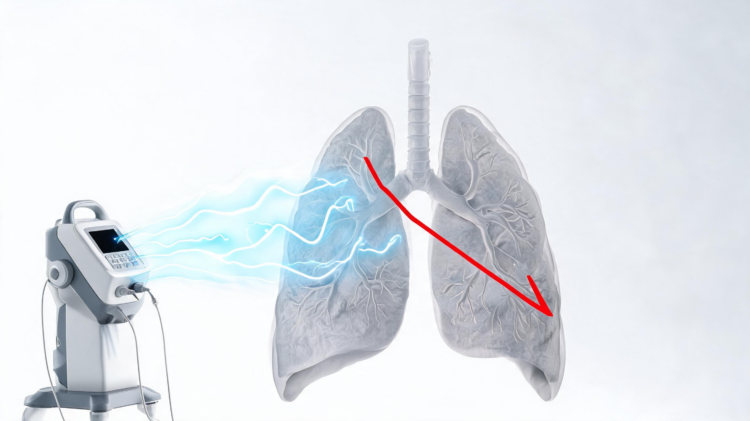
Pulsed electric field ablation has long been touted as one of the most elegant ideas in interventional oncology: instead of burning or freezing a tumor, clinicians deliver ultrashort, high-voltage electric pulses that punch stable nanoscale pores into the membranes of cancer cells, triggering a form of programmed cell death known as apoptosis. The theory is compelling. Because the technique, often called irreversible electroporation, does not rely on thermal energy, it should in principle preserve the delicate scaffolding of connective tissue and the network of blood vessels surrounding a tumor. It should also avoid the well-known heat sink effect, in which flowing blood near large vessels carries heat away from thermal ablation zones and leaves behind surviving tumor cells. And because apoptosis is a comparatively quiet way for cells to die, the surrounding inflammatory response should be milder than that provoked by radiofrequency or microwave ablation. A new case series, however, delivers a sobering reality check for lung cancer patients, finding that the technique failed to shrink tumors in nearly every patient treated.
The study, conducted by a team of radiologists at the University of Kansas Medical Center and published in CVIR Oncology, followed five patients with primary lung cancer who underwent pulsed electric field ablation. All procedures were performed by two experienced attending physicians, each with more than five years of experience using the Aliya System developed by Galvanize Therapeutics, and a device representative was present at every case to ensure that settings and operation matched the manufacturer’s specifications. Every ablation was carried out under computed tomography guidance, in line with the standard of care for image-guided tumor ablation. The cases represent the institution’s early clinical experience with the modality in patients selected jointly by the interventional radiology and oncology services. The results, measured primarily by change in tumor size on follow-up imaging using RECIST 1.1 criteria, where an increase of 20 percent or more in the sum of longest diameters counts as growth, were uniformly discouraging.
The first patient was an 82-year-old woman with a history of metastatic colon cancer who was found to have a primary pulmonary adenocarcinoma measuring 1.1 by 0.8 centimeters before treatment. Forty-three days after the ablation, follow-up imaging showed the tumor essentially stable at 1.2 by 0.9 centimeters. Stability might sound like partial success, but the authors note that effective ablation is expected to produce a decrease in tumor size over time, not merely a plateau. The second patient, a 72-year-old man with Erdheim-Chester interstitial lung disease and a bronchogenic carcinoma measuring 1.2 by 1.0 centimeters, initially appeared stable on a CT scan 55 days after treatment. Yet a subsequent PET/CT scan at 188 days revealed persistent metabolic activity and clear enlargement to 1.9 by 1.8 centimeters, along with a new lesion suggestive of metastasis. A later scan showed the tumor back to 1.2 by 1.1 centimeters, but the researchers classified the case as a failure, and the patient died 244 days after the procedure.
The remaining three cases were similarly bleak. Patient 3, a 47-year-old woman with metastatic non-small cell lung cancer, underwent ablation of a large tumor measuring 5.7 by 5.1 centimeters. She elected to pursue palliative care shortly afterward and died before any follow-up imaging could be obtained, leaving her outcome unmeasurable but unpromising. Patient 4, a 73-year-old woman with a history of breast cancer who developed squamous cell carcinoma with nodal metastasis, began with a tumor of 2.0 by 1.9 centimeters. Thirty-five days after ablation, the lesion had grown to 3.7 by 2.9 centimeters, and by 88 days it had reached 4.1 by 3.3 centimeters. She died 91 days after treatment from complications of cancer progression. Patient 5, a 74-year-old man with recurrent adenocarcinoma and nodal metastasis, saw his 6.3 by 3.1 centimeter tumor expand to 8.6 by 2.8 centimeters within 97 days. In total, three patients showed tumor growth, one showed stability without regression, and one died before follow-up imaging.
To understand why these findings matter, it helps to look at the physics of irreversible electroporation. The technique delivers trains of short, high-intensity electric pulses through needle electrodes placed in or around the tumor. When the induced transmembrane potential exceeds a critical threshold, the lipid bilayer of the cell membrane destabilizes and forms irreversible nanoscale defects. Cells lose their ability to maintain homeostasis and die through apoptotic pathways rather than through the coagulative necrosis produced by heat-based methods. That distinction underpins the promised advantages: extracellular matrix proteins such as collagen and elastin survive the treatment, major blood vessels and airways are relatively spared, and the reduced inflammatory cascade theoretically lowers the risk of complications such as bronchopleural fistula or damage to mediastinal structures. In organs like the liver, pancreas and kidney, where tumors often sit perilously close to major vessels, these properties have generated genuine enthusiasm and a growing clinical literature.
Lung tissue, however, presents a different environment. The air-filled parenchyma has very different electrical conductivity than solid organs, which can alter the distribution of electric fields in ways that are difficult to model and verify. Tumor size also matters: several of the patients in this series had lesions considerably larger than the small nodules typically targeted for ablation, and field homogeneity degrades rapidly with lesion diameter. The authors acknowledge that the variability in tumor sizes and histologic types across their five cases, combined with advanced disease stage and comorbidities at the time of treatment, introduces selection bias that limits how confidently the results can be generalized. Still, the direction of the findings is hard to ignore, particularly given that they echo a larger and more rigorous study.
That study, the ALICE trial, was a prospective multicenter phase II investigation conducted at two European institutions and initially designed to enroll 36 patients with lung malignancies. At an interim analysis of the first 23 enrolled patients, the results were poor enough that the trial was terminated early. Fourteen of the 23 patients went on to develop progressive disease. The Kansas case series, despite its small size, is consistent with that signal and strengthens the suspicion that irreversible electroporation, at least as currently delivered, does not achieve reliable tumor control in the lung. The authors are careful with their language, stating that the findings may indicate pulsed electric field ablation may not be effective for primary lung cancer and may not reduce tumor size, but the pattern across both studies suggests the problem is not merely a matter of operator technique.
The limitations of the new report are real and worth weighing. Five patients cannot establish efficacy or the lack of it with statistical confidence. Tumor sizes ranged from about one centimeter to more than six centimeters, and histologies included adenocarcinoma, squamous cell carcinoma and bronchogenic carcinoma, each of which may respond differently to electric field therapy. Long-term follow-up was incomplete, with one patient dying before imaging and another dying within three months of treatment. The presence of a device representative during all cases, while intended to ensure proper operation, reflects the reality of early-adopter clinical programs and does not substitute for the independent oversight of a controlled trial. What the series does provide is an honest, unvarnished look at real-world outcomes from an experienced team using a commercial system under manufacturer-approved conditions.
Where does the field go from here? The authors suggest that future research could investigate differing techniques that might increase effectiveness, potentially including refined electrode configurations, optimized pulse parameters, or combination approaches pairing electroporation with chemotherapy, immunotherapy or thermal methods. Preclinical work continues to explore how tissue conductivity, pulse frequency and electrode spacing shape the ablation zone, and the broader literature on liver, renal and pancreatic applications remains active. For now, though, the message for patients and clinicians is cautious: a technology that works beautifully on the whiteboard, sparing vessels and avoiding heat sinks, still has to prove itself against the unforgiving biology of lung cancer. On current evidence, pulsed electric field ablation of primary lung tumors has not done so, and the search for non-thermal ablation options for lung cancer continues.
One biological nuance worth emphasizing is that apoptosis, the cell death pathway triggered by irreversible electroporation, unfolds over hours to days rather than instantly. This means that immediate post-procedural imaging can underestimate the ablation zone, and conversely, the absence of a shrinking mass on early follow-up may not fully capture cellular-level damage. The Kansas team relied on tumor size as the primary metric, which is a practical but relatively blunt instrument, since volumetric assessment and metabolic imaging can sometimes reveal responses that diameter measurements miss.
The question of why electroporation behaves differently in lung is also drawing scientific attention. Aerated alveoli create a heterogeneous impedance landscape, and atelectatic or post-ablative regions conduct current differently from normal parenchyma, potentially leaving viable tumor cells in under-treated margins. Electrical field modeling software exists to plan electrode placement, but its accuracy in lung is less validated than in solid abdominal organs. Airway proximity adds further complexity, as bronchi may act as conduits that distort field distribution.
Despite the disappointing results, pulsed electric field technology continues to advance in cardiology, where similar pulse delivery is used for cardiac ablation, and lessons from that rapidly maturing field may eventually inform oncologic applications. Until properly powered prospective studies demonstrate benefit, however, thermal ablation and other established therapies remain the standard for lung tumors deemed amenable to percutaneous treatment.
Subject of Research: Pulsed Electric Field (PEF) ablation of primary lung cancer: a case series
Article Title: Pulsed Electric Field (PEF) ablation of primary lung cancer: a case series
Article References: Pulsed Electric Field (PEF) ablation of primary lung cancer: a case series. (n.d.). https://doi.org/10.1007/s44343-026-00057-z
Image Credits: AI Generated
DOI: 10.1007/s44343-026-00057-z
Keywords: Pulsed, Electric, Field, ablation, primary, lung, cancer, case, series, scientific research
Cite Scienmag News
APA MLA Chicago
Nathaniel Bowman. (September 3, 2026). Electric Pulse Therapy Shows Disappointing Results for Lung Cancer. Scienmag. https://scienmag.com/electric-pulse-therapy-shows-disappointing-results-for-lung-cancer/
Nathaniel Bowman. “Electric Pulse Therapy Shows Disappointing Results for Lung Cancer.” Scienmag, 3 September 2026, https://scienmag.com/electric-pulse-therapy-shows-disappointing-results-for-lung-cancer/. Accessed 3 September 2026.
Nathaniel Bowman. “Electric Pulse Therapy Shows Disappointing Results for Lung Cancer.” Scienmag. September 3, 2026. https://scienmag.com/electric-pulse-therapy-shows-disappointing-results-for-lung-cancer/
Copy citation Download RIS
Tags: ablationalternative therapies for lung cancerapoptosis induction in cancer treatmentcancercasechallenges in interventional oncologyclinical trial results in lung cancer treatmenteffects of pulsed electric fields on lung tumorsElectricelectric pulse therapy for tumorsfieldirreversible electroporation in oncologylimitations of electric pulse therapylungLung cancer treatment failurelung tumor ablation outcomesnon-thermal cancer ablation techniquesprimaryPulsedpulsed electric field ablationScientific Researchseries