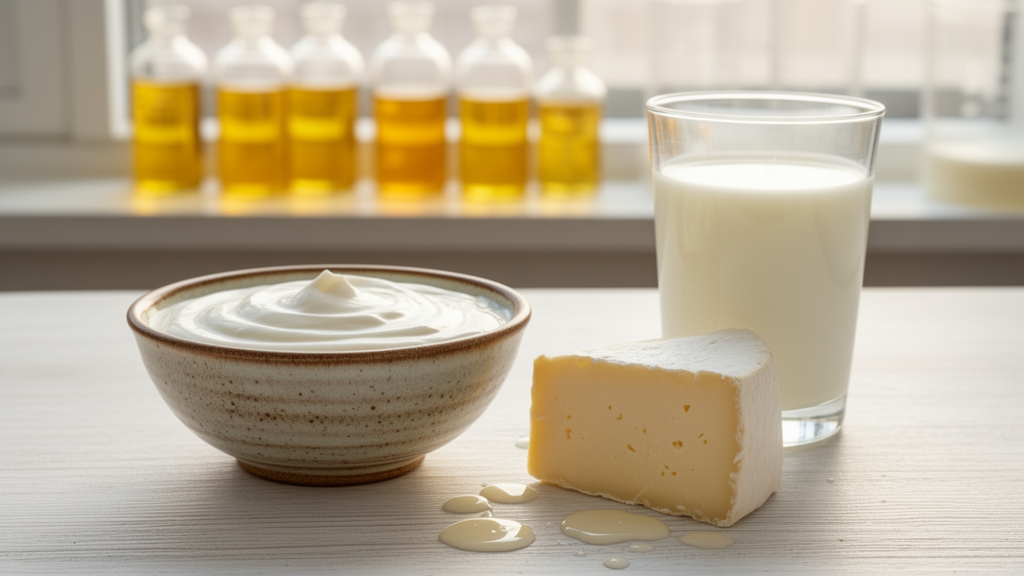
Milk and dairy products have been part of human diets for thousands of years, yet researchers still lack a clear understanding of how their fats interact with inflammation and chronic disease. In an opinion article published in the journal Dairy Science and Management, food scientist Ioannis Zabetakis argues that the link between dairy lipids, the food matrix that surrounds them, and long-term conditions such as cardiovascular disease, diabetes and obesity remains unresolved, and he calls for a new research agenda to close the gap.
The article, published on 15 September 2025, focuses on three major classes of dairy lipids: triglycerides, polyunsaturated fatty acids and phospholipids. According to the author, these compounds have been extensively studied for their potential impact against chronic diseases, but no coherent picture has yet emerged of how they influence inflammatory pathways or how the structure of the food they are embedded in modifies that influence. The piece is explicitly framed as a commentary rather than a clinical trial or systematic review, so its claims represent the author’s synthesis of existing literature rather than new experimental findings.
A central theme is the special status of fermented dairy products such as yoghurt, kefir and cheese. The author states that these foods show strong anti-inflammatory activities in the studies he surveys, and he links this to fermentation chemistry: during fermentation, lipolysis takes place, breaking larger lipid molecules down into smaller and, in his assessment, more biologically effective ones. This structural transformation, he argues, may partly explain why fermented products appear repeatedly in the literature on dairy and health benefits, including specific cited work on kefir, yoghurt and cheese.
The author notes that numerous publications describe biofunctionalities of these polar lipid fractions, yet they are frequently overlooked by researchers and industry alike, probably because they constitute less than one percent of the total lipid content of most dairy products despite their reported anti-inflammatory activities.
On the disease side, the article lists the chronic conditions that develop over many years and to which dairy lipids are relevant: cardiovascular diseases, cancer, stroke, high blood pressure, obesity, metabolic syndrome and type 2 diabetes mellitus. The author writes that there is today some understanding of the underlying mechanisms by which dairy lipids might inhibit these diseases, of the biochemical pathways involved in their development, and of how those pathways might be controlled. He characterises the role of dairy lipids against the onset and development of these conditions as vital, while simultaneously acknowledging that a clear causal link has not been established.
One finding highlighted in the conclusions is that recent research has reported a positive correlation between dairy consumption and cardiovascular disease biomarkers. The article does not present this as proof of harm or benefit; correlations of this kind identify associations that require mechanistic follow-up, and the author uses them to argue that the field needs better structure-function data rather than simple dietary verdicts.
Beyond basic science, the author identifies a commercial opportunity. He argues that a clear gap exists in the market for functional foods and nutraceuticals active against cardiovascular disease, and proposes that dairy lipids could fill it, whether as additions to other foods, as powders produced by freeze drying, or as novel food supplements. He adds that, with further research into the structure-function correlation of dairy lipids, the most functional fractions could be directed into food applications or even towards nutraceutical and pharmaceutical production.
The article also connects dairy lipid research to sustainability. Two strategies are proposed: first, valorising agri-food waste and by-products to improve the dietary fibre content, antioxidant properties, microbial quality and functional attributes of dairy products such as cheese, yogurt and ice cream; and second, the reverse approach, in which side streams from the dairy industry are used to grow microalgae that can in turn be processed into foods with improved nutritional value.
Readers should weigh the article’s claims against its format. As an opinion piece with no datasets generated or analysed, it maps out hypotheses and research priorities rather than testing them. The author’s own conclusion is that further research is needed to fully understand how dairy lipid structures relate to their biological functions, and that the current link between dairy lipids, the food matrix and chronic diseases is simply not yet clear. Until that work is done, the strongest supported takeaway is modest: fermented dairy products recur in studies of anti-inflammatory activity, polar lipids deserve more attention than their tiny share of total fat has earned, and the mechanisms connecting dairy fats to chronic disease remain an open scientific question.
Subject of Research: The proposed link between dairy lipids, the food matrix and chronic diseases
Article Title: Dairy lipids, food matrix and chronic diseases: is there a link?
Article References: Zabetakis, I. (2025). Dairy lipids, food matrix and chronic diseases: is there a link?. Dairy Science and Management, 2(1), Article 7. https://doi.org/10.1186/s44363-025-00011-z
Image Credits: AI Generated
DOI: 10.1186/s44363-025-00011-z
Keywords: dairy lipids, food matrix, chronic diseases, fermented dairy, inflammation, cardiovascular disease, milk fat globule membrane, polar lipids, kefir, yoghurt, functional foods, opinion article
News Source: Alan Morgan. (October 30, 2026). Fermented Dairy Lipids May Ease Inflammation, but the Evidence Remains Unclear. Scienmag.