


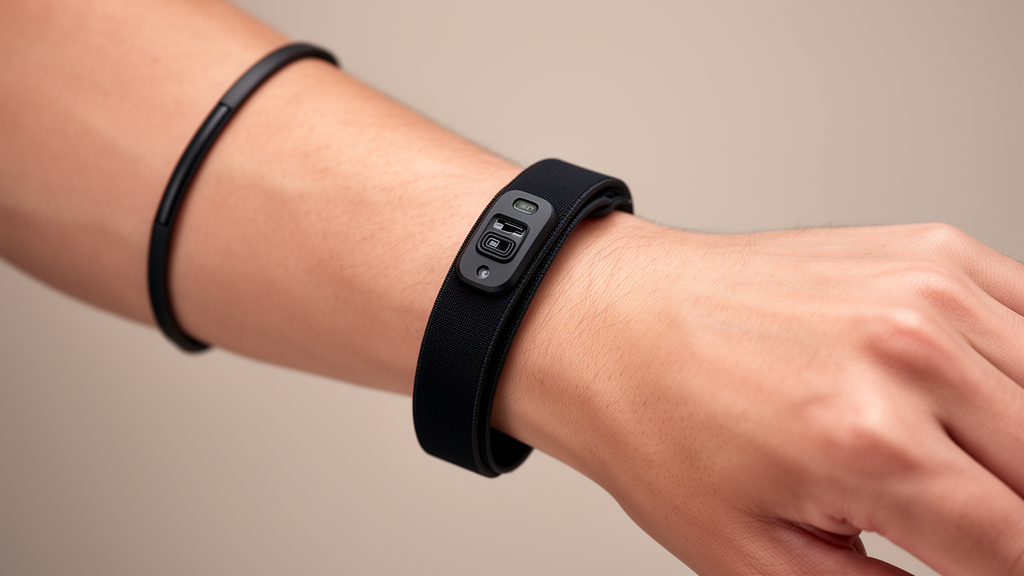
Engineers have shown that a century-old piece of rigid-body mechanics, combined with the motion data streaming from wearable inertial sensors, can pinpoint the rotation centers of joints in a musculoskeletal simulation—without assuming those centers stay still. In a simulation study published in BMC Biomedical Engineering, researchers at Friedrich-Alexander-Universität Erlangen-Nürnberg and collaborators applied an analytical formula for the instantaneous center of rotation to two very different testbeds: a simple double pendulum and a full-body musculoskeletal model with a ball-joint hip and a moving-axis knee. With noise-free synthetic data, the method recovered every joint center exactly. With noise added, standard filtering and optimization steps brought the estimates back to millimeter-level accuracy.
The work matters because musculoskeletal simulations—computer models that turn measured body motion into estimates of muscle forces, joint torques and reaction loads—are only as good as the model they run on. OpenSim, the widely used open-source framework for these simulations, comes with predefined joint axes and centers of rotation. When a generic model is scaled to a person’s height and limb lengths, the joint frames are simply shifted by the same scaling factor; the geometry of the axes themselves is not individualized. The authors argue this gap can degrade the tracking of measured motion and, downstream, the computed kinetics.
The stakes are quantified in prior literature the study cites. A systematic review by Camomilla and colleagues found that joint axis and joint center positions affect muscle moment arms and joint torques and their interpretation. For the hip, a 30-millimeter error in the hip joint center has been reported to produce mean errors of 22 percent in flexion-extension torque and 15 percent in abduction-adduction torque. For the knee, an error of plus or minus 10 millimeters in the joint center has been linked to variation of the knee flexion-extension moment from 0.7 to as much as 0.92 bodyweight-times-height. Other groups reported that knee angle kinematics were sensitive to the implemented flexion-extension axis, and that variations in axis position and orientation significantly affected lower-body joint torques, with a maximum root-mean-square error of 4 percent bodyweight-times-height.
Existing personalization methods have a structural blind spot. Marker-based and IMU-based techniques—sphere-fitting schemes, one-sided transformation methods, Kalman-filter approaches—generally assume the center of rotation is fixed relative to a body coordinate system, which usually means one of the two linked segments must stay stationary. That assumption fails for joints like the knee, whose center of rotation shifts with flexion angle as the tibia glides and rotates relative to the femur. For such joints, current approaches cannot estimate an individualized axis from measured motion data at all. The few methods that handle moving axes, or that tolerate both segments moving, are not applicable to arbitrary joint types.
The new study sidesteps the optimization-and-filtering paradigm at its first step. Instead of fitting a sphere or solving an inverse problem, the researchers borrowed a direct, analytical method from engineering mechanics, described by Kunz, that computes the instantaneous center of rotation of a moving rigid body from its linear and angular velocity. In planar motion, the instantaneous center is the unique point where two bodies share the same velocity; any rigid-body motion, however complex, can be read at each instant as a pure rotation about that point. The formula needs only three inputs: the relative angular velocity between the two bodies, the relative linear velocity, and the position of one body relative to the other. All three are readily available in musculoskeletal simulation.
For three-dimensional motion the point expands into an instantaneous axis of rotation, whose direction is simply the normalized relative angular velocity vector. Crucially, the method works when both joint partners—the parent and child segment—are moving, and it does not care whether the joint is a fixed hinge, a ball joint, or a moving center. That combination, the authors note, distinguishes it from commonly used methods in biomechanical simulation, which typically require a stationary segment or a stationary center.
To verify correctness, the team first built a two-degree-of-freedom double pendulum in OpenSim 4.4, with two bodies joined by a revolute joint at a known location and a virtual inertial measurement unit attached to each body. They ran a forward dynamic simulation at 100 hertz, letting the pendulum swing back and forth about three and a half times, and computed the instantaneous center of rotation at each of 1,000 time steps from the synthetic sensor data. With noise-free input, the calculated center sat at the true joint position—coordinates of zero—for every single time step. The ground truth was unambiguous, because the joint location was defined in the model itself.
Then came the noise test. White Gaussian noise was added to the linear and angular velocity values of the virtual IMUs, and the calculated centers scattered wildly—extreme values ranged from about minus 187 meters to plus 5.8 meters in one coordinate. After discarding outliers using the 1.5-fold interquartile rule, 635 of the 1,000 data points remained, and the remaining values clustered evenly around the true position. Two filters—a moving average with a 10-sample window and a second-order Butterworth filter with a 5-hertz cutoff—both reduced the scatter and pulled the root-mean-square error down to roughly the same level, allowing the position of the simple revolute joint’s center to be identified despite the noise.
The real challenge was the full-body musculoskeletal model, where the hip is modeled as a three-degree-of-freedom ball joint and the knee as a custom joint whose tibia translates and rotates in the femur frame as spline functions of knee angle. Using a 100-hertz squat motion file—chosen because it drives the knee through a large range of motion—the team computed instantaneous axes of rotation for the hip across 969 data points. With noise-free data, every axis intersected at exactly one point, matching the known hip joint center precisely. With noise added, no single intersection was visible, but a least-squares point minimizing the summed perpendicular distance to all axes landed within millimeters of the true center.
For the knee, the goal was not a single point but the moving center as a function of joint angle. From the noisy data, the team fit smoothing splines, trimmed outliers outside a one-centimeter margin, applied the same moving-average or a third-order Butterworth filter, and refit. Correlation coefficients between the noise-free and smoothed curves ranged from 0.97 to 0.99. Finally, they reconstructed the tibia’s position in the femur frame by rotating it step by step around the identified centers. With noise-free input, the reconstruction matched the model’s defining spline data with zero error; with noisy input, the root-mean-square errors were at most 1 millimeter for both coordinates and both filters. The authors are careful about limits: only virtual data was used, the noise model ignored real IMU errors such as sensor drift, and validation against experimentally measured motion data remains the necessary next step before any clinical or biomechanical application.
Subject of Research: An analytical method for identifying fixed and moving joint centers of rotation in OpenSim musculoskeletal models from IMU-based motion data, verified in simulation.
Article Title: IMU-based joint axis identification method for arbitrary joints in OpenSim – a simulation study
Article References: Wechsler, I., Shanbhag, J., Wartzack, S., Koelewijn, A. D., & Miehling, J. (2025). IMU-based joint axis identification method for arbitrary joints in OpenSim – a simulation study. BMC Biomedical Engineering, 7(1), Article 16. https://doi.org/10.1186/s42490-025-00102-7
Image Credits: AI Generated
DOI: 10.1186/s42490-025-00102-7
Keywords: OpenSim, musculoskeletal simulation, instantaneous center of rotation, IMU, joint axis individualization, knee joint, hip joint, motion capture, biomechanics, Gaussian noise, filtering, simulation study
News Source: Katie Riggs. (October 30, 2026). Simple Physics Trick Could Let Wearable Sensors Map Every Joint in Your Body. Scienmag.



