Credit: FEFU press office
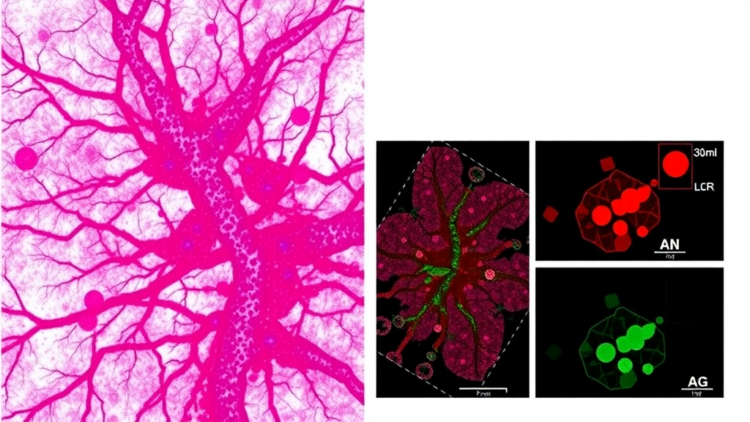
Far Eastern Federal University (FEFU) scientists have developed implantable hydrogels based on plant polysaccharides (pectins). They can play the role of an artificial extracellular matrix, a special network of molecules that fills the space between body cells. The development to be used as a medium for growing tissues and organs, as well as for drug delivery and brain recovery after removal of malignant tumors glioblastomas. A related article appears in the International Review of Neurobiology.
The hydrogels developed at the FEFU School of Biomedicine (FEFU SBM) are plant carbohydrate-based materials made of pectins modified by bioengineering methods. They are suitable for neural tissue restoration after its malignant transformation caused by brain tumors, and after damages caused by traumas or neurodegenerative diseases, involving such as cell death or loss of functional activity of cells and their environment.
“Some variations of our extracellular hydrogel matrices are capable of suppressing the cell proliferation in glioma, a malignant brain tumor. Their chemical modifications can be used to secure the normal neural stem cells potential, “preserving” them in an undifferentiated state, saving their viability and potential for the future. This is interesting for the development of cellular biotechnologies in regenerative medicine,” says the head of the research group Vadim Kumeiko, Deputy Director for Development of the FEFU SBM. “Certainly, bioengineering solutions associated with the use of extracellular matrices from pectins need to be carefully checked. However, we expect that in the future our hydrogels can be implanted in the brain tumor resection area in order to kill the tumor cells remaining after the operation.”
The scientist explained that in the human body, the extracellular space is a complex molecular network, i.e. a matrix, which consists of two main components: protein and carbohydrate. The neural system matrix differs from the matrix of many other tissues because it has more carbohydrate and resembles marmalade or marshmallow in its physicochemical properties. This vary from a more elastic and rigid matrix with a protein component predominance typical for connective tissues. It is almost impossible for cells to move along the carbohydrate matrix.
“This is the way nature intended so that in adult organisms brain cells do not easily migrate to new areas and do not form new electrical connections too quickly. Because if they do, it can lead, for example, to the loss of memory, acquired skills, and knowledge. Imagine you know a foreign language in the evening, but during the night cells migrated and you forgot everything,” explains Vadim Kumeiko.
The problem is that tumor cells control the rigidness of its extracellular space by adding protein components to it. By doing that, they pave a pathway for themselves to run away in order to metastasize and form new tumors in other areas of the body.
“The matrix with a predominance of the carbohydrate component, implanted after the tumor was removed, will not only inhibit the growth and proliferation of cells, but will also be perfect as a delivery vehicle for highly toxic drugs. Such drugs will be released from it gradually, causing less harm to the body as a whole, and killing the remaining tumor cells. At the next stage, it is possible to stimulate the regeneration and growth of neural cells by implanting injection of a tougher matrix containing a large proportion of proteins into the operated area,” says Vadim Kumeiko.
The scientist clarified the approach was proposed by his research group earlier in Frontiers in Bioengineering and Biotechnology, a new article is devoted to a partial experimental justification of the concept.
In the future, scientists plan to investigate the effect of pectin matrix composition on the rate of drug release, and what combination of carbohydrate and protein components will allow restoring neural tissue without scars or excessive density typical for tumor tissue.
In general, so far there are very few materials in the world that are approved for neural tissue bioengineering and clinical practice. Mainly, they are intended for the regeneration of the peripheral rather than the central nervous system.
###
Media Contact
Alexander Zverev
[email protected]
Related Journal Article
http://dx.