Anodal transcranial direct current stimulation applied to the cerebellum modulated verbal working memory performance and altered neural network connectivity in a distinct subgroup of patients diagnosed with early course psychosis, according to findings from a double-blind, randomized, crossover-controlled trial published in Translational Psychiatry. The investigation assessed whether non-invasive stimulation could alter verbal working memory deficits and targeted cerebellar network pathways, highlighting preliminary evidence that therapeutic cognitive responses may depend heavily on patient-specific baseline neural characteristics rather than applying uniformly across the entire clinical cohort.
The research was motivated by prior clinical observations that abnormalities in both cerebellar connectivity and verbal working memory predict the onset and subsequent clinical course of psychosis while contributing substantially to long-term functional impairment. Because these cognitive deficits present significant barriers to patient functioning, researchers evaluated transcranial direct current stimulation, commonly known as tDCS, targeting the cerebellum as a potential therapeutic intervention designed to address verbal working memory impairments in individuals diagnosed with early course psychosis.
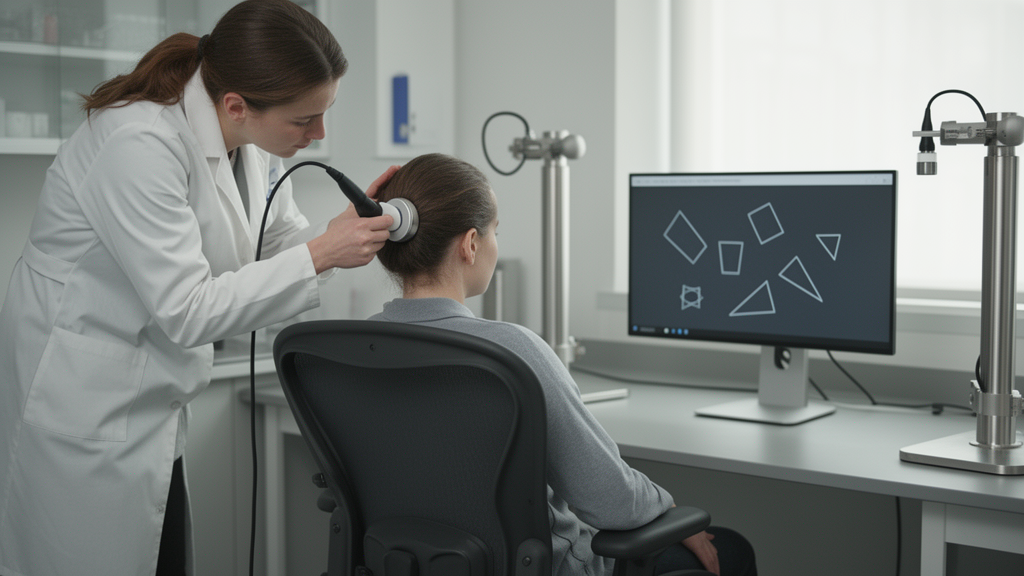
To test the intervention, the clinical trial enrolled twenty-seven participants with an early course psychosis diagnosis alongside a separate comparison group of thirty-six healthy control subjects. In the double-blind, crossover protocol, participants with psychosis received either active anodal cerebellar stimulation or an inactive sham stimulation condition prior to performing a verbal working memory task during functional magnetic resonance imaging. One week later, the clinical participants returned to complete a counterbalanced session using the alternate condition, whereas the healthy comparison cohort underwent only the sham procedure. The stimulation protocol proved to be well tolerated by participants, achieving an overall study retention rate of 90 percent.
Behavioral assessments under baseline control conditions confirmed that participants with early course psychosis exhibited a significant verbal working memory deficit during sham stimulation, registering a statistically significant impairment with a p-value of 0.006. When evaluating the entire clinical cohort during active cerebellar stimulation, overall verbal working memory performance showed a minor numerical improvement reflected by an effect size of d = 0.016. However, when comparing this active performance across the full patient group directly against their own sham performance, the resulting difference did not achieve statistical significance, yielding a p-value of 0.66.
Despite the lack of significant improvement across the unified cohort, investigators identified a clear responder subgroup comprising 14 of the 27 participants with early course psychosis. This responder cohort demonstrated a statistically significant within-group improvement in verbal working memory between the sham and active stimulation conditions, characterized by an effect size of d = 0.586. Furthermore, after excluding two participants who demonstrated stable ceiling performance on the task, responders showed a marked between-group difference when compared against the 11 non-responding participants, producing an effect size of d = -0.580 and a statistically significant difference at p < 0.00001.
Functional neuroimaging revealed that these behavioral differences corresponded to distinct sham-day connectivity biotypes within an anterior cerebello-thalamo-cortical network. Prior to stimulation, responders demonstrated lower baseline verbal working memory performance on sham day (d = -0.45, p = 0.001) alongside higher intrinsic activity within the anterior cerebellar network. Under active cerebellar stimulation compared to sham, this responsive subgroup exhibited a distinct neural response characterized by greater extrinsic connectivity across the anterior cerebello-thalamo-cortical network. The study authors concluded that while preliminary, these findings suggest cerebellar tDCS may serve as a viable treatment option for a defined patient subgroup, underscoring the clinical value of precision medicine approaches in psychosis care.
Subject of Research: Cerebellar stimulation and working memory in early course psychosis
Article Title: Cerebellar stimulation modulates working memory performance and anterior cerebellum-thalamic-cortical network connectivity in a subgroup of individuals with early course psychosis
Article References: Damme, K. S. F., Anderson, Z., Ristanovic, I., Calhoun, V. D., Shiffman, J., Bernard, J. A., & Mittal, V. A. (2026). Cerebellar stimulation modulates working memory performance and anterior cerebellum-thalamic-cortical network connectivity in a subgroup of individuals with early course psychosis. Translational Psychiatry. https://doi.org/10.1038/s41398-026-04324-8
Image Credits: AI Generated
DOI: 10.1038/s41398-026-04324-8
Keywords: cerebellar stimulation, transcranial direct current stimulation, early course psychosis, verbal working memory, cerebellar connectivity, anterior cerebello-thalamo-cortical network, functional magnetic resonance imaging, crossover controlled trial, double-blind trial, anodal stimulation, sham stimulation, precision medicine, responder subgroup, intrinsic connectivity, extrinsic connectivity, Translational Psychiatry
News Source: Glenn Wilkins. (November 16, 2026). Cerebellar Stimulation Modulates Working Memory in Early Course Psychosis Subgroup. Scienmag.