Materials scientists have developed a sustainable route to convert solid industrial leather waste into high-value fluorescent carbon quantum dots, integrating them into biomimetic hair-like hydrogel sensors capable of mechanical strain detection, optical pH monitoring, and bacterial inhibition. Standard leather processing typically converts only about 20 percent of raw animal hides into commercial goods, leaving massive volumes of collagenous shavings and trimmings underutilized while generating significant environmental burdens. To tackle this solid waste challenge through high-value valorization, a research team established a one-pot hydrothermal carbonization protocol that extracts nitrogen-doped carbon dots directly from discarded leather shavings, subsequently casting them into microstructured polyacrylamide matrices modeled after mammalian hair follicles.
The synthesis protocol dissolved one gram of biomass precursor—specifically leather shavings derived from starch-tanned leather waste—alongside 0.5 grams of cetyltrimethylammonium bromide surfactant in 30 milliliters of deionized water. The homogeneous mixture underwent sealed hydrothermal processing inside a Teflon-lined autoclave at 180 degrees Celsius for 10 hours. Parallel control batches were synthesized under identical conditions using pure gelatin and laboratory-prepared collagen aggregates to systematically decouple the structural effects of precursor heterogeneity. Following thermal treatment, the crude mixtures underwent centrifugation at 8,000 revolutions per minute for 30 minutes, microfiltration through a 0.22-micrometer membrane, 72 hours of dialysis across a 1,000-Dalton cut-off membrane, and lyophilization to yield dry quantum dot powders.
Structural and morphological characterization revealed that the resulting waste-leather carbon quantum dots formed quasi-spherical nanoparticles with an average transmission electron microscopy diameter of approximately 8.26 nanometers and a hydrodynamic diameter of 7.98 nanometers measured by dynamic light scattering. High-resolution lattice imaging resolved crystalline domains exhibiting an interplanar lattice spacing of roughly 0.21 nanometers, matching the (100) plane of graphitic carbon. Comparative dynamic light scattering quantified smaller hydrodynamic diameters of 5.98 nanometers for collagen-derived dots and 7.54 nanometers for gelatin-derived dots, demonstrating that precursor molecular heterogeneity directly governs particle dimensions and surface group density.
Spectroscopic investigations confirmed the rich chemical functionality and robust optical properties of the leather-derived nanodots. Fourier transform infrared spectroscopy displayed characteristic absorption bands at approximately 1710, 3300, 1545, and 3650 inverse centimeters, representing carbonyl stretching, hydroxyl vibrations, aromatic carbon-carbon double bonds, and amine bonds, respectively. X-ray photoelectron spectroscopy identified core binding peaks for carbon 1s at 284.8 electron volts, nitrogen 1s at 399.7 electron volts, and oxygen 1s at 531.3 electron volts, accompanied by a minor zirconium peak near 182.8 electron volts attributed to surface zirconia clusters from industrial tanning residues. Surface charge measurements showed a positive zeta potential of plus 16.6 millivolts for the waste leather dots, outperforming gelatin dots at plus 13.7 millivolts and collagen dots at plus 8.14 millivolts.
Under optical excitation, the waste-derived carbon quantum dots exhibited bright photoluminescence centered at 531 nanometers, representing an emission redshift relative to the 466-nanometer blue emission of collagen dots and 457-nanometer emission of gelatin dots. Absolute integrating sphere measurements quantified an optical fluorescence quantum yield of 66.3 percent for the leather waste dots, notably higher than commercial gelatin dots at 59.1 percent, while collagen dots reached 78.6 percent. Time-resolved spectroscopy revealed biexponential decay with an average photoluminescence lifetime of 5.13 nanoseconds, and Tauc plot analysis yielded an optical bandgap of 4.25 electron volts. Dispersions painted onto filter paper, gauze, and synthetic leather remained invisible under ambient daylight but fluoresced brightly under 365-nanometer ultraviolet light, confirming anti-counterfeiting utility.
Biological and antimicrobial testing confirmed that the positive surface potential and long alkyl groups from cetyltrimethylammonium bromide endowed the leather dots with potent antimicrobial activity. In 24-hour agar plate assays, exposure to 6 milligrams per milliliter of the nanodots achieved optimal bacterial inactivation against both Gram-negative Escherichia coli and Gram-positive Staphylococcus aureus, causing extensive membrane wrinkling, perforation, and cytoplasmic leakage. The nanomaterial also demonstrated progressive ABTS radical scavenging activity with increasing concentration. In vivo plant toxicity tests using mung bean sprouts showed healthy tissue distribution under confocal microscopy without morphological abnormalities or growth suppression up to 6 milligrams per milliliter.
To translate these nanodots into practical soft sensors, the team incorporated the leather dots into a polyacrylamide hydrogel network initiated by ammonium persulfate and crosslinked by N,N’-methylene-bis-acrylamide. Incorporating the dots from 0 to 8 milligrams per milliliter significantly enhanced crosslink density, increasing tensile strength from 2.85 to 9.49 megapascals, stretchability from 176.24 percent to 412.68 percent elongation at break, and compressive strength under 50 percent strain from 0.31 to 5.04 megapascals. Dynamic rheological testing showed that the storage modulus consistently exceeded the loss modulus across angular frequencies from 0.1 to 100 radians per second, while mechanical hysteresis loops during cyclic loading confirmed dynamic stress dissipation via reversible hydrogen bonding.
The composite hydrogel displayed pronounced, reversible pH-responsive fluorescence across the physiological and environmental range of pH 3 to 11. Under alkaline conditions, deprotonation of surface amino groups intensified intramolecular charge transfer, while diminished electrostatic repulsion caused controlled aggregation that triggered aggregation-induced emission, shifting emission wavelengths and fluorescence intensities visibly. Control experiments confirmed that pure polyacrylamide hydrogels exhibited no fluorescence or pH sensitivity. Extreme environments at pH 2 or pH 12 resulted in irreversible fluorescence degradation due to functional group damage, but intermediate ranges allowed clear visual colorimetric tracking demonstrated in multi-compartment hydrogel models.
To fabricate the biomimetic sensor, the precursor solution was cast inside glass capillary molds, thermal-cured at 60 degrees Celsius for 20 minutes, and soaked in a 20 weight percent lithium bromide aqueous solution. The resulting hydrogel filaments were inserted into microholes laser-perforated through a synthetic leather substrate and sealed with a hydrogel topcoat to establish continuous electrical pathways mimicking mammalian hair follicle signal transduction. Lithium bromide treatment established strong ionic hydration that suppressed water evaporation, preserving sensor sensitivity with only a minor gauge factor variation from 2.67 to 2.29 after 48 hours of open-air exposure, whereas untreated hydrogels deteriorated rapidly.
Electrochemical and mechanosensory characterization proved that electrical conductivity scaled directly with carbon dot loading, rising from 0.66 Siemens per meter in pure hydrogel to 8.61 Siemens per meter at 8 milligrams per milliliter. The hair-inspired sensor demonstrated a rapid response time of 468 milliseconds, a recovery time of 476 milliseconds, and stable performance across 1,000 continuous loading-unloading cycles. During physical testing, the integrated device successfully registered distinct, reproducible current profiles in response to complex mechanical motions including pressing, bending, and stretching, establishing an efficient paradigm for converting industrial leather byproducts into multifunctional wearable platforms.
Beyond basic emission spectra, time-resolved spectroscopy delineated how precursor selection governed radiative recombination pathways. Photoluminescence decay followed biexponential kinetics, yielding average lifetimes of 13.63 nanoseconds for collagen dots, 5.95 nanoseconds for gelatin dots, and 5.13 nanoseconds for waste leather dots. As emission shifted toward longer wavelengths, the proportion of the rapid lifetime component expanded from 8.91 percent in collagen dots to 69.78 percent in waste leather dots, showing that emission became dominated by core-state transitions rather than surface-mediated relaxations. UV-visible absorption spectra across all samples displayed prominent bands between 240 and 290 nanometers, corresponding to aromatic pi-to-pi-star transitions and carbonyl n-to-pi-star transitions. While waste leather dots exhibited an emission peak at 531 nanometers, their optical bandgap reached 4.25 electron volts, outpacing collagen dots at 3.48 electron volts and gelatin dots at 3.52 electron volts. High-resolution spectra resolved binding energies between 182 and 185 electron volts from oxidized zirconia clusters adhering to dot surfaces. Rather than entering the carbon lattice, these zirconia clusters altered core electronics through interfacial effects, enlarging the macroscopic bandgap.
To isolate the biochemical factors driving antibacterial efficacy, the researchers tested control formulations replacing cetyltrimethylammonium bromide with hexadecane to represent uncharged long chains, or ammonium bromide to provide ionic charge without extended alkyl tails. While both controls damaged bacterial walls, the synthesized waste-derived dots produced noticeably more severe structural collapse and perforation in both pathogens. The heightened vulnerability of Escherichia coli compared to Staphylococcus aureus aligned with the thinner peptidoglycan barrier and stronger negative surface charge of Gram-negative envelopes, amplifying electrostatic attraction toward the cationic dots. Solution experiments also validated the photophysical mechanisms governing emission. When waste dots were suspended in water-glycerol mixtures, fluorescence intensified as glycerol viscosity increased, demonstrating that the restriction of intramolecular motion suppressed non-radiative relaxation and drove aggregation-induced emission. Similarly, testing in water and dimethylformamide mixtures showed that hydrogen bonding with polar surface groups curtailed intramolecular charge transfer while prompting aggregation. Transmission electron microscopy confirmed that alkaline solutions neutralized surface charges, causing nanoscale clustering that mirrored measured decreases in zeta potential.
The global leather sector produces an estimated 6 to 8 million tons of solid waste annually, including shavings, trimmings, and buffing dust. Conventional landfill disposal risks releasing hazardous contaminants like hexavalent chromium, while prior chemical extraction methods for collagen recycling frequently faced technical complexity and economic inefficiencies. With an inherent collagen concentration near 90 percent, leather waste proved uniquely suited for direct hydrothermal valorization. Its quantum yield of 66.3 percent substantially surpassed yields documented for other biomass sources, such as grapefruit peel at 27.7 percent or lignin at 0.22 to 47.9 percent. Comparative testing against ethylene glycol and untreated controls also confirmed that lithium bromide post-treatment provided superior ionic hydration, preserving sensor stability.
Subject of Research: Bioinspired multifunctional hydrogel sensors derived from leather waste carbon quantum dots
Article Title: Leather waste-derived carbon quantum dot-embedded hydrogels with bioinspired hair-like architectures: multifunctional integration for mechanosensing, pH monitoring, and antimicrobial/antioxidant applications
Article References: Zhang, P., Ma, C., Teng, M., Jiang, K., Li, L., Wang, W., Wang, W., Feng, J., Liu, X., & Luo, X. (2026). Leather waste-derived carbon quantum dot-embedded hydrogels with bioinspired hair-like architectures: multifunctional integration for mechanosensing, pH monitoring, and antimicrobial/antioxidant applications. Collagen and Leather, 8(1), Article 14. https://doi.org/10.1186/s42825-026-00243-y
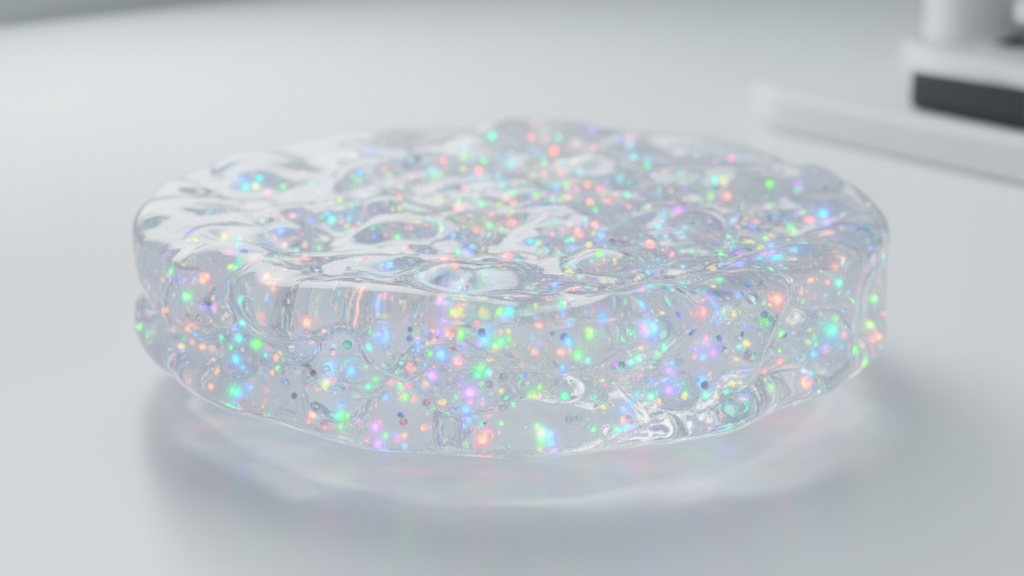
Image Credits: AI Generated
DOI: 10.1186/s42825-026-00243-y
Keywords: carbon quantum dots, leather waste recycling, hydrogel sensors, bioinspired architectures, mechanosensing, pH monitoring, biomass valorization, polyacrylamide hydrogels, photoluminescence, antimicrobial materials, antioxidant properties, flexible electronics, aggregation induced emission, intramolecular charge transfer, wearable technology, hydrothermal synthesis, semiconductor nanomaterials
News Source: Denise Maddox. (November 16, 2026). Leather Waste Yields Fluorescent Nanodots for Bioinspired Multifunctional Sensing Hydrogels. Scienmag.