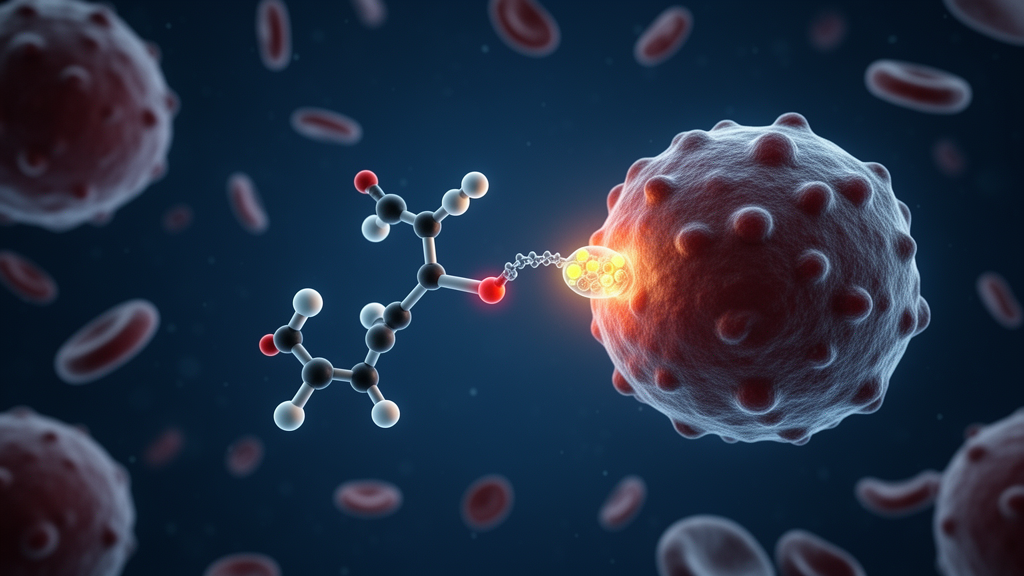
Antibody-drug conjugates have moved from a promising concept to a central pillar of blood cancer therapy, and a new open-access review published in Discover Medicine on 14 October 2026 now maps the full clinical landscape of the six agents approved by the US Food and Drug Administration for hematologic malignancies. The review, authored by Priya Hays, evaluates belantamab mafodotin for multiple myeloma, gemtuzumab ozogamicin for acute myeloid leukemia, inotuzumab ozogamicin for acute lymphoblastic leukemia, brentuximab vedotin for classic Hodgkin lymphoma, and polatuzumab vedotin and loncastuximab tesirine for diffuse large B-cell lymphoma. Each agent pairs a monoclonal antibody directed at a tumor surface antigen with a potent cytotoxic payload joined by a chemical linker, allowing chemotherapy-like killing to be concentrated on malignant cells while sparing healthy tissue.
The mechanism is elegantly simple in outline. The antibody binds its target antigen on the tumor cell surface, the ADC-antigen complex is internalized through receptor-mediated endocytosis, the linker is cleaved inside the lysosomal compartment, and the released payload kills the cell by damaging DNA, disrupting microtubules or triggering apoptosis. Payload classes differ sharply across the approved agents: calicheamicins such as those in gemtuzumab and inotuzumab ozogamicin cleave double-stranded DNA, auristatins such as the MMAE in brentuximab and polatuzumab vedotin and the MMAF in belantamab mafodotin dismantle microtubules, and the pyrrolobenzodiazepine dimer SG3199 carried by loncastuximab tesirine forms irreversible inter-strand DNA crosslinks. Linker chemistry, whether cleavable or noncleavable, governs stability in circulation, payload release and the drug-to-antibody ratio, and therefore much of each agent’s safety profile.
Belantamab mafodotin’s regulatory story is the most turbulent. The agent received accelerated FDA approval in 2020 as monotherapy for heavily pretreated relapsed or refractory multiple myeloma, but that approval was withdrawn in November 2022 after the confirmatory DREAMM-3 trial missed its primary endpoint. On 23 October 2025 the FDA granted regular approval for belantamab mafodotin combined with bortezomib and dexamethasone in adults with relapsed or refractory myeloma who had received at least two prior lines of therapy including a proteasome inhibitor and an immunomodulatory agent. In the pivotal DREAMM-7 trial, a phase 3 open-label randomized comparison against daratumumab, bortezomib and dexamethasone, median progression-free survival reached 36.6 months versus 13.4 months, with a hazard ratio for progression or death of 0.41. In the subgroup supporting the approved indication, median PFS was 31.3 months versus 10.4 months and overall survival favored the belantamab arm with a hazard ratio of 0.49. The companion trial DREAMM-8, testing belantamab with pomalidomide and dexamethasone against pomalidomide, bortezomib and dexamethasone in lenalidomide-exposed patients, showed a 12-month PFS of 71 percent versus 51 percent.
The defining toxicity of belantamab mafodotin is ocular. Its MMAF payload produces keratopathy that is managed through dose modifications, and ocular adverse events of any grade occurred in 79 percent versus 29 percent of patients in DREAMM-7 and 89 percent versus 30 percent in DREAMM-8, with blurred vision and dry eye prominent in the belantamab arms. Earlier monotherapy data from the phase 2 DREAMM-2 study, conducted in 58 centers across eight countries in heavily pretreated patients refractory to proteasome inhibitors, immunomodulatory drugs and anti-CD38 antibodies, showed objective responses in 31 percent of the 2.5 mg/kg cohort and 34 percent of the 3.4 mg/kg cohort, with grade 1 to 2 keratopathy the most common adverse event. The review notes that the 2025 approval’s trial population excluded patients refractory to daratumumab or bortezomib, those with prior BCMA-targeted therapy and those with pre-existing corneal disease, narrowing the studied population relative to typical clinic populations at second relapse.
In acute myeloid leukemia, gemtuzumab ozogamicin targets CD33 and carries N-acetyl gamma calicheamicin. The ALFA-0701 phase 3 trial enrolled 271 patients aged 50 to 70 with newly diagnosed de novo AML and added fractionated low-dose gemtuzumab, 3 mg/m2 on days 1, 4 and 7 of induction, to standard 3-plus-7 chemotherapy. Event-free survival at two years was 40.8 percent versus 17.1 percent, overall survival 53.2 percent versus 41.9 percent, and median event-free survival in the gemtuzumab arm was 17.3 months versus 9.5 months with chemotherapy alone. Benefit was concentrated in favorable and intermediate cytogenetic risk groups and was absent in poor-risk disease. Persistent thrombocytopenia and delayed platelet recovery were more common with the ADC, veno-occlusive disease occurred in 4.6 percent versus 1.5 percent, and hepatotoxicity carries a boxed warning. An individual patient data meta-analysis of 3325 randomized patients across five trials confirmed that adding gemtuzumab to induction chemotherapy improved overall survival, reduced relapse and validated CD33 as a legitimate therapeutic target, with higher CD33 expression correlating with longer survival in retrospective biomarker analyses.
Inotuzumab ozogamicin, a CD22-targeted calicheamicin conjugate, transformed outcomes in relapsed or refractory B-cell precursor acute lymphoblastic leukemia. In the phase 3 INO-VATE trial, the complete remission rate with inotuzumab monotherapy was 80.7 percent versus 29.4 percent with standard intensive chemotherapy, MRD negativity among responders rose 2.8-fold, and median PFS was 5.0 versus 1.8 months. Median overall survival was 7.7 versus 6.2 months, a modest absolute difference that the review argues becomes meaningful mainly through transplantation: 79 of 164 inotuzumab patients proceeded to allogeneic hematopoietic stem cell transplantation compared with 36 of 162 standard-care patients. The price is hepatic. Veno-occlusive disease or sinusoidal obstruction syndrome occurred in 14 percent of inotuzumab recipients versus 2.1 percent of controls, pooled data showed 18.8 percent of patients who received the drug and then underwent transplant developed SOS, which was fatal in a quarter of affected cases, and fractionated dosing limited to two courses is recommended to manage the risk. In older patients with newly diagnosed Philadelphia chromosome-negative ALL treated with low-intensity chemotherapy plus inotuzumab, 2-year PFS reached 58.2 percent, but nine patients developed second hematological neoplasms and 44 percent of the population died while in remission.
Brentuximab vedotin, the CD30-directed MMAE conjugate first approved in 2011, now holds seven FDA-approved indications spanning frontline and relapsed Hodgkin lymphoma, CD30-expressing peripheral T-cell lymphomas, high-risk pediatric cHL and, since February 2025, relapsed or refractory large B-cell lymphoma in combination with lenalidomide and rituximab. That latest approval rests on ECHELON-3, a randomized placebo-controlled trial in 230 patients ineligible for autologous transplant or CAR-T therapy, which showed median overall survival of 13.8 versus 8.5 months, a 37 percent lower risk of death, median PFS of 4.2 versus 2.6 months and objective response rates of 64 percent versus 42 percent, regardless of CD30 status. Peripheral neuropathy, the class-limiting toxicity of MMAE agents, developed or worsened in 27 percent of patients. In relapsed Hodgkin lymphoma, the combination of brentuximab vedotin with the checkpoint inhibitor nivolumab achieved an overall response rate of 85 percent with 67 percent complete responses and three-year overall survival of 93 percent, and preclinical work indicates that MMAE-driven microtubule disruption induces immunogenic cell death, providing a mechanistic rationale for such immunotherapy combinations.
For diffuse large B-cell lymphoma, polatuzumab vedotin targets CD79b and was approved in April 2023 as part of pola-R-CHP for previously untreated patients with an International Prognostic Index score of 2 or greater, based on the POLARIX trial in 879 patients, where substituting polatuzumab for vincristine reduced the risk of progression, relapse or death by 27 percent and produced a 2-year PFS of 76.7 percent versus 70.2 percent, although overall survival did not differ significantly. In transplant-ineligible relapsed disease, the GO29365 study showed that polatuzumab with bendamustine and rituximab improved median overall survival to 12.4 months versus 4.7 months compared with bendamustine-rituximab alone. Loncastuximab tesirine, the CD19-targeted pyrrolobenzodiazepine conjugate, earned approval through the single-arm LOTIS-2 trial in 145 heavily pretreated patients, achieving an overall response rate of 48.3 percent and a complete response rate of 24.8 percent, with durable remissions extending beyond two years in a subset of complete responders and elevated gamma-glutamyl transferase, neutropenia and thrombocytopenia as the leading toxicities.
Resistance, the review emphasizes, remains the central clinical challenge across the class. Antigen loss is the best-documented mechanism: relapse after brentuximab vedotin is associated with downregulation of CD30, and inotuzumab resistance involves loss of CD22 expression and exon 2 splicing that prevents antigen display, with MRD-positive relapses showing far larger decreases in CD22 expression than MRD-negative patients. For polatuzumab vedotin, downregulation and altered glycosylation of CD79b reduce binding, the ubiquitin ligase KLHL6 targets CD79b for degradation, and overexpression of the efflux pump MDR1 drives cross-resistance to MMAE payloads, with sequential MMAE-based ADCs showing diminished clinical benefit. Belantamab resistance involves antigen modulation and microenvironment-mediated escape, while loncastuximab resistance has been linked to the PBD payload in early studies, though clinical data remain limited for this newer agent.
The review’s author is candid about its limits: it is a narrative rather than systematic review, cross-trial comparisons such as DREAMM-7 against CAR-T data and the matching-adjusted indirect comparison of loncastuximab with polatuzumab plus bendamustine are hypothesis-generating at best, and the resistance pathway data derive largely from preclinical models without clinically actionable biomarkers. Even so, the picture that emerges is of a drug class that has earned durable positions across myeloma, leukemia and lymphoma, differentiated less by what each conjugate uniquely achieves than by who can receive it, what toxicities patients can tolerate and which resistance mechanisms will ultimately demand the next generation of agents and biomarker-driven combination strategies.
Subject of Research: FDA-approved antibody-drug conjugates for hematologic malignancies
Article Title: Efficacy, safety and resistance mechanisms of FDA-approved antibody–drug conjugates for hematologic malignancies
Article References: Hays, P. (2026). Efficacy, safety and resistance mechanisms of FDA-approved antibody–drug conjugates for hematologic malignancies. Discover Medicine, 3(1), Article 156. https://doi.org/10.1007/s44337-026-00721-6
Image Credits: AI Generated
DOI: 10.1007/s44337-026-00721-6
Keywords: antibody-drug conjugates, hematologic malignancies, multiple myeloma, acute myeloid leukemia, acute lymphoblastic leukemia, Hodgkin lymphoma, diffuse large B-cell lymphoma, brentuximab vedotin, belantamab mafodotin, drug resistance, clinical trials, FDA approval
News Source: Nathaniel Bowman. (October 29, 2026). FDA-Approved Antibody-Drug Conjugates Reshape Blood Cancer Treatment. Scienmag.