• HOME
  • NEWS
  • EXPLORE
    • CAREER
      • Companies
      • Jobs
    • EVENTS
    • iGEM
      • News
      • Team
    • PHOTOS
    • VIDEO
    • WIKI
  • BLOG
  • COMMUNITY
    • FACEBOOK
    • INSTAGRAM
    • TWITTER
Wednesday, June 10, 2026
BIOENGINEER.ORG
No Result
View All Result
  • Login
  • HOME
  • NEWS
  • EXPLORE
    • CAREER
      • Companies
      • Jobs
        • Lecturer
        • PhD Studentship
        • Postdoc
        • Research Assistant
    • EVENTS
    • iGEM
      • News
      • Team
    • PHOTOS
    • VIDEO
    • WIKI
  • BLOG
  • COMMUNITY
    • FACEBOOK
    • INSTAGRAM
    • TWITTER
  • HOME
  • NEWS
  • EXPLORE
    • CAREER
      • Companies
      • Jobs
        • Lecturer
        • PhD Studentship
        • Postdoc
        • Research Assistant
    • EVENTS
    • iGEM
      • News
      • Team
    • PHOTOS
    • VIDEO
    • WIKI
  • BLOG
  • COMMUNITY
    • FACEBOOK
    • INSTAGRAM
    • TWITTER
No Result
View All Result
Bioengineer.org
No Result
View All Result
Home NEWS Science News Cancer

Exploring the Link Between Obstructive Sleep Apnea and Lung Cancer: Epidemiology and Underlying Mechanisms

Bioengineer by Bioengineer
May 29, 2026
in Cancer
Reading Time: 2 mins read
0
Share on FacebookShare on TwitterShare on LinkedinShare on RedditShare on Telegram

It looks like your text got cut off at the end. Here is a summary so far, and if you want, I can help complete or expand the review:

Summary: Association Between Obstructive Sleep Apnea (OSA) and Lung Cancer

Background:
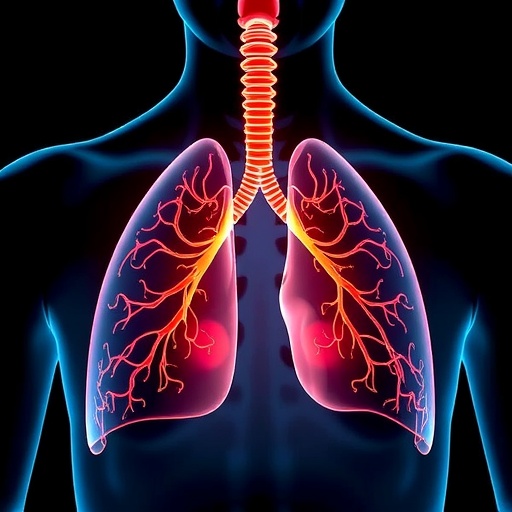
OSA is characterized by repeated episodes of partial or complete upper airway obstruction during sleep, leading to intermittent hypoxia (IH) and sleep fragmentation. These physiological stressors have been implicated not only in cardiovascular and metabolic disorders but also in cancer development and progression.

Epidemiological Evidence:

Mixed results exist regarding the association between OSA and lung cancer incidence and mortality.
Some large cohort studies (e.g., Jara et al. in a veteran population, Kendzerska et al. in Canada) report a positive association with hazard ratios (HR) up to 1.34, particularly in the presence of severe nocturnal hypoxemia (measured as T90%, the percentage of sleep time with oxygen saturation below 90%).
Other studies report no significant association or even suggest a protective effect, highlighting the need for more rigorous and standardized investigation.

Pathophysiological Mechanisms:
OSA-induced intermittent hypoxia may promote lung carcinogenesis and progression via several mechanisms:

Activation of Hypoxia-Inducible Factors (HIFs) which promote angiogenesis and tumor survival.
Remodeling of the tumor immune microenvironment leading to immune evasion.
Release of exosomes containing pro-tumor signaling molecules.
Activation of the NF-κB pathway, related to inflammation and cancer progression.
Enhancement of cancer stem cell properties, which may facilitate tumor initiation and metastasis.

Therapeutic Implications:

Continuous Positive Airway Pressure (CPAP) therapy, the first-line treatment for OSA, may mitigate hypoxia-related tumorigenic pathways.
Some evidence suggests that CPAP use reduces lung cancer incidence and improves prognosis in patients who are adherent to therapy.

Conclusion and Future Directions:
Further well-designed, prospective studies using objective OSA diagnostics and adequate control for confounders (e.g., smoking status, environmental exposure) are essential to clarify the causal relationship between OSA and lung cancer.

If you want, I can help you finish the epidemiology section, work on tables summarizing evidence, elaborate on specific mechanisms, or assist with drafting the remaining parts of your review. Please let me know how you would like to proceed!

Tags: cancer progression incardiovascular and metabolic comorbidities in OSAcohort studies on OSA and lung cancerepidemiology of sleep apnea and cancerhypoxia-inducible factors in tumor progressionimmune microenvironment remodeling in lung cancerintermittent hypoxia effects on cancermechanisms linking sleep apnea to carcinogenesisnocturnal hypoxemia and cancer mortalityobstructive sleep apnea and lung cancer risksevere nocturnal hypoxemia and tumor growthsleep fragmentation impact on cancer development

Share12Tweet8Share2ShareShareShare2

Related Posts

BMI, Chemotherapy Toxicity, Survival in Colorectal Cancer

June 10, 2026

Chronic Exposure to Hazardous Formaldehyde Levels Threatens Health of Thousands of NHS Workers

June 10, 2026

Mayo Clinic Uncovers Hidden Biology Behind Common Brain Tumors

June 10, 2026

New Study Links Birt-Hogg-Dubé to Cancer Risks

June 9, 2026

POPULAR NEWS

  • ESMO 2025: mRNA COVID Vaccines Enhance Efficacy of Cancer Immunotherapy

    324 shares
    Share 130 Tweet 81
  • Saying Goodbye to PGY-6: Pediatric Fellowship Realities

    90 shares
    Share 36 Tweet 23
  • Multi-Hospital Study Reveals Long Covid Burden Is Twice as High as Current Estimates

    89 shares
    Share 35 Tweet 22
  • Common Food Preservatives Associated with Elevated Blood Pressure and Increased Heart Disease Risk

    58 shares
    Share 23 Tweet 15

About

We bring you the latest biotechnology news from best research centers and universities around the world. Check our website.

Follow us

Recent News

eHealth Literacy, Cyberchondria, and Stress in Seniors

Calpeptin Blocks Red Blood Cell Vesicles, Reduces Inflammation

BMI, Chemotherapy Toxicity, Survival in Colorectal Cancer

Subscribe to Blog via Email

Enter your email address to subscribe to this blog and receive notifications of new posts by email.

Join 82 other subscribers
  • Contact Us

Bioengineer.org © Copyright 2023 All Rights Reserved.

Welcome Back!

Login to your account below

Forgotten Password?

Retrieve your password

Please enter your username or email address to reset your password.

Log In
No Result
View All Result
  • Homepages
    • Home Page 1
    • Home Page 2
  • News
  • National
  • Business
  • Health
  • Lifestyle
  • Science

Bioengineer.org © Copyright 2023 All Rights Reserved.