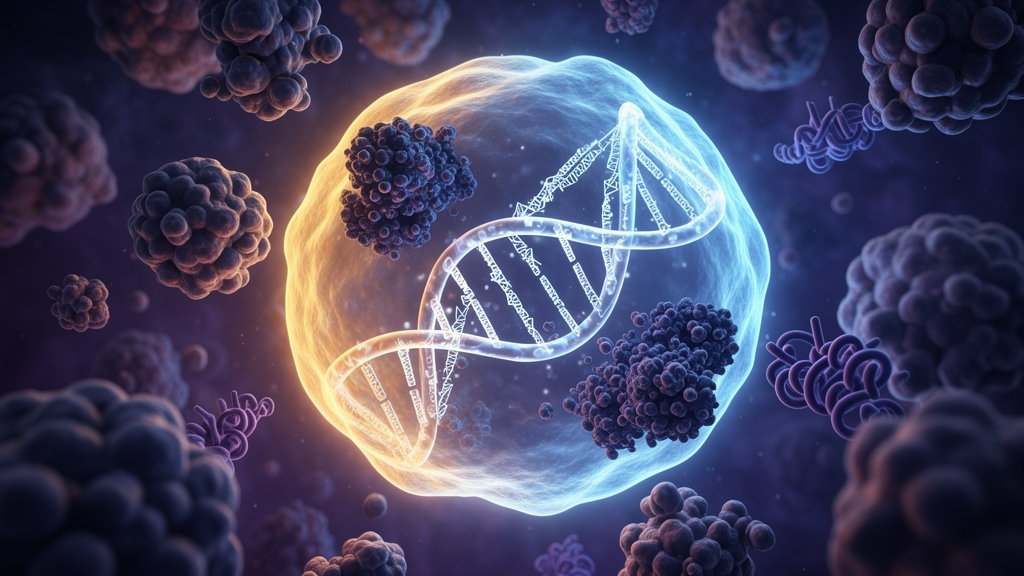
A research team led by Baohua Liu of Shenzhen University has proposed a unifying conceptual hypothesis termed the central dogma of aging, expanding the classical molecular information flow to explain how molecular imbalances drive one another across physiological systems. In a review published in The Innovation Life, the authors synthesize decades of catalogued hallmarks of aging, including genomic instability, telomere attrition, proteostasis collapse, and mitochondrial dysfunction, into an integrated multi-layered network. Rather than treating these physiological changes as disconnected or parallel phenomena, the framework argues that aging accelerates when layer-specific molecular disturbances propagate across levels through defined biological rules.
The traditional central dogma of molecular biology outlines the sequential transfer of genetic instructions from DNA to RNA and finally to functional proteins. The new theoretical model extends this pathway by incorporating metabolites as a foundational fourth biological layer. Within this architectural framework, the four tiers remain closely coupled through four core regulatory relationships designated as coding, catalysis, constitution, and catabolism. Furthermore, each individual layer maintains internal stability through continuous processes of synthesis, modification, and degradation, with aging fundamentally emerging when these tightly orchestrated mechanisms lose balance.
According to the review, the transmission of molecular dysfunction across these four layers is strictly multidirectional rather than a simple top-down cascade. DNA damage directly obstructs the progress of RNA polymerase and fuels transcriptional inaccuracies, while misplaced cytoplasmic fragments of damaged genomic material actively trigger the cGAS-STING immune sensing pathway to sustain chronic sterile inflammation. Consequently, abnormal transcripts do not behave merely as inert carriers of genetic templates; aberrant RNA species stimulate cellular interferon responses that independently drive the development of the senescence-associated secretory phenotype.
As these aberrant transcripts multiply, misfolded and damaged proteins accumulate in the intracellular environment at rates that overwhelm clearance pathways. The cellular load eventually exceeds the degradation capacity of both the ubiquitin-proteasome system and autophagy machinery, pulling down broader metabolic stability. This resulting proteostatic collapse triggers stress signals that feed directly back into RNA processing and genomic DNA maintenance, reinforcing instability across the upper molecular tiers and accelerating further cellular deterioration.
Metabolites ultimately close the regulatory feedback loop by modulating epigenetic programming and enzymatic activity across the preceding layers. Specifically, S-adenosylmethionine supplies essential methyl groups for DNA and histone methylation, oxidized nicotinamide adenine dinucleotide activates sirtuin deacetylases, acetyl-CoA establishes histone acetylation profiles, and alpha-ketoglutarate governs broad epigenetic modifications. Shifts in the availability of these specific metabolic substrates directly reshape upstream chromatin structure and transcriptional regulation, demonstrating how localized metabolic fluctuations can effectively reset the state of the entire cellular network.
Surrounding and acting upon all four internal tiers is the exposome, conceptualized by the authors as a series of concentric environmental shells that dictate the overall trajectory and rate of aging. These influences range from immediate microenvironmental factors, such as local oxygen tension, endocrine hormones, and inflammatory signaling molecules, through intermediate physiological parameters including systemic circulation, gut microbiota diversity, diet composition, exercise habits, and circadian sleep patterns, out to macro-environmental exposures like ionizing radiation, ambient temperature, microgravity, and environmental pollutants. The authors note that therapeutic strategies, including caloric restriction, exercise regimens, microbiome modulation, circadian regulation, and senescent cell clearance, can target interventions into this multi-tiered architecture.
The researchers explicitly emphasize that their published work represents a theoretical hypothesis framework rather than a report of novel empirical data, noting substantial disparities in the depth of current experimental validation. While modulators such as oxidized nicotinamide adenine dinucleotide, S-adenosylmethionine, beta-hydroxybutyrate, spermidine, and alpha-ketoglutarate possess comparatively robust empirical backing, other metabolic candidates such as succinate, lactate, and ceramides currently remain observational correlates awaiting rigorous causal testing. The authors conclude that effective future diagnostics will require dynamic composite biomarkers tracking multi-layer flow rather than isolated metrics, explaining why single-target interventions historically encounter limited success.
Consequently, the authors conclude that truly durable therapeutic success depends on developing unified interventions capable of simultaneously stabilizing multiple regulatory levels.
The published framework further argues that environmental exposures arranged throughout the concentric shells actively dictate the pace at which the entire four-layer molecular system drifts out of homeostatic balance. Because imbalances within anabolism, molecular modification, and catabolism spread continuously between genetic, transcriptomic, proteomic, and metabolic domains, intervening at the exposome level or at distinct internal nodes provides a biological rationale for broad anti-aging approaches.
Subject of Research: Hypothesis framework expanding the molecular biology central dogma to metabolites and aging networks
Article Title: A "central dogma of aging" proposed: DNA, RNA, protein and metabolite imbalances amplify each other into one self-reinforcing network
Article References: A "central dogma of aging" proposed: DNA, RNA, protein and metabolite imbalances amplify each other into one self-reinforcing network. Original publication (Bibliographic details unavailable.)
Image Credits: AI Generated
DOI: Not provided
Keywords: central dogma of aging, metabolites, exposome, proteostasis, DNA damage, cGAS-STING, senescence-associated secretory phenotype, epigenetics, sirtuins, NAD+, S-adenosylmethionine, alpha-ketoglutarate, hallmarks of aging, ubiquitin-proteasome system, Shenzhen University, The Innovation Life, aging biology
News Source: Beatrice Stafford. (November 13, 2026). Expanded Molecular Biology Central Dogma Framework Explains Self-Reinforcing Aging Network Imbalances. Scienmag.