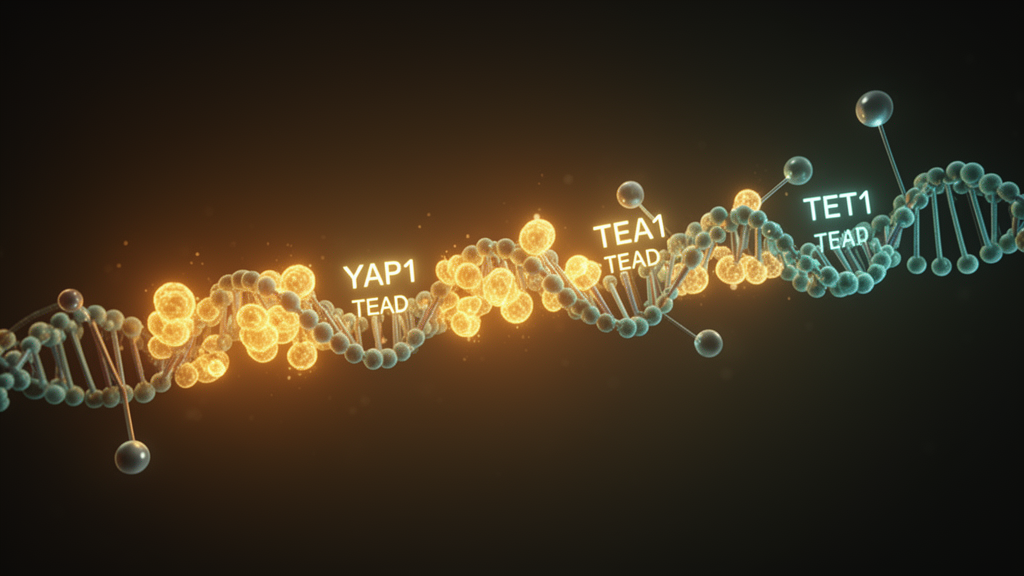
Cancers can develop through an epigenetic route even in the absence of the driver gene mutations (DGMs) long considered the engine of tumor formation, according to a study from the Institute of Science Tokyo published in Communications Biology. The research team, led by Professor Hiroshi Nishina, Assistant Professor Yoshimi Okamoto-Uchida, and doctoral student Misaki Kosaka, identified a signaling axis involving the transcriptional coactivator YAP1, the transcription factor TEAD, and the DNA-demethylating enzyme TET1 that promotes hepatocellular carcinoma (HCC) without canonical driver mutations. Their findings, published on September 17, 2026, in Volume 9 of the journal, point to an alternative mechanism of oncogenesis that operates through changes in DNA methylation rather than changes in DNA sequence.
Most cancers arise from genetic abnormalities that activate proto-oncogenes or disable tumor suppressor genes, and next-generation sequencing has allowed researchers to catalog driver gene mutations across the vast majority of tumors. A subset of cancers, however, lacks these canonical mutations, and the mechanisms behind their development have remained poorly understood. To test whether a mutation-independent route could explain such tumors, the team hypothesized that a complex composed of YAP1 and TEAD might promote cancer not by mutating genomic DNA but by inducing DNA demethylation, a chemical change that can switch genes on without altering their sequence.
The researchers built a mosaic mouse model in which YAP1 was activated in a subset of liver cells via hydrodynamic tail-vein injection. They then analyzed the resulting tumors with whole-exome sequencing to search for mutations and with DNA methylation analyses to characterize epigenetic changes. The tumors showed no detectable canonical driver gene mutations, while the methylation analyses revealed widespread DNA demethylation associated with the activation of multiple oncogenes. YAP1–TEAD activation was found to enhance expression of the Tet1 gene, which encodes Ten-eleven translocation (TET1), an enzyme that promotes DNA demethylation, thereby driving activation of multiple cancer-related genes.
When the team reduced Tet1 expression to test its role in tumor development, suppressing TET1 function reduced tumor formation in the mice. Spatial transcriptomic analysis further identified a TET1-high subpopulation of HCC cells that interacted with other hepatic cell types, suggesting that the epigenetic state of these tumor cells is linked to their microenvironment. “We observed that the expression of TET1 increased, promoting the activation of multiple cancer-related genes, and that suppressing TET1 function reduced tumor formation,” Okamoto-Uchida said, describing the experimental results.
The study also drew on human data to assess whether the pathway is relevant beyond the mouse model. Analysis of samples from patients with Fontan-associated liver disease, a condition associated with HCC and a lower frequency of canonical driver gene mutations, revealed elevated YAP1–TEAD–TET1-associated signatures in hepatocytes. This supports the relevance of the epigenetic pathway in a human liver disease context known to predispose patients to liver cancer, although the human analysis is observational and does not by itself establish causation in patients.
The work was conducted in collaboration with researchers from the National Cancer Center Research Institute, The University of Tokyo, Kobe University Graduate School of Medicine, and Showa Medical University School of Medicine in Japan. Because the core experiments were performed in mice, with supporting signatures from human disease data, the findings establish a mechanism in an animal model rather than a demonstrated clinical benefit, and the authors note that further work is needed before any therapeutic implications can be drawn.
Future research directions identified by the team include examining whether similar epigenetic pathways operate in other DGM-negative cancers, identifying the signals that initiate YAP1–TEAD activation, and clarifying how TET1 selects its target genes. Answering these questions may help establish whether the pathway offers potential therapeutic targets for further investigation, particularly for tumors that lack the mutations typically targeted by precision oncology.
More broadly, the study adds to a growing recognition that cancer development cannot always be explained by DNA sequence changes alone. By showing that a defined signaling pathway can reprogram the epigenetic landscape of liver cells and activate multiple oncogenes without introducing driver mutations, the Science Tokyo team offers a framework for understanding a class of tumors that has resisted conventional genomic explanation. The findings may prompt renewed scrutiny of DGM-negative cancers, in which epigenetic dysregulation could serve as the primary driver of malignancy.
Subject of Research: An epigenetic YAP1–TEAD–TET1 pathway that drives hepatocellular carcinoma without driver gene mutations
Article Title: Beyond mutations: New study reveals alternative route to cancer
Article References: Beyond mutations: New study reveals alternative route to cancer. Original publication (Bibliographic details unavailable.)
Image Credits: AI Generated
DOI: Not provided
Keywords: hepatocellular carcinoma, YAP1, TEAD, TET1, DNA demethylation, epigenetics, driver gene mutations, oncogenes, liver cancer, mouse model, spatial transcriptomics, Fontan-associated liver disease
News Source: Nathaniel Bowman. (October 25, 2026). Epigenetic YAP1–TEAD–TET1 pathway drives liver cancer without driver mutations. Scienmag.