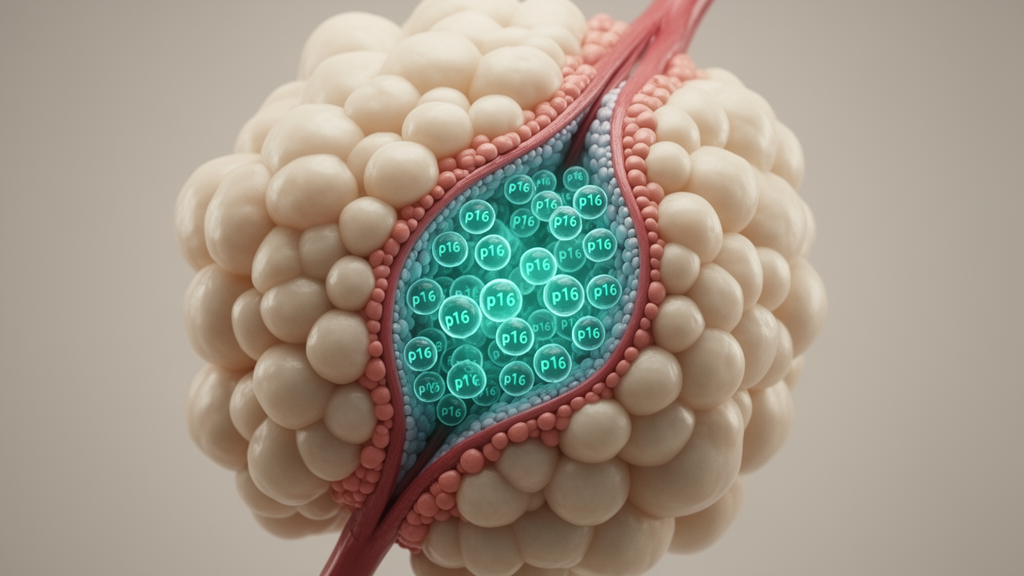
Clear cell renal cell carcinoma is characterized by extensive angiogenesis and marked architectural heterogeneity, and a new open-access study published in BMC Cancer on 26 October 2026 by Michael Stoffel, Marieta I. Toma and colleagues reports that p16 expression in the endothelial cells lining intratumoral blood vessels identifies a subgroup of patients with favorable clinicopathological characteristics and prolonged overall survival. The finding shifts attention from how many vessels a tumor contains to what those vessels express.
The team analyzed p16 expression in a tissue microarray cohort comprising 347 clear cell renal cell carcinoma cases with clinicopathological and survival data. Because vascular density has previously been investigated as a prognostic parameter in this disease but little has been known about the biological characteristics of intratumoral endothelial cells, the researchers related vascular p16 expression to previously described tumor architecture subtypes, testing the new marker against an established stratification system.
Tumor architecture could be assessed in 315 of the cases and was classified into nine predominant growth patterns. Tumors with thick trabecular or insular architecture, or solid sheet-like growth, were grouped as high-risk patterns. These high-risk architectural patterns were significantly associated with higher tumor grade and shorter overall survival, with a p value below 0.001, confirming that the spatial organization of tumor cells carries prognostic weight in this cancer.
The expression of p16 in the tumor cells themselves told a different story. Tumor cell p16 expression was infrequent in the cohort and showed no association with clinicopathological parameters or with survival. In contrast, endothelial p16 expression was commonly observed in the intratumoral blood vessels, with a median of 35 percent positive vessels per case. This dissociation between the tumor-cell compartment and the vascular compartment is the central technical observation of the study: the same protein was prognostically silent when expressed by cancer cells but informative when expressed by vessel-lining cells.
Higher endothelial p16 expression, measured both in extent and in staining intensity, was significantly associated with lower tumor grade, lower pT stage, favorable architectural patterns and prolonged overall survival. Tumors whose blood vessels expressed p16 abundantly therefore tended to be less aggressive by every conventional measure the investigators examined, and the association held across both the proportion of stained vessels and the strength of staining.
The most clinically interesting finding concerns how endothelial p16 interacts with the established architectural stratification. The prognostic impact of the architectural growth patterns was most pronounced in tumors with low endothelial p16 expression. Among tumors with high endothelial p16 expression, survival was comparable independent of architectural subtype, suggesting that abundant vascular p16 expression may flag cases with a good prognosis even when their growth pattern appears unfavorable.
The authors conclude that endothelial p16 expression is common in clear cell renal cell carcinoma and is associated with favorable clinicopathological characteristics and prolonged survival. They propose that endothelial p16 expression may complement architectural tumor stratification, identifying cases with good prognosis. Within those limits, the study adds a technically specific layer to the prognostic assessment of kidney cancer by showing that the biology of a tumor’s blood vessels, and not merely their abundance, carries information about how the disease behaves.
The study is a retrospective tissue microarray analysis of a single cohort, and the publisher notes that the article was shared early as a peer-reviewed, accepted version that remains subject to further edits before the final version of record. These caveats frame the result as an observational association in 347 tumors rather than a validated clinical test, but they do not diminish the core message: in clear cell renal cell carcinoma, the endothelial compartment is not prognostically inert, and p16 expression within it may help refine which patients face the greatest risk.
Subject of Research: Endothelial p16 expression as a prognostic marker in clear cell renal cell carcinoma
Article Title: Endothelial p16 expression identifies a subgroup of clear cell renal cell carcinoma with favorable prognosis
Article References: Stoffel, M., Baschun, K., Kehl, M., Ellinger, J., Klümper, N., Kadzik, S., Winterhagen, F. I., Ritter, M., Hölzel, M., Kristiansen, G., & Toma, M. I. (2026). Endothelial p16 expression identifies a subgroup of clear cell renal cell carcinoma with favorable prognosis. BMC Cancer, 26(1), Article 1302. https://doi.org/10.1186/s12885-026-17178-6
Image Credits: AI Generated
DOI: 10.1186/s12885-026-17178-6
Keywords: clear cell renal cell carcinoma, p16, endothelial cells, tumor architecture, prognosis, tissue microarray, overall survival, tumor grade, angiogenesis, biomarker, Endothelial, expression
News Source: Nathaniel Bowman. (October 26, 2026). Endothelial p16 expression marks a favorable-prognosis subgroup of clear cell renal cell carcinoma. Scienmag.