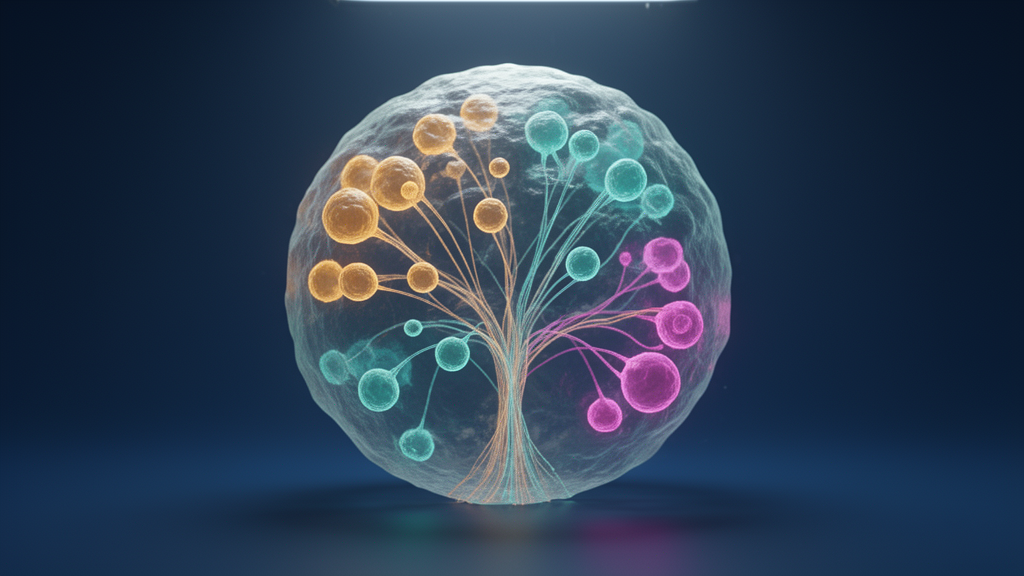
A review published in Nature Reviews Cancer on 26 October 2026 examines how single-cell genomics has entered cancer research and clinical oncology, enhancing our understanding of somatic evolution and the genomic heterogeneity that exists inside a tumour. Written by Johannes Gawron, Jack Kuipers, Ang Li, Benjamin J. Raphael, Florian Markowetz and Niko Beerenwinkel, the article frames the evolutionary history of a tumour as a phylogenetic tree and surveys the statistical and computational methods that researchers have proposed in recent years to reconstruct such trees from single-cell sequencing data.
The central argument of the review is that tumour phylogenetics cannot simply borrow from classical evolutionary biology. According to the authors, the nature of tumour evolution, combined with the characteristics of single-cell sequencing itself, raises modelling challenges that classical phylogenetic and phylodynamic approaches were not designed to address. The review therefore walks readers through the models and assumptions behind bespoke single-cell tumour phylogeny methods, explaining how each framework represents the somatic events that accumulate as a tumour evolves and where those representations can break down.
A substantial portion of the article is devoted to recent computational and algorithmic advances in phylogenetic inference. The authors compare different ways of representing mutation histories, highlighting how the choice of representation shapes what an inferred tree can reveal about the evolutionary events in a tumour. They also examine how unaccounted-for genomic events or sequencing errors can affect phylogenetic tree reconstruction, and they describe the tree inference strategies that researchers have developed for single-cell data. Together, these sections map the technical landscape that determines how faithfully a reconstructed tree reflects the underlying biology.
The practical payoff of these methods extends across basic and clinical oncology research. By applying single-cell phylogenetic reconstruction to individual cancers and to cohorts of patient samples, researchers can gain new insights into how tumours diversify and how subpopulations of cells relate to one another. The review discusses these applications in detail, positioning tumour phylogenetics as a bridge between the data-rich world of single-cell genomics and the evolutionary questions that underpin cancer progression.
The authors close with an outlook on the current challenges facing single-cell phylogenetics and its potential future applications. As single-cell sequencing continues to spread through cancer research, the review offers a structured guide to a field that is defining how the evolutionary history of cancer can be read directly from its cells, while also setting out the open problems that will shape the next phase of method development.
Subject of Research: Computational methods for reconstructing tumour phylogenies from single-cell sequencing data
Article Title: Single-cell tumour phylogenetics
Article References: Gawron, J., Kuipers, J., Li, A., Raphael, B. J., Markowetz, F., & Beerenwinkel, N. (2026). Single-cell tumour phylogenetics. Nature Reviews Cancer. https://doi.org/10.1038/s41568-026-00992-2
Image Credits: AI Generated
DOI: 10.1038/s41568-026-00992-2
Keywords: single-cell genomics, tumour phylogenetics, cancer evolution, intra-tumour heterogeneity, somatic evolution, phylogenetic inference, computational biology, Nature Reviews Cancer, Single-cell, tumour, phylogenetics, scientific research
News Source: Nathaniel Bowman. (October 26, 2026). Single-cell tumour phylogenetics. Scienmag.