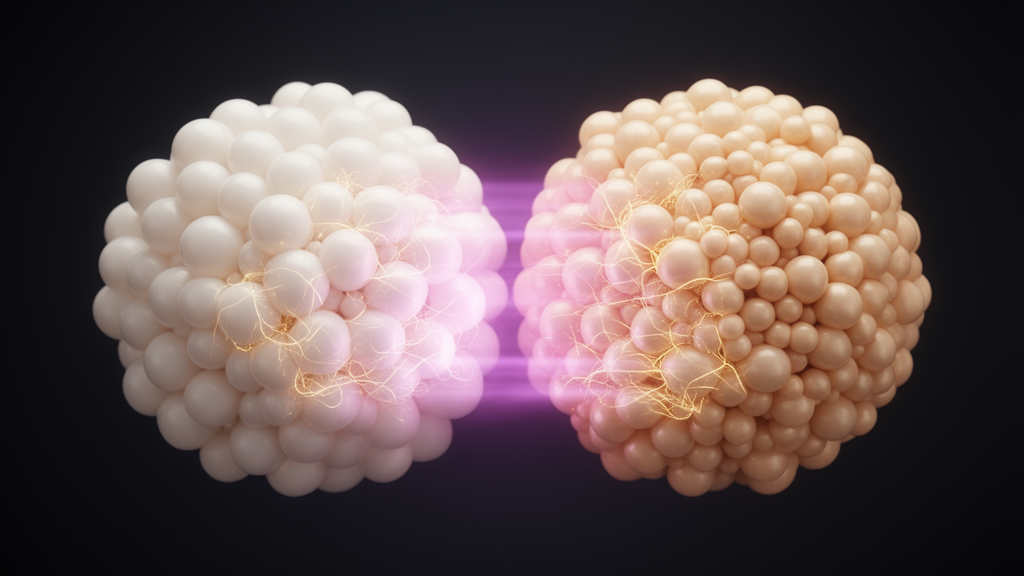
Researchers at the University of Oslo report that the passive electrical and optical properties of adipose tissue can distinguish between fat depots and track their metabolic remodeling, offering a non-destructive alternative to conventional tissue analysis. The study, accepted for publication in Frontiers in Physiology, combined three spectroscopic techniques with machine learning to classify different types of fat tissue.
The team, led by Jie Hou with colleagues including Florian Albert Dapsance, Damien Dufour, Charlotte N. Boccara, Nolwenn Briand and Ørjan Grøttem Martinsen, applied electrical impedance spectroscopy (EIS), dielectric relaxation spectroscopy (DRS) and near-infrared spectroscopy (NIRS) to analyze different types of adipose tissue. The measurements were then fed into machine learning classifiers, and the researchers also extracted and validated dielectric properties in order to estimate water content within each depot.
One of the study’s central findings concerns how fat depots relate to one another. Morphologically, inguinal white adipose tissue (iWAT) is closer to peri-gonadal white adipose tissue (gWAT), yet when the researchers examined electrical and optical properties, iWAT and brown adipose tissue (BAT) turned out to share more similar signatures. This suggests that functional differences between fat depots may be reflected in their passive biophysical properties even when their appearance under the microscope tells a different story.
The classification results were striking. Machine learning methods applied to the DRS measurements achieved classification accuracy above 99 percent, meaning the spectral data alone were sufficient to reliably tell the depots apart. In addition, the dielectric analysis enabled reliable estimation of depot-specific water content.
The motivation behind the work lies in the biology of adipose tissue itself. Far from being an inert storage depot, adipose tissue plays a central role in mammalian energy homeostasis and metabolic regulation, and different depots behave in functionally distinct ways. Of particular interest is the process known as beiging, in which white adipocytes transdifferentiate into highly metabolic beige adipocytes, a remodeling event that changes how a depot handles energy.
According to the authors, the approach provides a promising non-destructive method for studying adipose tissue adaptations and remodeling, including the monitoring of beiging. Because the technique relies on passive electrical and optical measurements rather than destructive sampling, it could in principle allow researchers to follow dynamic changes in fat tissue over time.
The study was received on 23 June 2026 and accepted on 25 September 2026, and is classified as an original research article in the journal’s Medical Physics and Imaging section. The final formatted version of the article will be published soon, according to the journal’s listing.
As with any early-stage methodological study, the findings describe what the spectroscopic and machine learning approach achieved in the analyzed tissue samples; the authors present it as a promising research tool for characterizing adipose depots and their adaptations, and the reported classification accuracy and water-content estimates apply to the measurements described in the study.
Subject of Research: Non-destructive electrical and optical spectroscopy for classifying adipose tissue depots and monitoring beiging
Article Title: Determination of adipose tissue beiging from passive electrical and optical properties
Article References: Hou, J., Dapsance, F., Dufour, D., Boccara, C. N., Briand, N., & Martinsen, Ø. G. (2026). Determination of adipose tissue beiging from passive electrical and optical properties. Frontiers in Physiology, 17, Article 1917194. https://doi.org/10.3389/fphys.2026.1917194
Image Credits: AI Generated
DOI: 10.3389/fphys.2026.1917194
Keywords: adipose tissue, beiging, brown adipose tissue, dielectric relaxation spectroscopy, electrical impedance spectroscopy, near-infrared spectroscopy, machine learning, water content, white adipose tissue, metabolic regulation, tissue remodeling, Determination
News Source: Drew Townsend. (October 29, 2026). Electrical and Optical Properties Distinguish Adipose Tissue Depots and Offer a Promising Route to Monitoring Beiging. Scienmag.