In a groundbreaking revelation that could redefine therapeutic strategies for gliomas, one of the most aggressive brain cancers, researchers from Baylor College of Medicine and Texas Children’s Hospital have uncovered how dietary manipulation—specifically methionine restriction—profoundly impacts tumor biology and animal survival. This landmark study, published in the prestigious Proceedings of the National Academy of Sciences, elucidates the intricate connection between nutrient availability, chromatin architecture, and tumor viability, offering a paradigm shift in cancer treatment modalities.
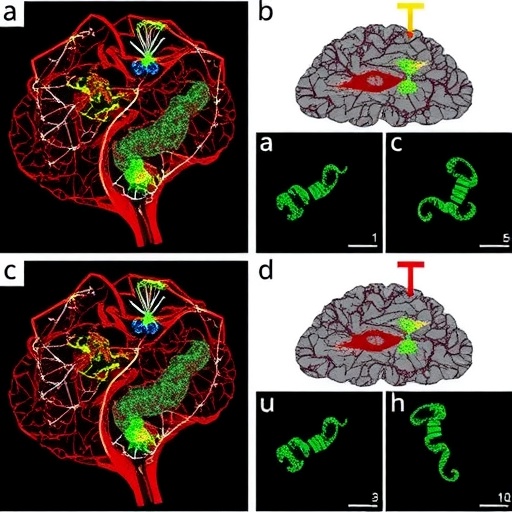
Gliomas notoriously exhibit fierce metabolic demands, particularly for the essential amino acid methionine, which the body cannot synthesize and must obtain through diet. This amino acid fuels rapid cellular proliferation and gene regulation mechanisms essential for tumor progression. The investigative team, led by Dr. Benjamin Deneen and graduate scientist Brittney Lozzi, sought to interrogate the consequences of depriving tumors of methionine in vivo. Utilizing a sophisticated mouse model of high-grade glioma, they observed that animals subsisting on methionine-restricted diets had significantly prolonged lifespans and markedly slowed tumor growth, underscoring a potential metabolic vulnerability.
Upon microscopic examination of glioma cells harvested from methionine-deprived mice, the researchers identified an unexpected phenomenon: the DNA within tumorous cells was less densely packed, appearing partially unraveled. This chromatin disorganization was striking, suggesting that methionine levels directly influence chromatin stability—a key regulator of gene expression. Chromatin’s conformational state dictates the accessibility of genomic regions to transcriptional machinery, thereby controlling which genes are activated or silenced—a critical factor in cancer cell fate.
Diving deeper into the molecular mechanisms, the study implicated the chromatin-organizing protein Hp1bp3, known for its role in maintaining nucleosome integrity by suppressing histone demethylases. These enzymes remove methyl groups from histone proteins, erasing epigenetic marks that typically repress gene activity. Methionine, as a methyl donor in cellular methylation reactions, provides the substrates needed for these modifications. Thus, Hp1bp3 and methionine converge to sustain chromatin organization through maintenance of essential methylation patterns.
Experimental depletion of Hp1bp3 in glioma cells led to accelerated tumor growth and diminished survival in mice, accompanied by chromatin destabilization. Intriguingly, the combined absence of Hp1bp3 and dietary methionine restriction synergistically impaired tumor viability far beyond either condition alone. This dual assault overwhelms the cancer cells’ epigenetic buffering capacity, causing catastrophic chromatin unraveling, transcriptional dysregulation, cellular stress, and ultimately tumor cell death.
This research elegantly bridges metabolism, epigenetics, and oncogenesis, highlighting how dietary elements can modulate nuclear architecture to influence cancer progression. The findings invite a reevaluation of nutritional interventions as adjunct strategies in glioma treatments, suggesting that manipulating amino acid availability might enhance therapeutic outcomes or sensitize tumors to conventional therapies.
Despite promising preclinical data, the translational leap to human glioma patients necessitates cautious, rigorous inquiry to assess safety and efficacy. Future studies are mandated to delineate optimal methionine restriction protocols, understand off-target physiological impacts, and evaluate combinatorial regimens incorporating epigenetic-targeting agents.
Moreover, this study illuminates new avenues for biomarker development. Hp1bp3 expression levels and chromatin stability markers could serve as predictive indices for responsiveness to methionine modulation therapies. Personalized nutritional oncology could harness such biomarkers to tailor diets that exploit tumor metabolic dependencies.
The interdisciplinary team’s work exemplifies the power of combining metabolic biology, chromatin research, and cancer neuroscience to unlock novel vulnerabilities in resilient tumors. Support from NIH, CPRIT, and other institutions reflects the translational importance and high impact potential of these discoveries.
As diet’s influence on gene regulation and tumor microenvironment gains recognition, these insights may cascade beyond gliomas, informing dietary strategies across diverse malignancies. The complex interplay of metabolism and epigenetics emerges as a fertile ground for innovative therapeutic development.
Ongoing investigations will expand on the molecular crosstalk between nutrient availability, epigenetic enzymes, and chromatin organizers like Hp1bp3, ultimately refining our understanding of tumor biology and paving the way for diet-based adjuvant therapies that improve patient survival and quality of life.
This research stands at the vanguard of a new era where what we eat is intertwined with molecular governance of gene expression and cancer fate, underscoring the profound impact of nutrition on human health and disease resilience.
Subject of Research: Animals
Article Title: Diet remodels chromatin structure and extends survival in models of glioma
News Publication Date: 10-Jun-2026
Web References: http://dx.doi.org/10.1073/pnas.2601061123
References: Proceedings of the National Academy of Sciences, DOI: 10.1073/pnas.2601061123
Keywords: Health and medicine, Biomedical engineering, Diseases and disorders, Human health, Medical specialties, Pharmaceuticals
Tags: amino acid deprivation and cancerchromatin remodeling in tumorsdietary intervention for gliomadietary strategies for brain tumorsepigenetic changes in gliomaglioma survival rates and dietglioma tumor growth inhibitionmetabolic vulnerabilities in brain cancermethionine metabolism in cancer cellsmethionine restriction in cancer therapynutrient impact on epigeneticspreclinical glioma mouse models