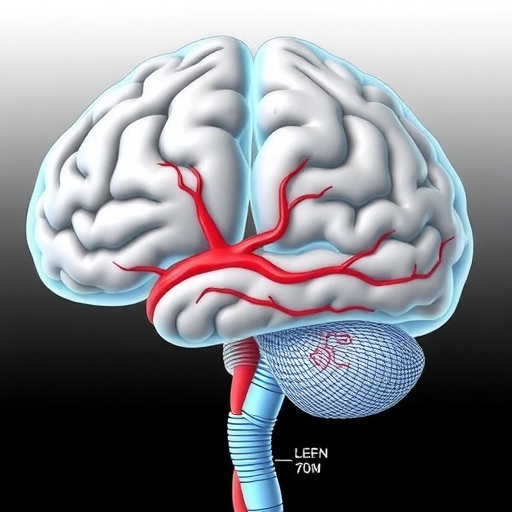
A new study has turned the spotlight on an often-overlooked vascular pathway—cerebral venous blood flow—and its unexpected role in governing both intracerebral pressure and the brain’s waste-clearing system. Reported in Nature Neuroscience, the work suggests that how blood returns from the brain can directly influence how effectively fluid and solutes are managed in the head, shaping clearance via meningeal lymphatic vessels.
Researchers investigated the dynamics linking venous circulation to the brain’s internal “plumbing.” They focused on meningeal lymphatic vessels, specialized channels that help drain cerebrospinal fluid–derived material out of the skull. The study shows that when venous blood flow changes, meningeal lymphatic function does not simply “track” passively—it responds in ways that can alter the clearance environment.
A key finding is that venous blood flow regulates intracerebral pressure, which in turn affects the conditions needed for fluid movement toward the lymphatic drainage routes. Rather than treating pressure as an isolated physical parameter, the authors place it within a mechanistic chain: altered venous flow modifies pressure gradients, and those gradients influence clearance efficiency.
Technically, the researchers used measurements and manipulations to tease apart cause-and-effect between hemodynamics and lymphatic transport. Their results indicate that the coupling between blood flow and pressure is a central driver of the clearance process, helping explain why impaired vascular function could translate into reduced brain “drainage.”
The implications reach beyond basic physiology. Elevated intracranial pressure and disrupted waste removal are relevant to multiple neurological conditions, including disorders characterized by impaired glymphatic or lymphatic clearance. By pointing to venous flow as a tunable upstream regulator, the study opens a new axis for therapeutic thinking.
Importantly for the viral science news audience, the results provide a compelling narrative: the brain clears itself not only through local fluid transport systems, but also through how venous circulation sets the pressure landscape. This reframes clearance as a network property spanning blood vessels, pressure regulation, and lymphatic drainage.
The researchers conclude that targeting venous hemodynamics could offer a way to modulate intracerebral pressure and enhance brain clearance via meningeal lymphatics. If borne out in future work, such strategies might connect cardiovascular and neurological health more directly than previously appreciated.
Subject of Research: Cerebral venous blood flow, intracerebral pressure regulation, brain clearance, meningeal lymphatic vessels
Article Title: Cerebral venous blood flow regulates intracerebral pressure and brain clearance via meningeal lymphatic vessels.
Article References: El Kamouh, MR., Spajer, M., Singhabahu, R. et al. Cerebral venous blood flow regulates intracerebral pressure and brain clearance via meningeal lymphatic vessels. Nat Neurosci (2026). https://doi.org/10.1038/s41593-026-02358-1
Image Credits: AI Generated
DOI: https://doi.org/10.1038/s41593-026-02358-1
Tags: blood flow and brain clearancebrain fluid homeostasisbrain pressure regulationbrain waste clearance mechanismsCerebral venous blood flowcerebrospinal fluid drainageintracerebral pressure dynamicslymphatic system in the brainmeningeal lymphatic vessel functionneurovascular coupling in waste removalneurovascular interactionsvenous circulation and brain health