In a discovery that reshapes how scientists understand one of medicine’s most stubborn liver diseases, researchers have identified a molecule produced by gut bacteria as a central driver of primary sclerosing cholangitis, a chronic inflammatory condition of the bile ducts that can progress to cirrhosis and liver failure. The findings, published in Nature Metabolism, reveal that imidazole propionate, a metabolite generated by intestinal microbes, promotes the disease process through a specific intracellular signaling pathway involving the enzyme p38, offering researchers an entirely new therapeutic target in a field where effective treatments remain scarce.
Primary sclerosing cholangitis, often abbreviated PSC, is a progressive disease in which the bile ducts, the thin channels that carry bile from the liver to the intestine, become inflamed, scarred, and progressively narrowed. This constriction chokes off bile flow, allowing toxic bile acids to accumulate in liver tissue and destroy hepatocytes over time. The disease is closely associated with inflammatory bowel disease, with the majority of PSC patients also carrying a diagnosis of ulcerative colitis or Crohn’s disease. Despite decades of research, no approved medical therapy has been shown to halt or reliably slow its progression, and liver transplantation remains the only definitive treatment for end-stage disease. The strong epidemiological link between intestinal inflammation and bile duct destruction has long suggested that something traveling from the gut to the liver might be responsible, but identifying the precise culprit has proven elusive.
The gut-liver axis, the anatomical and immunological highway connecting the two organs, has become one of the most intensively studied frontiers in hepatology. Blood draining from the intestines flows directly to the liver through the portal vein, carrying with it nutrients, microbial products, and metabolic byproducts of the trillions of bacteria resident in the digestive tract. In healthy individuals, the intestinal barrier and hepatic immune defenses contain this microbial traffic. In PSC, however, the barrier appears compromised, and the liver is chronically exposed to a stream of bacterial molecules. Previous studies had catalogued altered microbiome compositions in PSC patients and identified elevated levels of various microbial metabolites in their blood, but cataloguing associations is a very different matter from demonstrating causation.
The new research, led by Antonio Molinaro and colleagues, with contributions from Paul Richard Braadland and Gianluca Carpino among a broader team of investigators, took the crucial step of moving from correlation to mechanism. The team measured circulating levels of imidazole propionate in patients with primary sclerosing cholangitis and found the metabolite significantly elevated compared to healthy controls. Imidazole propionate first came to scientific prominence several years ago, when it was identified as a microbiota-derived amino acid derivative, produced from histidine by certain gut bacteria, that impairs insulin signaling and contributes to type 2 diabetes. Its presence at high concentrations in PSC patients immediately suggested that a molecule already known to disrupt cellular signaling in metabolic disease might also be interfering with the biology of the bile ducts.
To test whether imidazole propionate was merely a bystander in PSC or an active participant, the researchers turned to experimental systems that allowed them to isolate the molecule’s effects. In cellular studies using cholangiocytes, the epithelial cells that line the bile ducts and bear the brunt of injury in PSC, they exposed the cells to imidazole propionate and tracked the molecular consequences. What they observed was a decisive activation of p38 mitogen-activated protein kinase signaling, a stress-responsive pathway that, when chronically engaged, drives inflammation, promotes fibrotic responses, and can alter cell survival and proliferation. The p38 pathway functions as a cellular alarm system, and imidazole propionate appeared to be jamming the alarm switch into the on position.
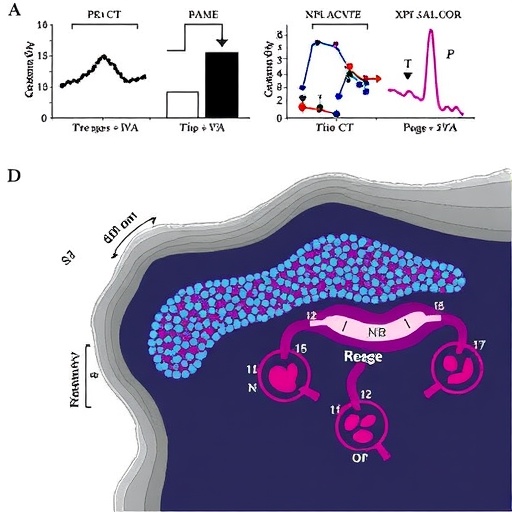
The signaling cascade traced by the investigators followed a recognizable logic. Imidazole propionate acts on cholangiocytes by engaging a cell surface receptor and triggering a phosphorylation chain reaction that culminates in p38 activation. Once activated, p38 modulates downstream transcriptional programs that amplify inflammatory cytokine production and promote the profibrotic behavior characteristic of cholangiopathies. In essence, the bacterial metabolite was instructing bile duct cells to behave as though they were under continuous attack, orchestrating exactly the kind of chronic inflammatory and scarring response that defines PSC pathology. When the researchers blocked components of this signaling pathway, the pathological effects of imidazole propionate on the cells were substantially blunted, confirming the pathway’s causal role.
Animal experiments provided further support. In mouse models, exposure to imidazole propionate or enrichment of the gut microbiota capable of producing it exacerbated bile duct inflammation and fibrosis, while interventions that reduced the metabolite’s production or blocked its signaling mitigated disease features. These results elevate imidazole propionate from a biomarker to a genuine disease-promoting agent, a microbial metabolite with the demonstrated capacity to instigate and sustain the pathological processes of primary sclerosing cholangitis. The work also offers a plausible mechanistic explanation for the clinical association between inflammatory bowel disease and PSC: a dysbiotic, inflamed gut rich in histidine-metabolizing bacteria would continuously manufacture and export the metabolite through the portal circulation, delivering it directly to the liver and biliary tree.
The therapeutic implications are considerable. Because the study identifies a defined molecule and a defined signaling pathway, it opens multiple points of intervention. Strategies could aim to reduce the production of imidazole propionate by modifying the gut microbiome, whether through dietary manipulation of histidine availability, targeted antibiotics, bacteriophages directed against producing strains, or live biotherapeutics that outcompete the responsible organisms. Alternatively, drugs could be developed to block the metabolite’s receptor on cholangiocytes or to inhibit p38 signaling in the biliary epithelium. p38 inhibitors have been pursued in pharmaceutical pipelines for inflammatory diseases for years, and while systemic inhibition has proven challenging because of the pathway’s broad physiological roles, the biliary compartment’s relative isolation might allow more localized approaches. None of these avenues exists as a therapy today, but the study converts them from speculative ideas into concrete, testable strategies.
Beyond treatment, the findings carry diagnostic weight. Elevated circulating imidazole propionate could potentially serve as a biomarker, helping to identify patients at risk of progression or to monitor response to future microbiome-targeted interventions. Biomarker development in PSC has been notoriously difficult; the disease course is highly variable, some patients progress to transplant within a few years while others maintain stable liver function for decades, and current predictors of prognosis rely heavily on invasive or imprecise measures. A circulating metabolite linked mechanistically to disease activity would represent a valuable addition to the clinical toolkit, though the researchers caution that large prospective validation studies will be needed before any such test reaches the clinic.
The study also fits into a broader reorientation of hepatology toward microbial metabolites as disease mediators. In recent years, gut-derived molecules have been implicated in alcoholic liver disease, nonalcoholic steatohepatitis, and hepatocellular carcinoma, with bacterial products ranging from short-chain fatty acids to secondary bile acids to amino acid derivatives shaping hepatic inflammation and metabolism. Imidazole propionate’s dual role in type 2 diabetes and now in cholangitis suggests that microbial amino acid metabolism may be a common wellspring of chronic inflammatory disease, and that a single bacterial product can exert distinct pathological effects in different organ systems depending on the cell types it encounters. This convergence raises the tantalizing possibility that interventions aimed at reducing imidazole propionate production might benefit multiple conditions simultaneously.
Significant questions remain open. The researchers and outside experts alike emphasize that PSC is a heterogeneous disease, and imidazole propionate is unlikely to be the sole driver. Genetic risk factors, immune-mediated injury, other microbial metabolites, and alterations in bile acid composition all contribute to the disease’s complexity. It remains to be seen whether the metabolite’s effects are most important at disease initiation, during progression, or in flare-ups associated with intestinal inflammation. The identity and prevalence of the specific bacterial strains that produce imidazole propionate in PSC patients, and whether they can be selectively depleted without disrupting a beneficial microbiome, are active areas of investigation. Human studies will also need to confirm that reducing the metabolite in patients translates into measurable slowing of fibrosis, an outcome that can take years to assess.
Even with those caveats, the study marks a watershed in a field long starved of mechanistic insight. For the first time, a specific gut bacterial metabolite has been shown to promote primary sclerosing cholangitis through a defined molecular pathway in bile duct cells, and the demonstration that blocking p38 signaling can counteract the metabolite’s effects provides proof of principle that the process is druggable. The research team, which also included collaborators across clinical and laboratory hepatology programs, suggests that the next phase of work will focus on therapeutic validation in preclinical models and on characterizing the microbiome signatures that predict high imidazole propionate production in patients. For the thousands of individuals living with PSC, a disease with no approved medical therapy and a transplant-dependent endpoint, the identification of a microbial metabolite steering their disease represents not a cure, but something nearly as precious: a clear molecular target and a plausible route toward one.
Subject of Research: The role of the gut microbiota-derived metabolite imidazole propionate in promoting primary sclerosing cholangitis through p38 signaling in bile duct cells
Subject of Research: Medicine
Article Title: Gut microbiota-derived imidazole propionate promotes primary sclerosing cholangitis via p38 signalling
Article References: Molinaro, A., Braadland, P. R., Carpino, G., Carreras, A., Nikolaidis, M., Hanzely, P., Beck, K. R., Ali, A. H., Bossen, L., Frank, A., Lundqvist, A., Juran, B. D., Overi, D., Geng, L., Amundsen‑Isaksen, E., Reims, H. M., Björk, I., Grzyb, K., Abildgaard, A., … Hov, J. R. (2026). Gut microbiota-derived imidazole propionate promotes primary sclerosing cholangitis via p38 signalling. Nature Metabolism. https://doi.org/10.1038/s42255-026-01600-1
Image Credits: AI Generated
DOI: 10.1038/s42255-026-01600-1
Keywords: primary sclerosing cholangitis, gut-liver axis, imidazole propionate, gut microbiota, microbial metabolites, p38 signaling, cholangiocytes, bile duct inflammation, fibrosis, inflammatory bowel disease, microbiome-targeted therapy, hepatic fibrosis
Cite Scienmag News
APA MLA Chicago
Morgan Morrow. (September 10, 2026). Gut microbial metabolite imidazole propionate drives sclerosing cholangitis through p38 signaling. Scienmag. https://scienmag.com/gut-microbial-metabolite-imidazole-propionate-drives-sclerosing-cholangitis-through-p38-signaling/
Morgan Morrow. “Gut microbial metabolite imidazole propionate drives sclerosing cholangitis through p38 signaling.” Scienmag, 10 September 2026, https://scienmag.com/gut-microbial-metabolite-imidazole-propionate-drives-sclerosing-cholangitis-through-p38-signaling/. Accessed 10 September 2026.
Morgan Morrow. “Gut microbial metabolite imidazole propionate drives sclerosing cholangitis through p38 signaling.” Scienmag. September 10, 2026. https://scienmag.com/gut-microbial-metabolite-imidazole-propionate-drives-sclerosing-cholangitis-through-p38-signaling/
Copy citation Download RIS
Tags: bile duct inflammationgut bacteria and bile duct inflammationGut microbial metabolite imidazole propionategut-liver axisgut-liver axis in sclerosing cholangitisinflammation-driven bile duct damageinflammatory bowel disease and PSC linkintestinal microbes and liver healthintestinal microbiota and liver diseaseliver disease progression and microbial metabolitesmicrobial influence on bile duct scarringmicrobial metabolite-driven liver pathologymicrobial metabolites in chronic liver diseasemicrobial metabolites in liver diseasenovel therapeutic targets for cholangitisnovel therapeutic targets for PSCp38 signaling pathwayp38 signaling pathway in liver diseaseprimary sclerosing cholangitisprimary sclerosing cholangitis pathogenesisPSC pathogenesisrole of gut bacteria in liver fibrosisrole of imidazole propionate in liver fibrosis