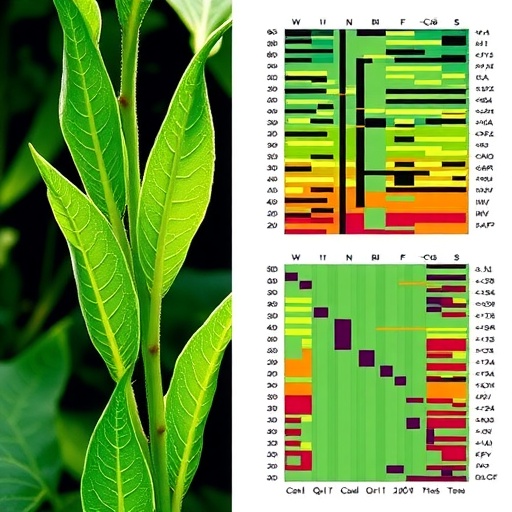
Soybean, the humble legume that supplies a substantial fraction of the world’s protein and vegetable oil, has just received the most detailed cellular portrait ever assembled for any crop of its kind. An international team of researchers has unveiled “Tabula Glycine max,” a single-cell resolution transcriptome atlas that maps gene activity across every major organ and structure of the soybean plant, from root tips to developing seeds. The achievement, published in Nature Plants, promises to reshape how scientists approach crop improvement in one of agriculture’s most economically and nutritionally important species. The work arrives at a moment when global demand for plant protein continues to climb, and when breeders are searching for new molecular levers to push yields, oil content and stress resilience in the face of a changing climate.
The technical foundation of the atlas is single-nucleus RNA sequencing, a method that has transformed animal and human biology over the past decade but has been applied more slowly in plants. Rather than sequencing bulk tissue, where the signal from tens of thousands of cells is averaged together, the researchers isolated individual nuclei from ten different organs and morphological structures that together constitute the entire soybean plant. From each nucleus, they captured the RNA transcripts present, generating a molecular readout of which genes were active in that single cell. Nuclei were then grouped by the similarity of their transcriptomic profiles, a computational clustering procedure that revealed an astonishing 156 distinct clusters, each corresponding to a different cell type, tissue state or developmental stage.
The scale and breadth of the atlas is what sets it apart. Earlier single-cell studies in plants typically focused on a single organ, most commonly the root, because roots are relatively easy to prepare for nuclear isolation. Tabula Glycine max deliberately spans the whole plant, capturing cell populations from aerial organs, reproductive structures and below-ground tissues in a single, integrated framework. This whole-organism coverage allowed the team to ask a question that organ-by-organ studies cannot address: whether the same cell type in different organs shares a recognizable molecular signature, and whether those signatures are consistent enough to define identity across the plant.
The answer, the researchers report, is a resounding yes, and the key to it lies in transcription factors. These are the regulatory proteins that bind DNA and switch genes on or off, and they sit at the top of the hierarchy that determines what a cell becomes and what it does. The team discovered that the pattern of co-expressed transcription factor genes, meaning sets of these regulatory genes that are active together in the same cells, is sufficient to define most soybean cell types based on both their function and the organ from which they originate. In other words, a cell can essentially be identified by the combination of transcription factors it expresses, much as a fingerprint identifies a person, and that fingerprint carries information about both the cell’s job and its address in the plant.
This finding has immediate practical implications. For decades, plant biologists have known that transcription factors control critical agronomic traits, from seed composition to nodulation and disease resistance, but targeting them precisely has been difficult because a given transcription factor may act in multiple tissues, producing beneficial effects in one place and undesirable ones in another. The atlas changes this calculus by revealing which transcription factors are active specifically in which cell types. With that knowledge, researchers can design engineering strategies that act only in the cells where a change is wanted, for example boosting oil accumulation in seed cells without altering photosynthesis in leaves, or enhancing nutrient transport in root cells without disturbing the rest of the plant.
The concept of cell-type-specific engineering that emerges from this study represents a significant conceptual advance for plant synthetic biology. The authors describe the atlas as offering a new perspective to engineer cell-type-specific programs and enhance the biology of unique soybean cell types. In practice, this could mean deploying gene promoters that are active only in defined cell populations, guided by the co-expression patterns documented in the atlas, to rewrite developmental or metabolic programs with surgical precision. Such approaches could improve protein quality in specific seed cell layers, modulate the formation of nitrogen-fixing nodules, or strengthen barrier tissues that defend against pathogens, all while leaving the remainder of the plant untouched.
Beyond engineering, the atlas is expected to become an indispensable reference resource for basic research. Soybean has a large and complex genome, having undergone ancient whole-genome duplication events that left many genes in multiple related copies, complicating efforts to assign functions. A whole-plant, single-cell map provides the context needed to interpret which members of duplicated gene families are actually active in particular cells, accelerating functional studies that would otherwise take years. The 156 clusters catalogued in the atlas also provide a vocabulary for the soybean community, allowing laboratories around the world to compare their own single-cell or bulk datasets against a standardized cellular taxonomy of the species.
The choice of single-nucleus rather than whole-cell sequencing is itself noteworthy and reflects the particular challenges of plant material. Plant cells are enclosed in rigid cell walls that complicate the dissociation procedures used in animal single-cell work, and protoplasting, the usual workaround that strips the wall away, can itself induce stress-response genes that distort the picture of normal activity. Isolating nuclei instead sidesteps the cell wall problem and captures a snapshot closer to the cell’s native state. The trade-off is that nuclear RNA represents only a subset of the cell’s total transcript pool, but the results demonstrate that this subset contains more than enough information to resolve 156 distinct cellular identities across the plant.
The nutritional stakes of the work are considerable. Soybean is an essential source of protein and oil with high nutritional value for both human and animal consumption, and it dominates global oilseed production. Improvements in its seed composition, yield and resilience ripple through food systems worldwide, affecting everything from cooking oil and livestock feed to plant-based meat alternatives. The researchers emphasize that accurate information regarding the expression of each of the plant’s protein-coding genes is essential for advancing understanding of soybean biology, and that this cellular resolution and breadth make the Tabula Glycine max an exceptional resource for the plant and soybean communities.
The study also feeds into a broader movement in plant science toward whole-organism cellular atlases, following the model of the Human Cell Atlas project that has catalyzed single-cell research in biomedicine. Soybean now joins a small group of plants for which such comprehensive resources exist, and the methodology described in the paper offers a template that other crop species can follow. As sequencing costs continue to fall and computational tools for integrating single-cell data mature, the prospect of similar atlases for maize, wheat, rice and other staples becomes increasingly realistic, opening a path toward a future in which crop improvement is guided by an atlas-level understanding of the cellular architecture of entire plants.
For the soybean research community, the immediate value will be in the details: the specific transcription factor modules active in each of the 156 cell clusters, the comparisons between equivalent cell types in different organs, and the public availability of the data as a community resource. For breeders and biotechnologists, the longer-term promise is the ability to write genetic programs into specific cells rather than entire plants, a shift in precision that could compress the timelines of trait development. What began as a technical exercise in cataloguing nuclei has produced something with far more consequence: a cellular map of one of the world’s most important crops, and with it, a new set of instructions for how to improve it.
Subject of Research: A single-cell resolution transcriptome atlas of the soybean plant (Tabula Glycine max), mapping cell-type-specific co-expressed transcription factors across ten organs and 156 cell clusters.
Subject of Research: Biology
Article Title: Decoding the landscape of cell-type-specific co-expressed transcription factors in soybean
Article References: Thibivilliers, S. B., Cervantes-Pérez, S. A., Yang, E. J. Y., Li, Y., Amini, S., Pelletier, J. M., Meyer, I., Xu, H., Tennant, S., Sprueill, C. M., Farmer, A. D., Coate, J. E., Nelissen, H., Martin, O. C., Amézquita, E. J., Goldberg, R. B., Harada, J. J., Nichols, J., & Libault, M. (2026). Decoding the landscape of cell-type-specific co-expressed transcription factors in soybean. Nature Plants. https://doi.org/10.1038/s41477-026-02388-4
Image Credits: AI Generated
DOI: 10.1038/s41477-026-02388-4
Keywords: soybean, single-nucleus RNA sequencing, transcriptome atlas, transcription factors, cell-type-specific gene expression, Tabula Glycine max, Glycine max, plant synthetic biology, crop improvement, gene co-expression, cell clusters, seed biology
Cite Scienmag News
APA MLA Chicago
Juliet Wilcox. (September 10, 2026). Mapping cell-type-specific co-expressed transcription factors in soybean. Scienmag. https://scienmag.com/mapping-cell-type-specific-co-expressed-transcription-factors-in-soybean/
Juliet Wilcox. “Mapping cell-type-specific co-expressed transcription factors in soybean.” Scienmag, 10 September 2026, https://scienmag.com/mapping-cell-type-specific-co-expressed-transcription-factors-in-soybean/. Accessed 10 September 2026.
Juliet Wilcox. “Mapping cell-type-specific co-expressed transcription factors in soybean.” Scienmag. September 10, 2026. https://scienmag.com/mapping-cell-type-specific-co-expressed-transcription-factors-in-soybean/
Copy citation Download RIS
Tags: advances in plant single-cell genomicscell-type-specific co-expressed transcription factorscell-type-specific gene expression in soybeancell-type-specific transcription factors in soybeancrop improvement and gene regulationcrop stress resilience geneticscrop yield enhancement through transcription factor analysisgene activity across soybean organsgene activity mapping in soybeanhigh-resolution plant cellular atlasmapping transcription factors in soybeanmolecular mechanisms of soybean developmentplant cell-type mappingplant molecular biology and genomicsplant single-nucleus RNA sequencingSingle-cell transcriptome atlas of soybeansoybean crop improvementsoybean organ-specific gene expressionsoybean seed development and gene expressionSoybean single-cell transcriptome atlassoybean yield and oil content regulationstress resilience in soybean