For decades, one stubborn side reaction has haunted the field of electrochemical carbon dioxide reduction: hydrogen. Whenever engineers and chemists apply a cathodic current to convert CO2 into useful fuels and chemicals, water molecules at the electrode surface compete fiercely for the same electrons, splitting instead into hydrogen gas. This proton-coupled electron transfer chemistry, in which protons and electrons move together through the same catalytic interface, has long been treated as an unavoidable tax on the dream of turning waste carbon into formate, carbon monoxide, or hydrocarbons. Now a research team has demonstrated a way to escape that constraint altogether, and the trick involves a cleverly engineered two-faced electrode made of palladium.
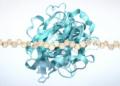
In a study published in Nature Chemistry, Xunyu Hu, Will Boyd, Feng Wang and colleagues describe a so-called Janus palladium membrane electrode that decouples hydrogen formation from carbon dioxide conversion by physically separating the two processes on opposite faces of a thin palladium membrane. On one side of the electrode, hydrogen is generated from water in the ordinary way. But rather than bubbling off as unwanted gas, the hydrogen atoms permeate through the palladium membrane — a material famous for its ability to absorb and transport hydrogen — and emerge on the other side, where they encounter a completely different chemical environment that faces the CO2-containing electrolyte.
The elegance of the design lies in what happens at that CO2-facing interface. Instead of allowing protons and electrons to combine there, the membrane independently polarizes the rear surface, converting the permeated hydrogen atoms into palladium hydride species, written chemically as Pd–H. These hydride species carry a tunable hydricity — a measure of how strongly the hydrogen atom is delivered as a hydride ion, H-minus, rather than as a proton or a neutral radical. Hydride transfer is a fundamentally different chemistry from the proton-coupled electron transfer that dominates conventional electrocatalysis. In a hydride transfer, the hydrogen atom arrives together with two electrons, ready to insert directly into a carbon dioxide molecule and reduce it to formate in a single, well-defined step.
Because the two faces of the Janus electrode can be controlled independently, the researchers can sustain a directed flux of hydride from water, where the hydrogen originates, to the carbon dioxide waiting on the other side of the membrane. Under only mild cathodic polarization of the CO2-facing interface, this directional hydride delivery drives highly selective formate production. Formate is itself a valuable product — a liquid chemical used in fuel cells, as a hydrogen carrier, and as a feedstock — and it is one of the most commercially attractive targets of CO2 electroreduction.
The performance numbers reported in the study are striking. In aqueous electrolytes, the membrane electrode achieves excellent Faradaic efficiencies, meaning that an unusually large fraction of every electron passing through the circuit ends up stored in formate rather than wasted on hydrogen gas or other byproducts. The turnover frequencies — a measure of how many product molecules each active site can generate per unit time — are also high, indicating that the catalyst is not merely selective but genuinely productive. Isotope labelling experiments, in which deuterium is substituted for hydrogen to trace the origin of the atoms in the product, confirmed that hydride transfer through the palladium membrane is the dominant reaction pathway. In other words, the formate is genuinely being built from hydrogen atoms that traveled across the metal, not from protons reacting directly at the surface.
The membrane architecture also solves a second chronic problem in CO2 electroreduction: catalyst stability and selectivity over long operating periods. On conventional catalysts, adsorbed carbon monoxide — an intermediate in many CO2 reduction pathways and a poison in others — accumulates and degrades performance. In the Janus design, the continuous delivery of hydrogen through the membrane keeps the CO2-facing surface in a hydrogen-rich state, which suppresses the formation of adsorbed CO and allows the electrode to operate stably over extended periods. The steady stream of permeating hydrogen atoms effectively washes the surface chemistry toward formate formation and away from competing carbon monoxide pathways.
Perhaps the most significant demonstration, however, is that the electrode works not only in water but also in fully aprotic electrolytes — solvent systems that contain no protons to donate at all. Conventional proton-coupled electrocatalysis cannot function meaningfully in such environments, because there are no protons to couple with the electrons. The Janus membrane electrode, by contrast, carries its own hydrogen supply across the metal barrier, delivering hydride reactivity to the CO2-facing surface regardless of what solvent surrounds it. This opens the door to running CO2 electroreduction in organic solvents and other nonaqueous media where new selectivities, solubilities, and product distributions might be accessed — possibilities that are simply unreachable within the proton-coupled paradigm.
The broader implication is that heterogeneous hydride chemistry, long the province of molecular catalysts and stoichiometric reagents in homogeneous solution, can now be exercised at a solid electrode under electrochemical control. Hydride transfer is one of the most powerful and selective transformations in chemistry: biological systems use hydride carriers such as NADH to reduce carbon dioxide in photosynthesis and metabolism, and synthetic chemists reach for hydride donors like borohydrides when they want clean, targeted reductions. Bringing that same hydride reactivity to an electrochemical interface — powered by renewable electricity rather than sacrificial chemical reductants — represents a conceptual bridge between electrocatalysis and classical hydride chemistry.
Palladium is uniquely suited to play the central role. The metal dissolves large quantities of hydrogen, forming a palladium hydride phase in which hydrogen atoms occupy interstitial sites in the metal lattice, and it conducts hydrogen across thin foils with remarkable facility. By tuning the electrochemical potential applied to the CO2-facing side, the researchers can adjust the hydricity of the Pd–H species at the surface — effectively dialing in how reactive, how reducing, the delivered hydrogen will be. That tunability matters because different CO2 reduction products require different degrees of reducing power, and a hydride donor whose strength can be adjusted offers a level of control that conventional co-catalysts cannot match.
The work arrives at a moment of intense global interest in carbon utilization technologies. Electrochemical CO2 reduction promises a route to close the carbon cycle, converting emissions from power plants, industrial facilities, or even direct-air capture into fuels and chemicals using renewable electricity. Yet the technology’s economic viability has been persistently undercut by the hydrogen evolution reaction, which steals current, lowers selectivity, and complicates downstream separation of products. A strategy that physically removes proton-coupled electron transfer from the CO2-facing interface — while still drawing the hydrogen ultimately from water — addresses the problem at its mechanistic root rather than merely suppressing it with catalyst additives or electrolyte tricks.
There is also a design philosophy on display here that may prove as influential as the specific result. Rather than engineering a better catalyst composition, the researchers engineered a better reaction architecture: a spatially segregated, two-compartment system in which the generation of one reagent and its delivery to another are handled by different faces of the same device. The Janus membrane is simultaneously an electrode, a hydrogen separator, and a hydride reagent generator. Such multifunctional device-level thinking, the authors suggest, offers a general route to access heterogeneous hydride reactivity beyond proton-mediated electrocatalysis — a toolbox that could extend well beyond CO2 to other reductions that benefit from hydride delivery.
Challenges remain before such electrodes could be scaled. Palladium is scarce and expensive, membrane thickness and hydrogen permeation rates must be optimized for industrial current densities, and the long-term mechanical and chemical stability of the hydride-loaded membrane under continuous operation will need to be proven. Nevertheless, the demonstration that selective, high-efficiency CO2-to-formate conversion can be achieved through directed heterogeneous hydride transfer — in water and in fully aprotic media alike — marks a genuine conceptual advance. It shows that the competing hydrogen evolution reaction, instead of being an enemy to be suppressed, can be domesticated: generated on one side of a metal membrane, converted into tunable hydride reagent, and delivered with precision to the carbon dioxide waiting on the other.
Subject of Research: Electrochemical carbon dioxide reduction via directed heterogeneous hydride transfer using a Janus palladium membrane electrode, enabling selective formate production while circumventing proton-coupled electron transfer and the competing hydrogen evolution reaction.
Subject of Research: Chemistry
Article Title: Directed heterogeneous hydride transfer enables selective CO2 reduction using a Janus palladium membrane electrode
Article References: Hu, X., Boyd, W., Wang, F., Diefendorf, A., Cowling, O., & Sun, Y. (2026). Directed heterogeneous hydride transfer enables selective CO2 reduction using a Janus palladium membrane electrode. Nature Chemistry. https://doi.org/10.1038/s41557-026-02243-1
Image Credits: AI Generated
DOI: 10.1038/s41557-026-02243-1
Keywords: CO2 reduction, Janus palladium membrane electrode, heterogeneous hydride transfer, proton-coupled electron transfer, formate production, Faradaic efficiency, palladium hydride, hydrogen evolution reaction, aprotic electrolytes, electrocatalysis, tunable hydricity, isotope labelling
Cite Scienmag News
APA
MLA
Chicago
Bethany Barker. (September 10, 2026). Janus palladium membrane enables selective CO2 reduction via directed hydride transfer. Scienmag. https://scienmag.com/janus-palladium-membrane-enables-selective-co2-reduction-via-directed-hydride-transfer/
Bethany Barker. “Janus palladium membrane enables selective CO2 reduction via directed hydride transfer.” Scienmag, 10 September 2026, https://scienmag.com/janus-palladium-membrane-enables-selective-co2-reduction-via-directed-hydride-transfer/. Accessed 10 September 2026.
Bethany Barker. “Janus palladium membrane enables selective CO2 reduction via directed hydride transfer.” Scienmag. September 10, 2026. https://scienmag.com/janus-palladium-membrane-enables-selective-co2-reduction-via-directed-hydride-transfer/
Copy citation
Download RIS
Tags: advanced electrochemical reactor designdecoupling hydrogen and CO2 reactionsdecoupling hydrogen evolution from CO2 reductiondirected hydride transferelectrochemical carbon dioxide conversionelectrochemical CO2 reductionelectrochemical conversion of CO2 to fuelsfuel and chemical synthesis from CO2hydride transfer in electrochemistryhydrogen evolution suppressionhydrogen management in electrocatalysishydrogen permeable palladiumhydrogen permeation through palladiuminnovative electrode design for CO2 reductionJanus palladium membraneJanus palladium membrane electrodemembrane-based electrochemical reactorsovercoming side reactions in CO2 reductionpalladium membrane electrodephysical separation of electrochemical reactionsproton-coupled electron transferselective CO2 reductionselective hydrogen transfer